Style guide, Uniforms
Uniforms for Pan-Asian, Japanese, Thai and Chinese Restaurants: Wraps, Mandarin Collars and Colour
Pan-Asian restaurants have become one of the most crowded categories in Indian dining: dim sum bars, sushi counters, Thai kitchens, ramen shops, wok-to-table chains and modern "Asian bistro" menus that travel from Tokyo to Bangkok in one page. In a busy category, the team's uniform does real branding work. It tells guests, before they read the menu, whether this is a casual noodle bar or a serious Japanese kitchen.
This guide covers uniforms for pan-Asian, Japanese, Thai and Chinese restaurants in India: the design vocabulary worth borrowing, how to avoid a costume, colour choices, practical fabric for wok stations and sushi counters, script branding, and a role-by-role plan.
The design vocabulary: details worth borrowing
You do not need traditional dress to signal an Asian concept. One or two well-chosen details, applied to practical uniform garments, do the job.
Wrap and crossover fronts
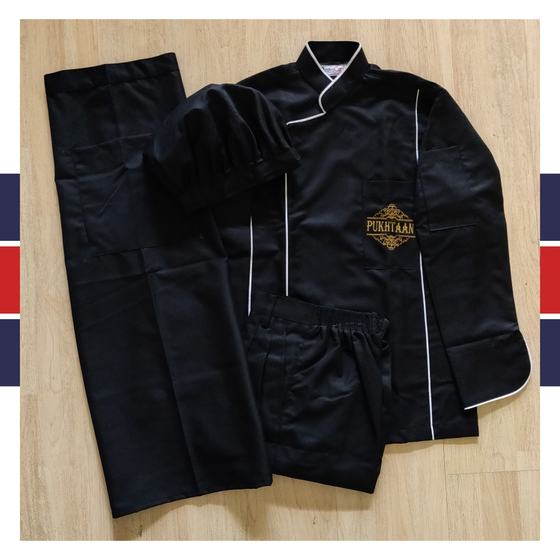
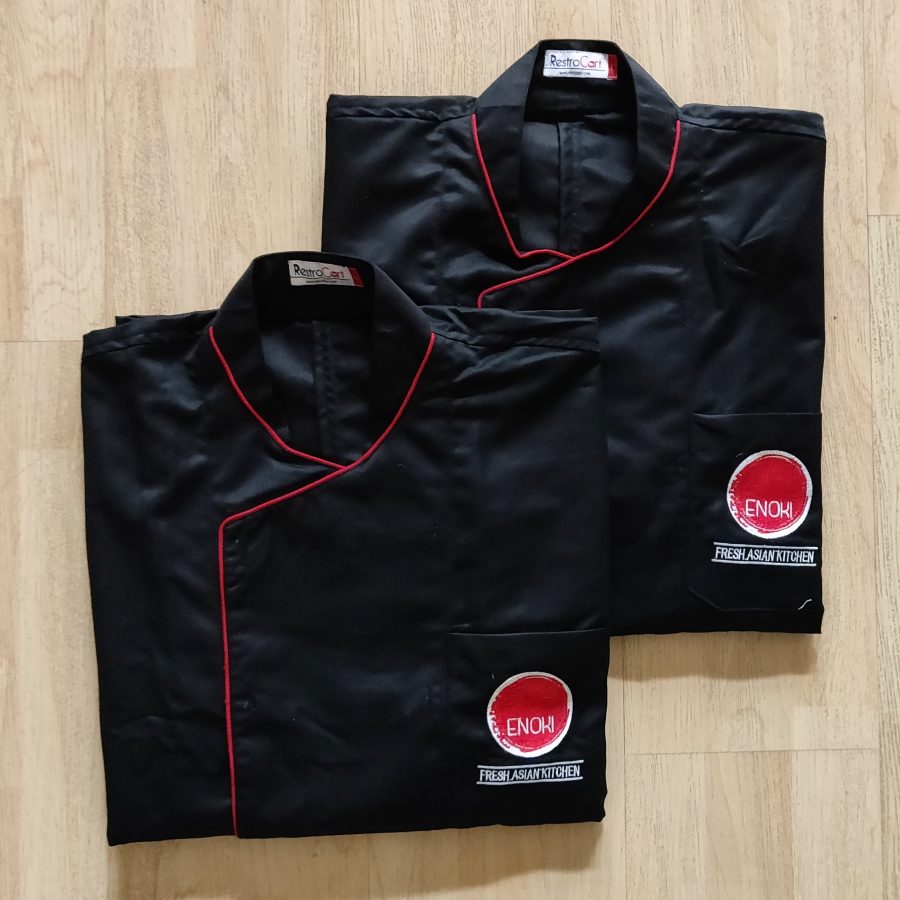
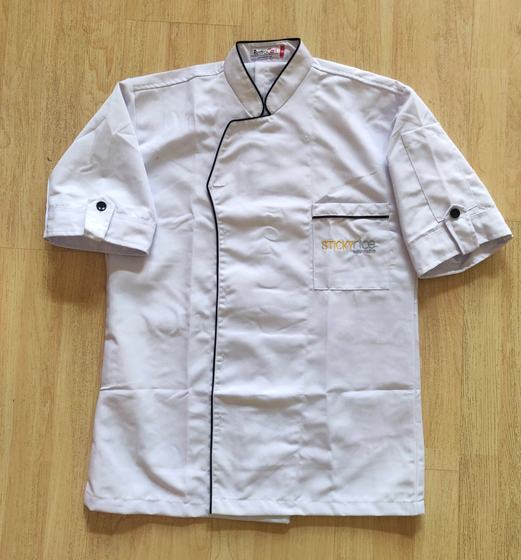
A chef coat or service jacket that closes diagonally across the chest, like a kimono or samue work jacket, is the strongest single signal of a Japanese or pan-Asian concept. It works on chef coats, server tops and hostess tunics, and contrast piping along the crossover line makes it read clearly from across the room.
Mandarin and band collars
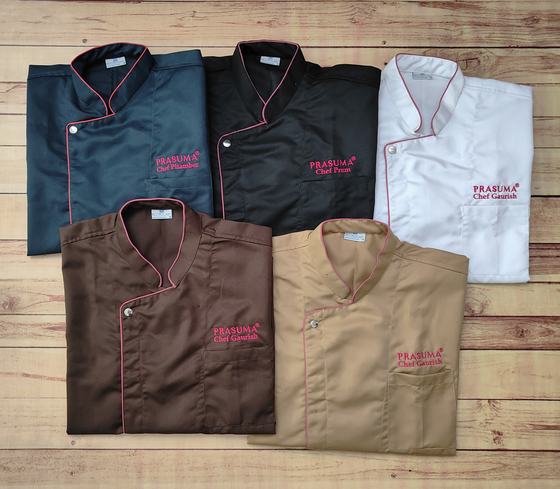
A short stand-up collar is associated with Chinese and wider East Asian dress and is extremely practical: no collar points to curl, nothing flops into food. A contrast colour on the collar alone is enough to set a brand apart.
Happi-style jackets
The happi is a straight-cut Japanese jacket with wide sleeves and a contrast band down the front edges, often with a crest or characters on the back. A shortened, lighter version makes an excellent host or festival-style server jacket over a tee.
Knotted closures and Thai details
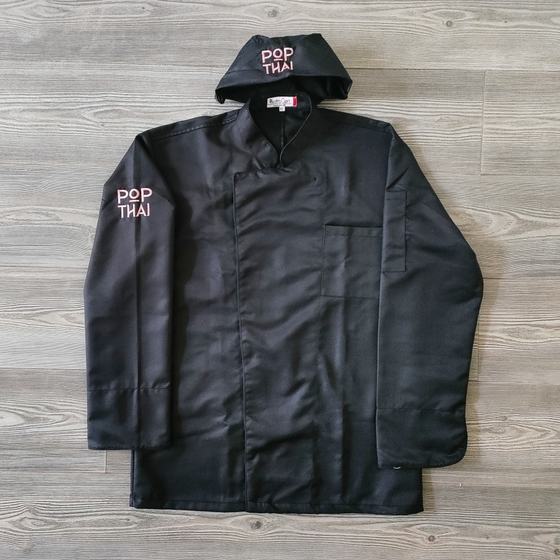
Fabric knot buttons suit Chinese concepts and hostess tunics. For Thai restaurants, a jewel-tone base, a subtle woven border or a sash-inspired apron tie nods to the cuisine without costume.
Colour: black and red, and the alternatives
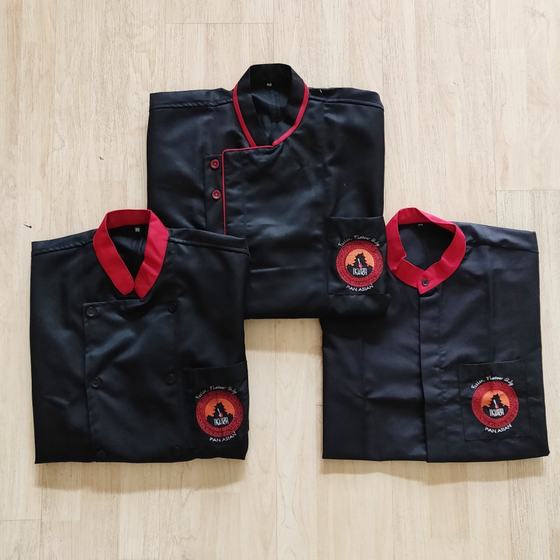
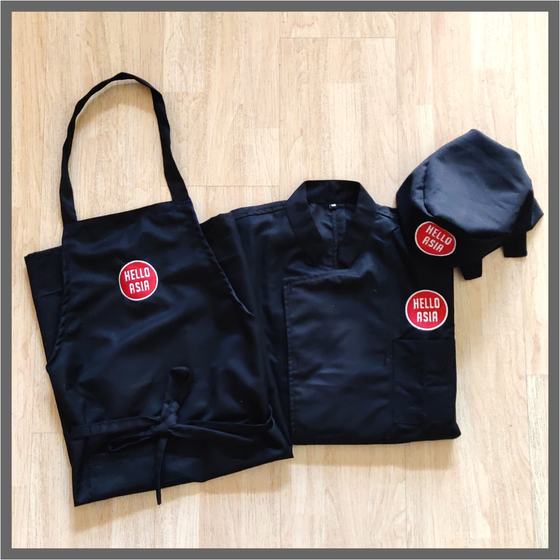
Black with red is the most common combination in Indian pan-Asian restaurants, and for good reasons. It suits dark, moody interiors, hides soy, oil and chilli splashes, and red is widely associated with luck and celebration in Chinese culture. Enoki Kitchen, Ikura and Hello Asia all use black bases with red accents in the uniforms we made for them. The downside is that black and red has become the default, so it takes strong details to stand out.
Alternatives worth considering:
- Indigo and white for Japanese concepts: indigo-dyed looks are deeply rooted in Japanese workwear and sit beautifully against wood and stone interiors.
- White and pale grey for sushi counters and open kitchens where cleanliness is part of the show.
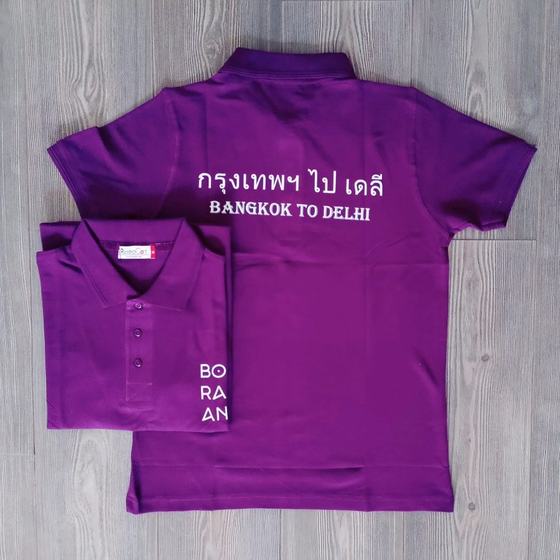
- Jewel tones for Thai and Southeast Asian concepts: purple, emerald, saffron or teal on polos and aprons.
- Earthy neutrals such as sand, olive and charcoal for modern, minimal Asian bistros.
Our uniform colour guide explains how lighting and interiors change the way colours read.
Pan-Asian restaurant uniforms by cuisine
| Concept | Kitchen | Service | Colour ideas |
|---|---|---|---|
| Japanese / sushi / ramen | Wrap-front or mandarin-collar coat, headband or cap, bib apron | Wrap top or happi-style jacket over a tee, long waist apron | Indigo, white, black with natural tones |
| Chinese / dim sum | Mandarin-collar chef coat, skull cap | Mandarin-collar shirt or tunic, knot-button accents for hosts | Black with red, deep green, gold accents |
| Thai | Chef coat with coloured collar or piping | Jewel-tone polo or shirt, apron with contrast ties | Purple, emerald, saffron, teal |
| Pan-Asian / wok bar | Black coat with contrast piping, cap | Polo or tee with half apron | Black with one accent colour |
| Asian fine dining | Tailored wrap-front coat | Mandarin-collar jacket or waistcoat, hostess tunic | Charcoal, midnight blue, muted gold |
Designing uniforms for an Asian concept? Tell us the cuisine, the interior mood and your roles. We will send mockups with wrap fronts, mandarin collars or happi styles in your colours.
WhatsApp +91 98213 34906 Email info@restrocart.comKitchen realities: wok stations, steamers and sushi counters
Asian kitchens push uniforms hard in specific ways.
- Wok stations throw intense heat and flare-ups. Choose poly-cotton twill with good breathability, short or three-quarter sleeves, and avoid loose wide sleeves near the flame even if the happi look tempts you. Our guide to summer kitchen uniforms covers heat management.
- Dim sum and steamer sections are humid all day. Lighter fabric and a moisture-wicking chef tee under an apron can work better than a full coat.
- Sushi counters are theatre. The chef is watched at arm's length, so crisp construction, clean colours and a neat apron matter more than anywhere else in the restaurant.
- Open kitchens in general mean the kitchen uniform is part of the dining room design; choose it together with the service look.
For chef coat cuts and closures, see our guide to chef coat styles, and for caps, headbands and skull caps, our headwear guide.
Service, bar and host roles
Kitchen uniforms get most of the attention in Asian restaurants, but guests spend far more time with the floor team.
Servers
For casual pan-Asian and wok bars, a black or coloured polo or tee with a long waist apron is practical and quick to launder. For a more considered look, a wrap-front service top in a soft poly-cotton, worn over a tee, gives the Japanese feel without restricting movement. Keep sleeves short or three-quarter so they stay out of sauces and soup bowls, and give aprons deep pockets for chopstick rests, order pads and card machines.
Bartenders
Asian cocktail and sake bars suit a mandarin-collar shirt with a bib apron in denim, canvas or black twill, with script or a crest on the bib. The bar is often where guests photograph the team, so it is a good place for the strongest branding.
Hosts and hostesses
The host stand is where a traditional detail can go furthest: a mandarin-collar tunic with knot buttons, a wrap top in a richer fabric or a tailored jacket in midnight blue or charcoal. Our hostess uniform guide covers fits and fabrics.
Managers, housekeeping and delivery
Managers can wear a mandarin-collar shirt or jacket in the deepest shade of the palette. Housekeeping and delivery staff should not be forgotten; the same base colour with a small logo keeps the whole team consistent, from the host stand to the rider at the door.
Script, crests and branding
Japanese, Chinese and Thai script embroidered on an apron, sleeve or jacket back is one of the most effective branding tools for an Asian concept. Two rules keep it from going wrong:
- Get the text checked by a native speaker. A character upside down or a mistranslation is embarrassing and permanent once embroidered across a team.
- Supply vector artwork. Script strokes need clean digitising to stay legible at embroidery size. Tiny characters below a certain size lose detail, so keep script bold.
A round crest or seal, like the red round logos on the Enoki Kitchen and Hello Asia uniforms, borrows from Japanese mon and Chinese seal traditions and works well as a chest emblem. Our embroidery vs printing guide explains which technique suits which garment.
Avoiding the costume trap
The fastest way to make an Asian restaurant look cheap is to put Indian staff in shiny, synthetic "oriental" costumes. Guests read them as a theme party, and staff feel it too. A few principles keep the look authentic and respectful:
Pan-Asian uniform design checklist
- Use one or two traditional details per garment, not every detail at once.
- Keep fabrics matt and practical; avoid shiny satin unless it is a small accent.
- Make service garments fit for carrying trays and bending, with sleeves that stay out of food.
- Match the details to the cuisine: wrap fronts for Japanese, mandarin collars and knots for Chinese, colour for Thai.
- Check all script and symbols with a native speaker.
- Use the same colour pair across kitchen, floor, bar and host roles.
- Give housekeeping and delivery staff the same palette so the whole team matches.
- Sample one complete set per role and see it in the restaurant's lighting before bulk production.
How RestroCart makes pan-Asian uniforms
We have dressed many Asian restaurants, from Enoki Kitchen, Ikura, Pop Thai, Sticky Rice, Hello Asia and Boraan Thai to Mensho Tokyo; you can read about the Mensho Tokyo project in our Mensho Tokyo story. The process is the same for every client: you share your cuisine, interiors, roles and logo on WhatsApp or email; our in-house design team sends mockups and suggests fabrics, colours and branding; you approve swatches and a sample set; then we produce, quality-check and deliver to your door anywhere in India, packed by role or size. Typical timelines are two to three weeks for design and sampling and two to four weeks for production. Patterns, fabric codes and artwork stay on file for reorders.
Beyond uniforms, the same palette can carry through to menus, chopstick sleeves, coasters and delivery packaging. See more in our client portfolios.
Want a pan-Asian team that looks the part without the costume? Send your logo, cuisine and roles. We reply the same day with ideas.
WhatsApp +91 98213 34906 Email info@restrocart.comMessage us on WhatsApp at +91 98213 34906, email info@restrocart.com, or build your list in our quote builder.