City guide, Uniforms
Ordering Restaurant Uniforms from Delhi for Mumbai and Pune: The Remote Process and Fabric Advice for Humidity
Mumbai and Pune have some of the most competitive restaurant scenes in India, and a staff uniform has to work harder there than almost anywhere. The problem is not style; it is humidity. A uniform specified for a dry Delhi winter can feel unbearable in a Mumbai kitchen in July. This guide explains how to order restaurant uniforms for Mumbai and Pune from Delhi, and how to choose fabrics, colours and quantities that survive humid weather and the monsoon.
RestroCart is a restaurant uniform manufacturer in Naraina, New Delhi. We do not have an office in Mumbai or Pune; we design and make everything in Naraina and deliver to your outlet, with the whole process run remotely. Here is how that works, and what we recommend for the climate.
What humidity does to restaurant uniforms
High humidity affects uniforms in four ways, and each one should change your brief.
- Sweat does not evaporate. Heavy or tightly woven fabrics trap heat and moisture, and staff feel it within an hour. Breathability matters more than thickness.
- Garments dry slowly. During the monsoon, uniforms washed at night may still be damp in the morning. Two sets per person stops working; three becomes the minimum.
- Sweat marks show. Light greys, pastels and some mid-tones show underarm and back sweat clearly. Darker or patterned fabrics are more forgiving on the floor.
- Mildew and odour. Damp garments stored in a closed locker develop smells and spots quickly, especially thick cotton, canvas and leather.
None of this means you cannot have a smart, branded uniform. It means the fabric and the quantities need to be chosen for the city, which is exactly what a good brief is for.
Fabric advice for Mumbai and Pune, garment by garment
| Garment | What works in humidity | What to avoid or limit |
|---|---|---|
| Chef coats | Breathable poly-cotton or cotton-rich blends in a lighter weight; half sleeves for the hot line | Heavy 100% cotton drill that stays damp; thick double layers everywhere |
| Service shirts | Poly-cotton poplin or blends that dry quickly and resist creasing | Pure linen for daily wear (creases badly); thick oxford weaves |
| Polos and tees | Moisture-wicking or dry-fit knits, or lighter cotton-rich polos with a firm collar | Very heavy cotton knits that hold sweat |
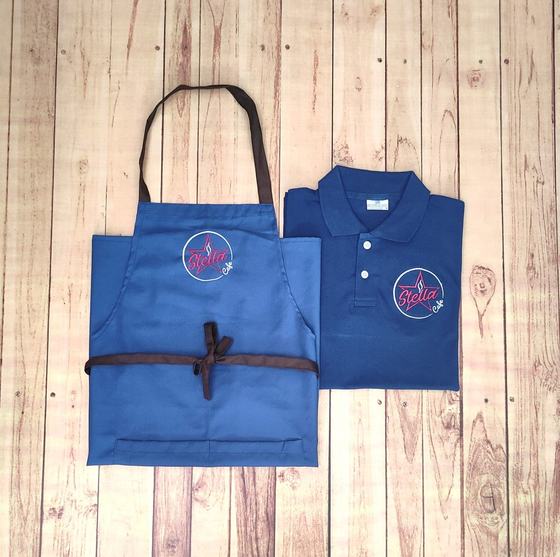
| Kitchen aprons | Lighter drill or poly-cotton; waterproof aprons for wash and prep areas | Heavy canvas for daily kitchen use |
| Bar and display aprons | Lighter canvas or denim, or leather that is aired and stored properly | Thick denim or leather left damp in lockers |
| Waistcoats and blazers | Lighter suiting blends; unlined or half-lined waistcoats | Heavy wool blends and full linings |
For the numbers behind these choices, our dry-fit vs cotton guide explains how knit fabrics handle sweat, and the waterproof aprons guide covers wash-up and prep areas. If you like the look of a heavier apron, ask for a sample in a lighter weight first and wear it through a monsoon shift before deciding.
Colour choices for a humid city
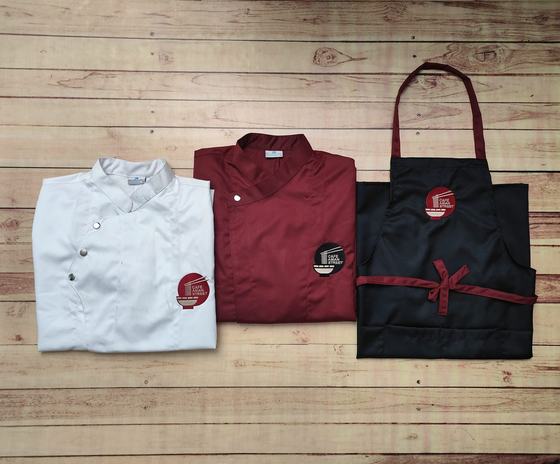
Darker shades such as black, navy, charcoal, bottle green and maroon hide sweat and stains better on the floor. If your brand is built around a light colour, use it for trims, aprons, piping or the logo, and keep the main body of the shirt in a forgiving shade. For kitchens, black or dark chef coats hide stains but absorb heat; white or light coats feel cooler but show marks. Many kitchens choose dark coats with light accessories, or the other way round, to get the best of both.
Pune is not Mumbai: what changes
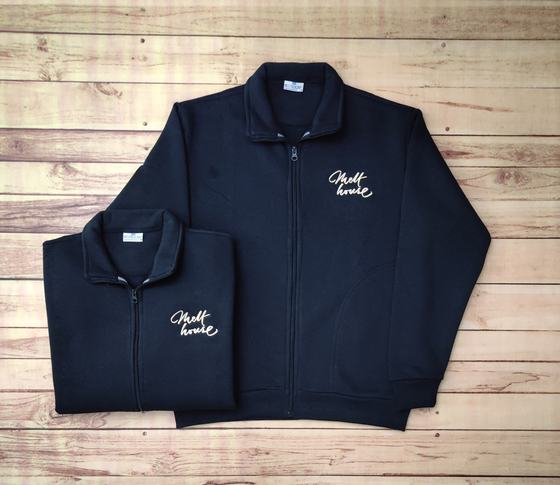
Pune is humid in the monsoon but drier than Mumbai for much of the year, with noticeably cooler evenings in winter. In practice, that gives Pune restaurants a little more freedom: slightly heavier fabrics are comfortable for more of the year, canvas aprons are easier to live with, and a light branded layer such as a sweatshirt, zip jacket or knit can be worth having for outdoor seating on winter evenings. The monsoon rules still apply: quick-drying fabric and enough spares.
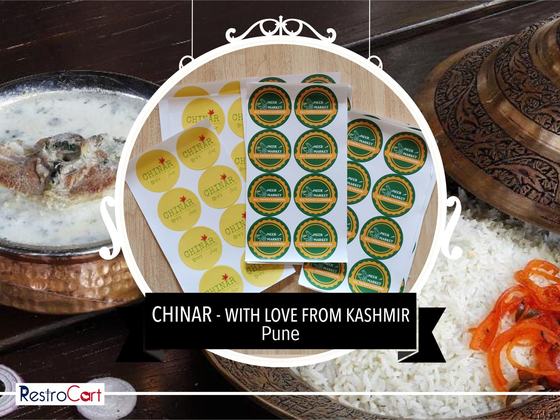
Uniforms do not have to travel alone. For Chinar, for example, we made branded packaging stickers, and supplies like these can ship with a uniform order when they come from the same brand files.
Opening or refreshing a Mumbai or Pune restaurant? Tell us your roles and headcount and we will courier swatches chosen for humid weather.
WhatsApp +91 98213 34906 Email info@restrocart.comHow ordering from Delhi works for Mumbai and Pune
You can complete the entire process without visiting us. The steps are designed so that every important decision is made with fabric in your hands, not just on a screen.
The remote process, step by step
- Brief on WhatsApp or email: roles, headcount, logo files, brand colours, photos of your interiors, how uniforms are washed and your in-building date.
- Digital mockups: our in-house design team sends a mockup per role, with fabric suggestions chosen for humidity.
- Swatches by courier: check them in your own lighting, and wet a corner to see how fast it dries.
- Sample set: one complete set per role is made and shipped. Have staff wear it through a real shift, ideally a hot one.
- Sizes: we share a size chart and measurement sheet; collect sizes per staff member, with names if you want named packing.
- Production: 2 to 4 weeks after sample approval, with quality checks.
- Delivery: packed by role and size, or by staff name, and delivered to your Mumbai or Pune outlet. Transit time is confirmed with the quote.
Design and sampling typically take 2 to 3 weeks. For a full description of each stage, see our custom uniform ordering process.
Extra lines to add to a Mumbai or Pune brief
A standard uniform brief covers roles, headcount, logo, colours and dates; our uniform brief template has the full list. For a humid city, a few extra lines help us specify fabric correctly from the first mockup instead of the second.
Add these for a humid-city order
- Is the kitchen open or closed, and is it air-conditioned, partly ventilated or not cooled at all?
- Is there outdoor, terrace or sea-facing seating, and which staff work there?
- How are uniforms dried: tumble dryer, commercial laundry or line-dried on site?
- Where are uniforms stored between shifts: open racks, closed lockers or staff take them home?
- Which roles sweat most: tandoor, grill, fryer, runners, bar?
- Do riders or valet staff need rainwear from June to September?
- Is there a colour in your brand you do not want on the floor because it shows sweat?
These answers change real decisions: whether the chef coat is full or half sleeve, whether the server's shirt is a dark or light shade, whether aprons are drill or canvas, and how many sets each person needs. Giving them upfront also makes quotes from different suppliers comparable, because everyone is pricing the same specification.
Kitchen versus floor in a humid restaurant
Kitchen teams in Mumbai need the lightest, most breathable fabrics in the building, and the most spares. Service staff in air-conditioned dining rooms can wear smarter, slightly heavier fabrics, but they walk between the cool dining room, a hot kitchen pass and sometimes a humid terrace many times an hour. A breathable shirt with a dark apron is usually the most comfortable answer. Managers who spend time outdoors or at the entrance benefit from an unlined waistcoat instead of a full blazer.
What we made for Pukhtaan
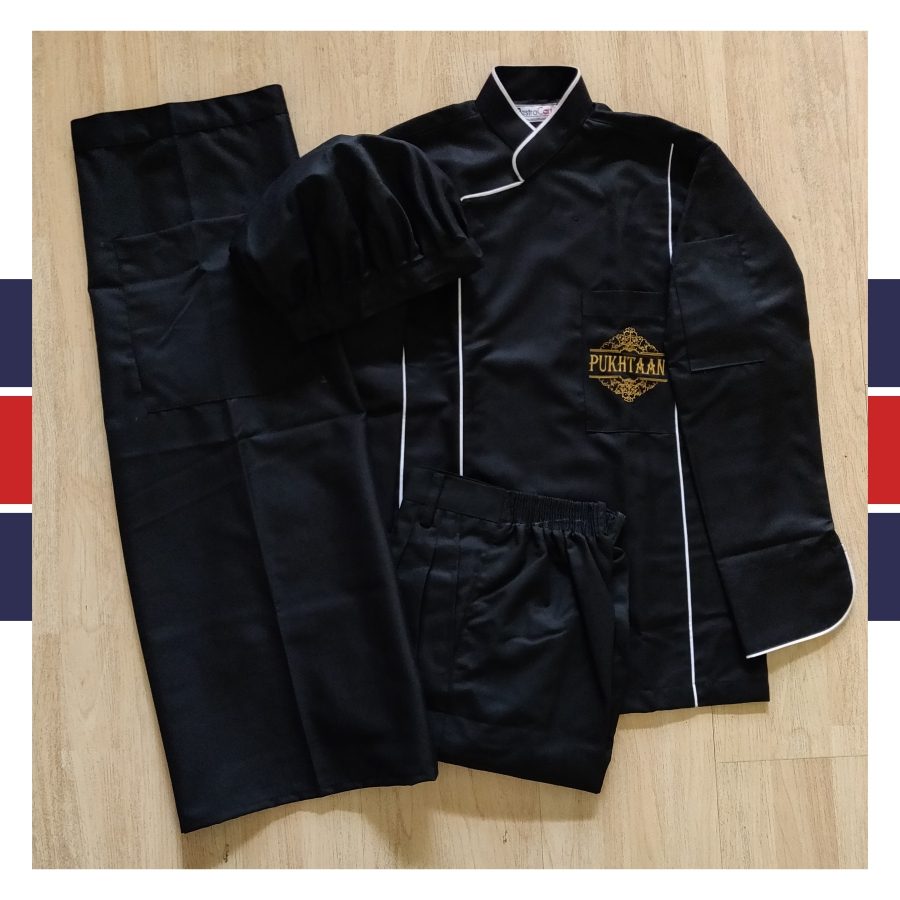
Pukhtaan is a good example of a formal Indian dining uniform built across roles. For Pukhtaan we made a steward uniform with a gold brocade waistcoat over a white shirt and a black apron embroidered with the logo, black chef coats with white piping and a gold embroidered logo, a hostess tunic with contrast trims, housekeeping sets and a dark suit for managers. Each role is distinct, but the gold and black thread runs through the whole team. See more on the Pukhtaan portfolio page.
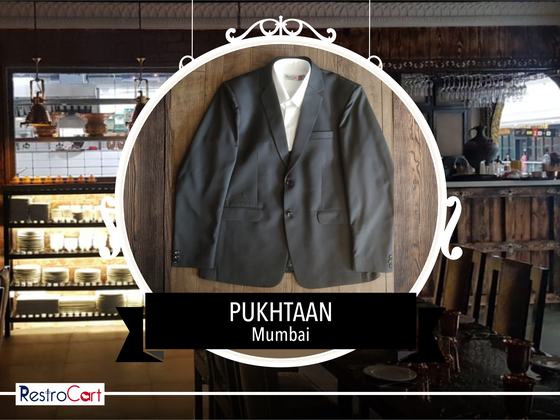
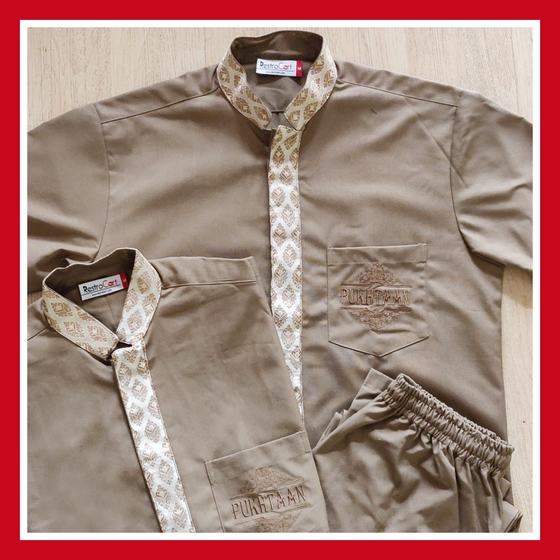
For a humid city, a look like this can keep its richness while using lighter suiting blends and an unlined waistcoat, so the steward stays comfortable through a long dinner service. Our guide to kurta and Indian-wear uniforms covers more options for Indian restaurants.
Monsoon care: keeping uniforms fresh through the rains
Good fabric helps, but monsoon care is what keeps uniforms looking right until October.
- Dry completely before storing. Never fold a damp uniform into a locker. Hang it where air moves.
- Rotate three sets. One on, one drying, one ready.
- Ventilate lockers. Leave gaps, avoid overpacking, and air leather aprons regularly.
- Wash promptly. Sweat left overnight in humid weather sets stains and odour.
- Plan rainwear separately. Delivery riders and entrance staff need proper branded rain jackets or ponchos, not an umbrella. Our monsoon rainwear guide covers the options.
The uniform care and laundry guide has more on wash temperatures, embroidery care and stain handling.
Reorders from Mumbai and Pune
Because we keep patterns, fabric codes, thread shades and artwork on file, reorders do not need a new sample. A top-up for new staff, or a second outlet across Mumbai or in Pune, is a message with roles, sizes and quantities. That matters more for a remote client than for anyone else: you should not have to repeat the whole process every time you hire.
Ready for a quote? Share your city, roles and headcount and we will send humidity-friendly fabric options and a timeline.
WhatsApp +91 98213 34906 Email info@restrocart.comGet a quote
Message us on WhatsApp at +91 98213 34906, email info@restrocart.com, or list what you need on our quote builder. Tell us your city and your in-building date, and we will plan the swatches, sample and shipping backwards from it.