Buying guide, Uniforms
Custom vs Readymade Restaurant Uniforms: An Honest Comparison of Cost, Quality and Brand Value
At some point before opening, every restaurant owner opens two browser tabs. One shows a readymade uniform catalogue with chef coats at a tempting price and delivery this week. The other is a WhatsApp chat with a custom manufacturer talking about swatches, samples and a four-to-seven-week timeline. Which one is right?
We are a custom manufacturer, so you should read this with that in mind. But we also tell clients to buy readymade when it makes sense, because a restaurant that feels oversold does not come back for its second outlet. Here is the honest comparison.
The short version
| Factor | Readymade uniforms | Custom uniforms |
|---|---|---|
| Upfront cost | Lower | Higher per piece |
| Cost per wear | Often higher: lighter fabric, earlier replacement | Often lower: fabric chosen for heat and laundry |
| Lead time | Days, if in stock | Four to seven weeks end to end |
| Fit | Stock size chart; limited ladies' fits | Graded to your team; ladies' fits and extended sizes |
| Colour | What is in stock | Your brand colour, matched to swatches |
| Branding | Logo added on top | Branding designed into the garment: piping, panels, placements |
| Reorders | Depend on the same stock still existing | Matched from a spec sheet |
| Brand value | Looks like other restaurants | Looks like yours; photographs as part of the brand |
Where readymade uniforms make sense
Readymade is the right answer more often than manufacturers admit:
- Temporary and event staff. A catering company hiring forty people for a wedding season does not need forty custom shirts. It needs clean, matching, branded basics.
- Very small teams on a tight budget. A four-person kiosk can start with branded readymade tees and caps and upgrade once the concept is proven.
- Genuine emergencies. If your uniforms are needed in five days, readymade with a logo is the only realistic option.
- Back-of-house basics. Plain black trousers and skull caps are commodity items for many kitchens.
If you go readymade, check three things: fabric weight (hold it up to the light), stitching at stress points (armholes, pocket corners, apron strap joins) and the size chart against your actual team.
Where custom uniforms pay for themselves
In the kitchen
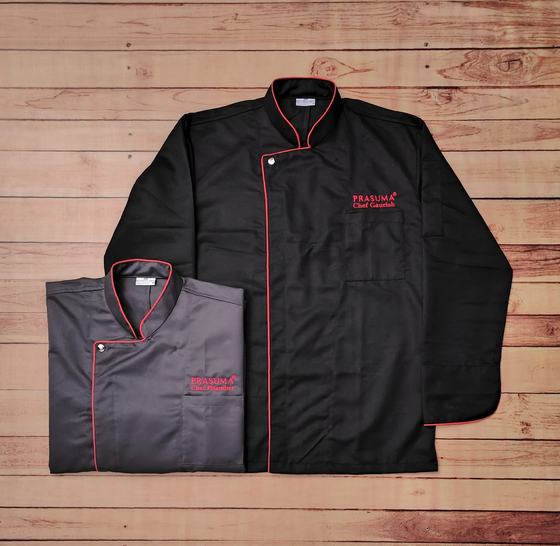
This is where the gap is widest. A chef coat is washed hot, often daily, and worn beside open flame. Readymade chef coats are frequently made in lighter fabric that goes translucent under kitchen lights, with plastic buttons that crack in hot washes. A custom coat in 200 to 220 GSM poly-cotton twill with cloth buttons or press studs, double-stitched seams and a reinforced sleeve pocket simply lasts longer. Our chef coat fabric guide explains the specifications.
For aprons
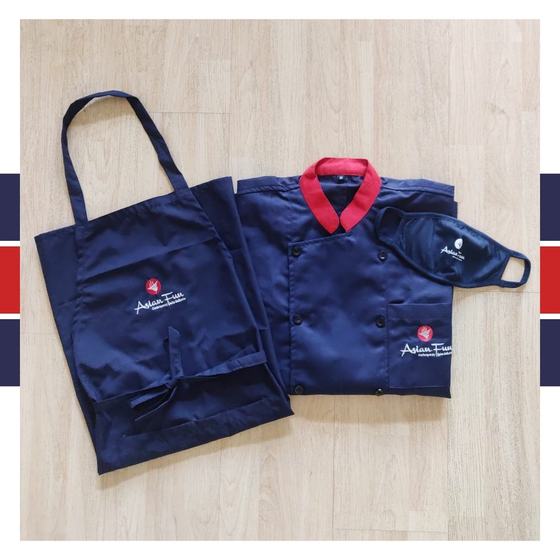
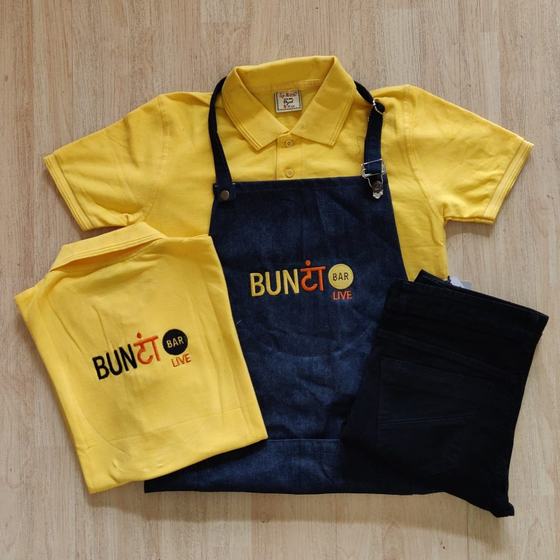
Aprons take the most abuse of any uniform piece and sit front and centre in every photograph. Custom lets you choose the fabric (canvas, denim, leatherette or waterproof), strap style (neck loop or cross-back), pocket layout for the role, and branding that survives the wash. See canvas vs denim vs leather aprons.
When the brand is the product
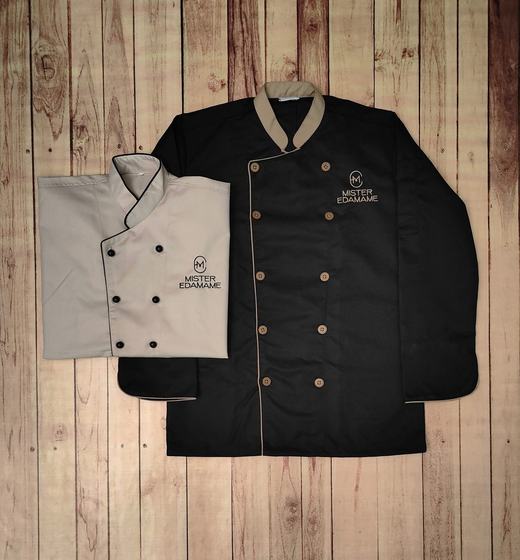
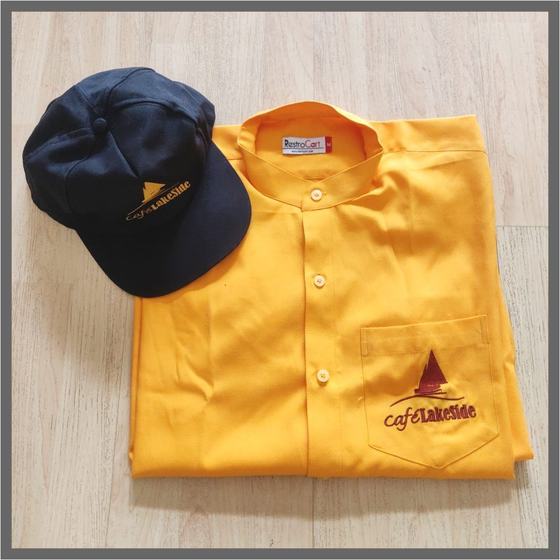
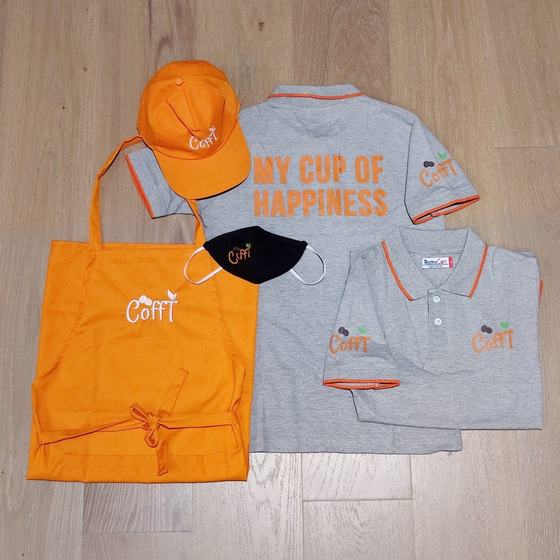
If your concept depends on a look, a signature teal, a Nehru collar, a playful line on the back of a tee, readymade cannot deliver it. Guests photograph staff more than most owners realise, and a uniform that is recognisably yours turns every photo into brand content.
When you plan to grow
The second outlet is where readymade uniforms quietly fail. The catalogue has changed, the shade is discontinued, and outlet two looks like a different company. Custom uniforms come with a spec sheet, so outlet five matches outlet one. We explain how multi-outlet programmes work in our hotel F&B uniform guide.
Cost per wear: the number that decides it
The fairest way to compare is cost per wear: what you pay for a garment divided by the number of shifts it survives looking presentable. A cheaper coat that looks tired after a few months of daily washing can cost more per wear than a better coat that lasts a year or more. The comparison depends on your laundry, your menu and your standards, so run it with your own numbers:
Work out cost per wear for any uniform
- Price per piece, including branding and delivery.
- Sets per person (usually three for chef coats and aprons, two to three for service shirts).
- Shifts per week each piece is worn.
- Months until it fades, shrinks, tears or stops looking presentable.
- Cost per wear = price per piece divided by (shifts per week x weeks it lasts).
Owners who do this sum usually find that the kitchen and aprons are where custom pays back fastest, while basic tees are closer to a draw. Our restaurant uniform cost guide covers the other drivers of budget: sets per person, replacement cycles and opening versus annual orders.
Not sure which pieces are worth customizing? Send us your team split and budget. We will tell you honestly where custom pays off and where branded basics are enough.
WhatsApp +91 98213 34906 Email info@restrocart.comThe hybrid approach most restaurants should consider
It does not have to be all or nothing. A setup that works for many casual dining restaurants and cafes:
| Role | Recommended approach | Why |
|---|---|---|
| Chefs | Custom chef coats and aprons | Heat, hot washing and open-kitchen visibility |
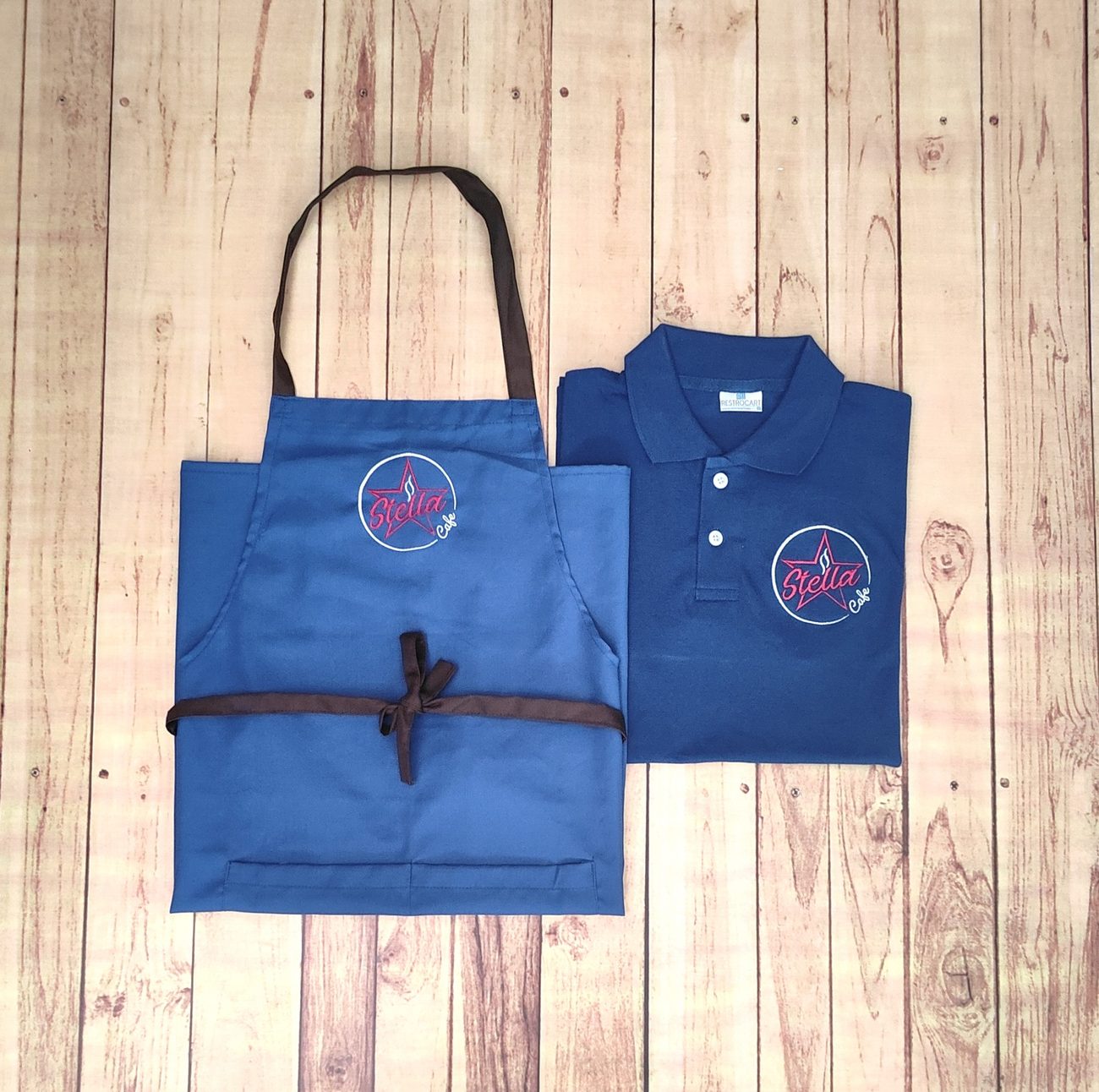
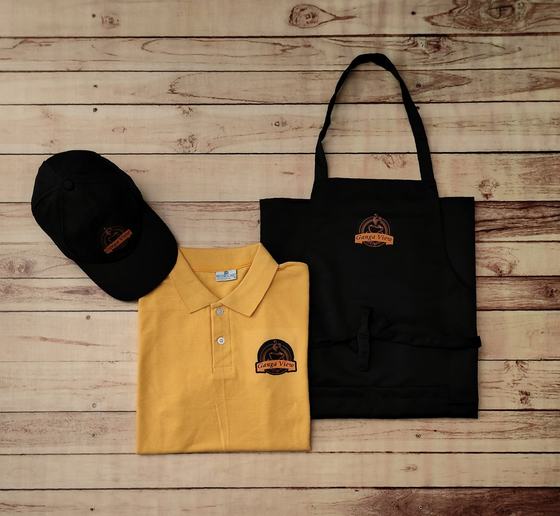
| Service team | Custom aprons over branded polos or shirts | The apron carries the brand; the polo can be simpler |
| Bar | Custom leatherette or denim apron | The bar is the most photographed station |
| Housekeeping | Custom set in stain-tolerant fabric | Readymade rarely comes in ladies' and gents' fits in one shade |
| Managers | Custom waistcoat or blazer, tailored | Worn all day; must read as leadership |
| Temporary or event staff | Readymade tees with embroidered logo | Fast, affordable, easy to scale |
Questions to ask yourself before deciding
- How many people will wear this uniform in the next twelve months, including turnover?
- Is our brand colour a standard stock colour, or something specific?
- Will we open a second outlet within two years?
- How are uniforms washed: in-house, by staff at home, or by a commercial laundry?
- Do guests see the kitchen?
- When do we actually need the uniforms, and is there time for a sample?
If you answered "more than eight", "specific", "yes", "commercial laundry", "yes" and "six weeks or more", custom is almost certainly the better investment.
Signs it is time to move from readymade to custom
Many restaurants start with readymade uniforms and switch later. These are the signals that the switch will pay off:
- You are reordering every few months. If uniforms are fading, shrinking or tearing fast enough that you reorder constantly, better fabric will cost less over the year.
- Colours no longer match. When this month's batch is a different shade from last month's, the catalogue has changed underneath you.
- Staff complain about fit. Readymade size charts often suit nobody well, and uniforms that do not fit are uniforms staff avoid wearing.
- You are opening a second outlet. This is the moment to lock in a specification that can be repeated.
- Guests are photographing your team. If your staff appear in reels and reviews, the uniform has become marketing, and it should look like your brand.
- You have rebranded. A new logo and palette are the natural point to design uniforms around them rather than squeezing them onto stock garments.
The switch does not have to happen all at once. Start with the pieces that wear out fastest or matter most, usually chef coats and aprons, and move the rest over at the next reorder.
What customization actually includes
"Custom" covers a range. At the lighter end, it means choosing a stock garment style in your colour with your branding. At the fuller end, it means designing the garment: colour-blocked panels, contrast piping, bespoke pocket layouts, printed linings, a woven label with your name. RestroCart works across that whole range, from branded polos for a new QSR to complete eight-role uniform systems like the one we made for Bayleaf. Branding options include embroidery, screen printing, DTF, sublimation, woven patches and leather patches.
Our honest recommendation
If you are opening a restaurant with a real team, a real brand and a plan to be around in three years, customize the kitchen, the aprons and the leadership roles at minimum. Use branded basics where they genuinely do the job. And whichever route you take, never skip the sample for anything you will order in bulk.
Get a custom quote you can compare. Share your roles and headcount. We will send options at two budget levels so you can see the difference for yourself.
WhatsApp +91 98213 34906 Email info@restrocart.com