Buying guide, Uniforms
How to Choose a Restaurant Uniform Manufacturer in India: 15 Questions to Ask Before You Pay an Advance
Every restaurant owner in India eventually has the same bad week. The uniforms arrived late, the maroon on the aprons does not match the maroon on the shirts, two of the chef coats have already shrunk a size, and the supplier who was so responsive before the advance has gone quiet on WhatsApp. Most of that pain is avoidable, and almost all of it can be spotted before you pay a single rupee.
We have been on the manufacturing side of this conversation since 2018, making uniforms for more than 200 F&B brands from our studio in Naraina, New Delhi. This guide is the checklist we would use if we were the buyer: fifteen questions to ask any restaurant uniform manufacturer, what a good answer sounds like, and the red flags that should make you walk away. Use it on us, too.
Why a restaurant needs a specialist, not just a garment unit
India has thousands of garment manufacturers, and many of them make excellent corporate shirts or school uniforms. Restaurant uniforms are a different problem. A chef coat has to breathe beside a tandoor running above 45 degrees, survive daily hot washes with industrial detergent, and still look crisp when the chef walks out to greet a table. A server's half apron needs pockets in the right place for a notepad, a pen and a card machine. Housekeeping fabric has to forgive bleach splashes. A bartender's apron has to handle ice water, citrus and sticky syrups.
A specialist has already solved these problems a hundred times. A generalist will solve them on your order, at your cost. The difference shows up in month three, when the uniforms have been through sixty wash cycles.
The 15 questions to ask before you pay an advance
1. Can you show me real restaurant work, with client names?
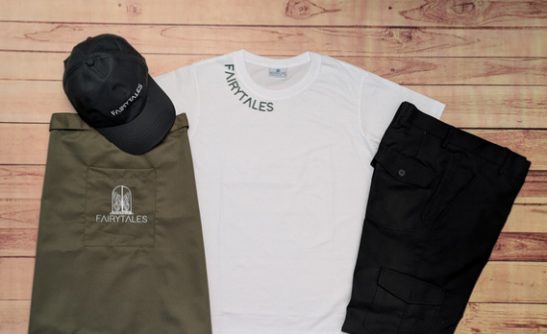
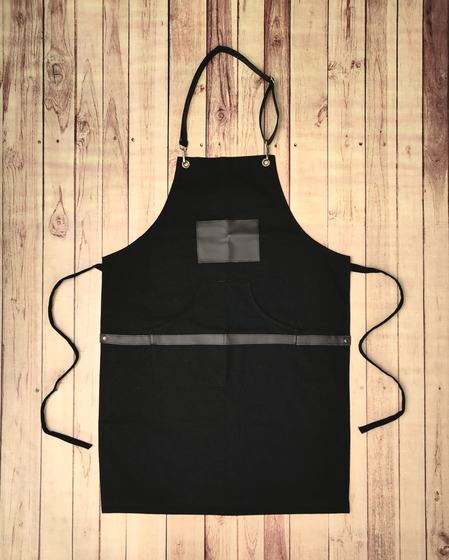
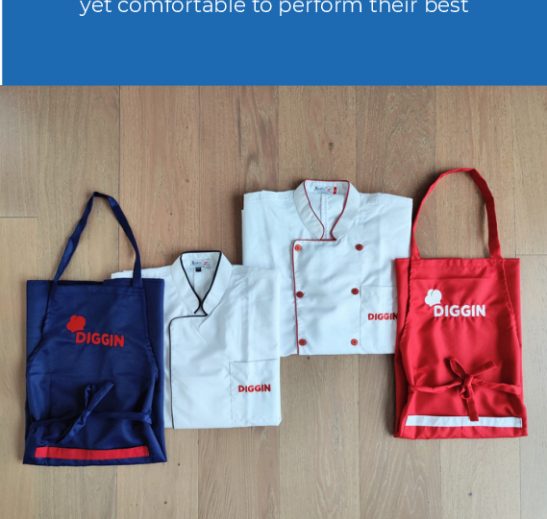
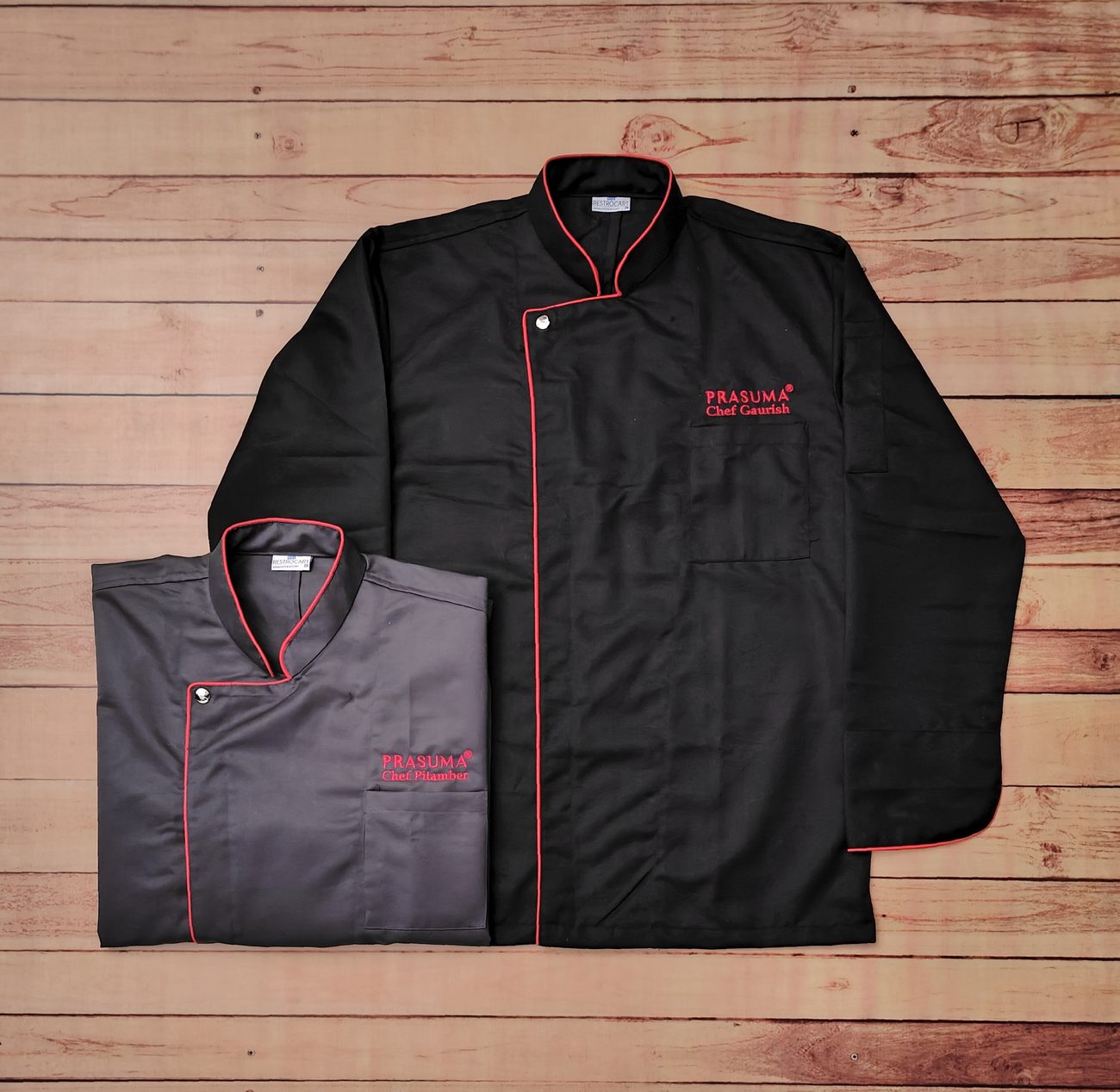
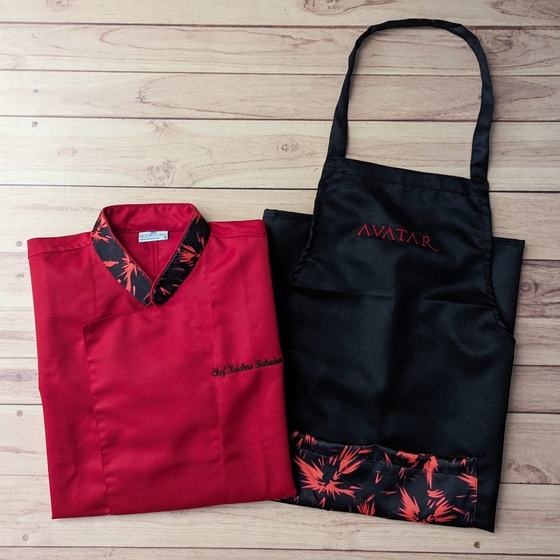
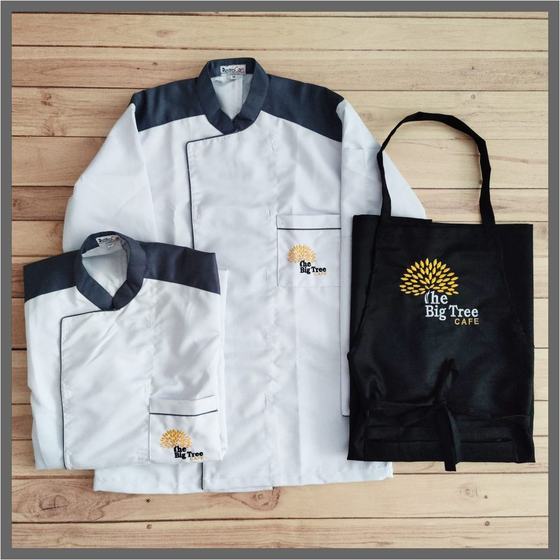
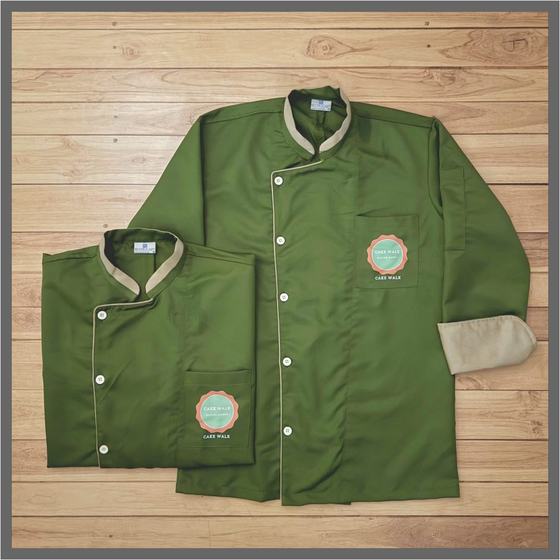
Stock photos of models in white chef jackets tell you nothing. Ask for photographs of actual deliveries, ideally flat-lays of finished pieces and photos of staff in service, and ask which restaurants they were made for. A manufacturer proud of its work will name clients happily. You can browse ours on the work gallery, where every piece is tagged by product and, where the client agreed, by brand.
Red flag: "Our clients are confidential" for every single job. Some clients do ask to stay unnamed; none of a supplier's clients wanting that is unusual.
2. What exactly is the fabric: blend, weave and GSM?
"Premium cotton" and "imported fabric" are not specifications. A good quote says something like 65:35 poly-cotton twill, 210 GSM or 100% cotton canvas, 10 oz. That precision is what lets you compare two quotes honestly, and it is what protects you if the bulk order arrives thinner than the sample. If you are unsure what these numbers mean, our chef coat fabric guide and polo GSM guide explain them in plain English.
3. Will you make a physical sample before bulk production?
This is the single most important question on the list. A digital mockup shows you design intent; only a physical sample shows you fabric hand-feel, true colour, embroidery density, collar construction and fit. For a team order, the sample should be one complete set per role in the actual fabric, with the actual branding.
Red flag: a supplier who wants to go straight to bulk "to save time". It never saves time. It moves the mistakes from the sample stage, where they are cheap, to the bulk stage, where they are not.
4. Is embroidery and printing done in-house or supervised by you?
Branding is where most quality problems live: puckered embroidery, logos that are a few millimetres off-centre across a batch, prints that crack after ten washes. Ask whether branding happens in-house or with a partner they supervise directly, and ask to see close-ups of embroidery on a finished garment. Our embroidery vs printing guide explains which method belongs on which garment.
5. Do you understand the difference between roles?
A good manufacturer will ask you about your roles before quoting: how many chefs, how many on the floor, whether the bar is separate, whether housekeeping is in-house, whether managers need a distinct look. If the conversation starts and ends with "how many pieces", they are selling garments, not a uniform system. Our role-by-role uniform guide shows how the pieces fit together.
6. How do you handle sizing for a mixed team?
Indian restaurant teams span a wide range of body types, and standard size charts from export garment units often run narrow. Ask whether they provide a size set for your team to try on, whether they offer ladies' fits for shirts and housekeeping tunics, and how they handle one-off sizes. See our uniform sizing guide for the process we use.
7. What is the timeline, in writing, from sample approval to delivery?
Get two dates: when the sample will be ready, and how many days after sample approval the bulk order ships. Our typical timeline is two to three weeks for design and sampling, then two to four weeks of production. Treat any supplier promising a complete custom team order in a week with scepticism, and treat a supplier who cannot give dates at all with more.
8. Can you make everything, or will I need three more vendors?
A new restaurant needs chef coats, aprons, service shirts, caps, name badges, housekeeping sets and often winterwear, plus menus, coasters and packaging. Every extra vendor adds a colour-matching problem and another person to chase. There is a practical case for ordering uniforms and supplies together: shared artwork, one reorder conversation, and colours that actually match.
9. How will you match my brand colour?
Ask whether they work from Pantone references, physical swatches or "closest available". Fabric dyed to order behaves differently from stock fabric, and a colour that looks right on screen can look different under warm restaurant lighting. A good supplier sends physical fabric swatches before sampling. Our uniform colour guide covers how lighting and cuisine affect the choice.
10. What happens if something is wrong?
Ask directly: if pieces arrive with a defect, a wrong size or a branding error, what is the remedy and how fast? The answer should be specific: replace defective pieces, fix branding errors at their cost, and a realistic turnaround. Vague reassurance is not a policy.
11. Will you keep my specifications on file for reorders?
This question separates suppliers from partners. Six months from now you will hire four more stewards. You need the same fabric lot or the closest match, the same embroidery file, the same placement and the same sizing. A manufacturer who keeps a spec sheet for your brand makes reorders a one-line WhatsApp message.
12. Can you deliver to my city, and how are measurements handled remotely?
If your restaurant is outside the supplier's city, ask how swatches, samples and measurements will move. We run most out-of-town projects over WhatsApp, video calls and courier, and deliver to cities from Amritsar and Srinagar to Guwahati and Goa. Our note on delivering uniforms across India covers what changes by climate and region.
13. What is included in the price?
Line up two quotes and check what each one includes: fabric, stitching, embroidery or print, digitising charges for the logo, packaging, and delivery. A low per-piece price can hide separate setup charges. Ask for one all-in number per set.
14. How should we care for these uniforms?
A supplier who understands their product will tell you how to wash it: temperature, detergent, whether to turn embroidery inside out, and what will fade it early. If they cannot answer, they have probably not seen their uniforms after sixty washes. Our uniform care guide is the advice we give every client.
15. Who is my single point of contact?
Restaurant openings move fast and change often. You need one person who knows your order, answers on WhatsApp, and can make decisions. Ask who that is before you pay.
Want to run these questions past us? Send your team size, roles and opening date. We will reply with fabric options, a sampling plan and a written timeline.
WhatsApp +91 98213 34906 Email info@restrocart.comHow to compare two uniform quotes side by side
Once you have quotes, put them in a simple grid. The cheapest line rarely wins once you account for what is missing.
| What to compare | What a strong quote shows | What a weak quote shows |
|---|---|---|
| Fabric | Blend, weave and GSM per garment | 'Premium cotton', 'best quality' |
| Sample | Physical sample per role before bulk | Mockup only, sample 'if needed' |
| Branding | Method, size and placement per piece; digitising included | 'Logo included', no detail |
| Sizing | Size set or measurement process; ladies' fits available | S, M, L, XL only |
| Timeline | Sample date plus bulk days after approval | 'Two to three weeks', no start point |
| Reorders | Spec sheet kept on file | Not mentioned |
| Price | All-in per set, delivery stated | Per piece, extras added later |
Red flags that should make you walk away
- No physical sample. The most expensive shortcut in uniform buying.
- No fabric specification. You cannot hold anyone to a promise that was never written down.
- Only stock photos. If they cannot show their own work, ask yourself why.
- Full payment upfront for a custom order. A part advance against an approved sample is normal; paying everything before you have seen anything is not.
- One size chart for everyone. Your team is not a size chart.
- Silence on reorders. If they are not thinking about month six, they will not be there in month six.
Specialist manufacturer, tailor, or readymade catalogue?
Not every restaurant needs a custom manufacturer on day one. Here is an honest view of when each option makes sense.
| Option | Best for | Watch out for |
|---|---|---|
| Local tailor | A few pieces, alterations, very small cafes | Inconsistent colour and sizing across batches; slow for teams |
| Readymade catalogue uniforms | Stop-gap needs, temporary staff, very tight budgets | Your restaurant looks like every other restaurant; limited sizes |
| Hospitality uniform manufacturer | Any team of eight or more, new openings, multi-outlet brands | Needs two to six weeks; plan ahead |
We go deeper into the trade-offs in custom vs readymade restaurant uniforms.
What working with RestroCart looks like
Since you will likely ask us these questions, here are our answers up front. We are a design and manufacturing studio for hospitality, founded in 2018 by Raashi Gupta and Vasudha Gupta, with our studio at E-41, Naraina, New Delhi. We make every uniform role, chef, service, bar, hostess, housekeeping and management, plus caps, winterwear and name badges, alongside tableware, merchandise and packaging, so a restaurant can dress its team and its tables in one conversation.
- Brief: you share your roles, headcount, brand files and opening date on WhatsApp or email. Our uniform brief template makes this a ten-minute job.
- Design and swatches: our design team sends mockups per role and physical fabric swatches.
- Sampling: one complete set per role, in your fabric and branding, for your approval.
- Production: bulk production after sample sign-off, with quality checks before packing.
- Delivery: packed by staff name or size and delivered to your door, anywhere in India.
- Reorders: your specifications stay on file, so the next batch matches the first.
The full walk-through, with timings at each stage, is in how custom restaurant uniforms are made.
A final test: ask about their worst order
Here is a question most buyers never ask: "Tell me about an order that went wrong and what you did." Every manufacturer has one. The good ones answer immediately, explain what failed, and describe what they changed afterwards. That answer tells you more about how your order will be handled than any brochure. A supplier who claims nothing has ever gone wrong has either not made many uniforms or is not being straight with you. Ask us too; we would rather you hear how we fix problems before you need us to.
Ready to shortlist a manufacturer? Put us to the test with the fifteen questions above. We reply the same day.
WhatsApp +91 98213 34906 Email info@restrocart.com