Buying guide, Uniforms
How to Write a Restaurant Uniform Brief Your Supplier Can Actually Quote (Free Template)
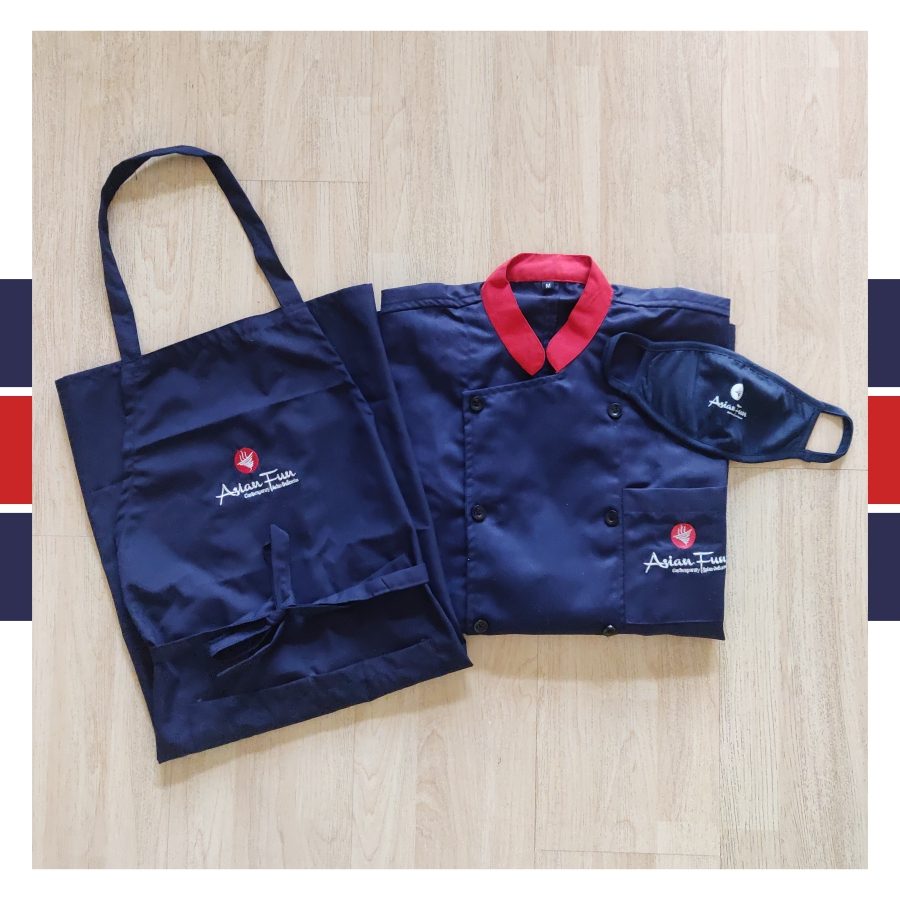
The fastest uniform orders we see all start the same way: a client sends one clear message with their logo, their roles, their headcount and their date. The slowest start with "Hi, need uniforms for my restaurant, please share price." Neither client is more demanding than the other. One simply gave the manufacturer enough to work with.
A good brief gets you accurate mockups in the first round, a quote you can compare with other suppliers, and fewer surprises at sample stage. This guide explains what to include and why, gives you a template to copy, and shows a filled-in example for a typical cafe.
Why the brief matters more than you think
A uniform manufacturer is making dozens of decisions on your behalf: fabric, weight, cut, colour, embroidery size and placement, size grading, packing. Every piece of information you leave out becomes a guess. Guesses are fine at mockup stage, but they are expensive once fabric has been cut.
A vague brief also makes quotes impossible to compare. If one supplier quotes a 160 GSM polo and another quotes a 220 GSM polo, the cheaper quote is not cheaper; it is a different product. A clear brief puts both suppliers on the same footing.
The ten things every uniform brief needs
1. Brand basics
Your restaurant name, city, concept and cuisine, and three words that describe the place. "Warm, rustic, Punjabi" leads to very different uniforms than "sleek, pan-Asian, cocktail-led". Add your brand colours as Pantone or hex codes if you have them, and attach your logo, ideally as a vector file.
2. Every role, with headcount
List each role separately with the number of people: chefs, commis, stewards, bartenders, hosts, housekeeping (split ladies and gents), managers and delivery riders. This is the single most useful line in the brief, because it decides how many garment designs are needed and how the uniform system is structured. Our role-by-role uniform guide can help if you are unsure which roles need a distinct look.
3. Garments per role
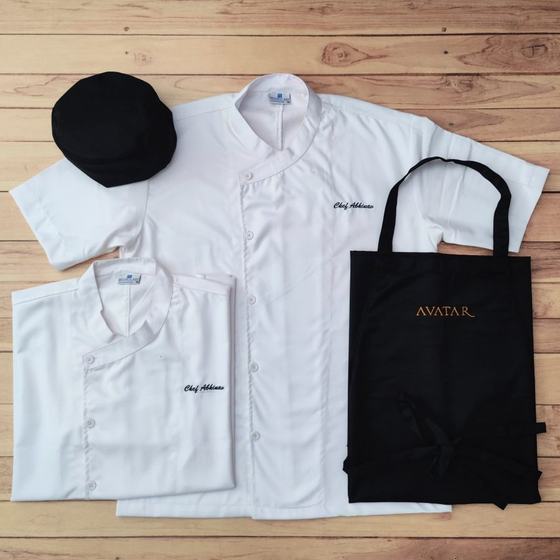
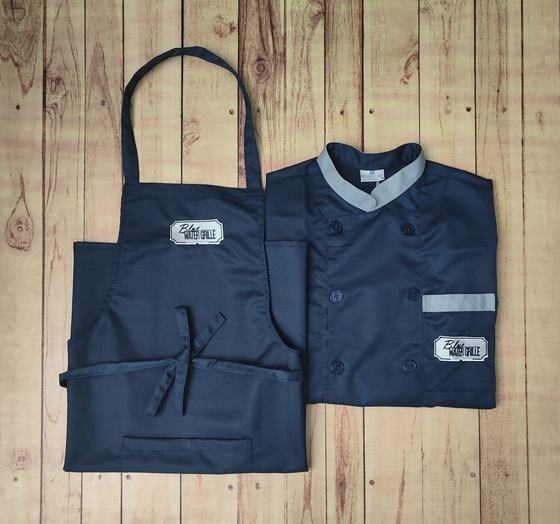
For each role, list what you imagine they will wear, even roughly: "chef coat, bib apron, skull cap" or "shirt, half apron, cap". If you are unsure, say so and ask for recommendations. It is equally useful to say what you do not want, such as "no ties" or "nothing white on the floor".
4. Sets per person
The usual standard is three sets per person for kitchen roles and two to three for service roles. If your laundry cycle is slow or staff wash uniforms at home, lean towards three. Our sizing guide covers spare ratios.
5. Must-haves and must-avoids
This is where operational knowledge goes: ladies' fits for shirts, cross-back aprons for long prep shifts, a pocket that fits your card machine, a thermometer pocket on chef sleeves, sleeve length for a hot kitchen, a religious or cultural consideration for head covering. These small notes shape the design more than any mood board.
6. Laundry
Tell the manufacturer how uniforms will be washed: an in-house machine, a commercial laundry, or staff washing at home. Commercial laundries use high temperatures and strong detergents, which favours poly-cotton blends and embroidery over print. Home washing is gentler but less consistent. Our uniform care guide explains the difference.
7. Budget range
Give a range per set or overall. It is not a negotiating weakness; it saves both sides a round of quoting things you will not buy. Ask for two options, a core option and a premium one, if you want to see the difference.
8. The real deadline
Give the date the uniforms must be in the building, not the opening date. You want uniforms at least two weeks before opening so staff can wear them during training. Our typical timeline is two to three weeks for design and sampling and two to four weeks for production; see how custom uniforms are made.
9. Other items you might need
If you will also need name badges, winterwear, menus, coasters or packaging, mention them now. A manufacturer who handles several categories can use the same artwork and colour references across all of them, which is where ordering together saves money.
10. One decision-maker
Name one person who approves mockups and samples. Uniform projects stall when approvals bounce between partners, chefs and designers.
Want us to fill in the gaps? Send whatever you have, even just a logo and a date. We will call back and complete the brief with you.
WhatsApp +91 98213 34906 Email info@restrocart.comThe template: copy, fill, send
Copy the text below into WhatsApp, email or a document, fill in what you know, and leave blanks where you want advice.
RESTAURANT UNIFORM BRIEF

1. Brand
   Restaurant name:
   City and address for delivery:
   Concept / cuisine:
   Three words that describe the place:
   Brand colours (Pantone or hex if known):
   Logo files attached (vector preferred): yes / no

2. Roles and headcount
   Chefs / commis:
   Stewards / servers:
   Bartenders:
   Hosts / hostesses:
   Housekeeping (ladies / gents):
   Managers / supervisors:
   Delivery riders:
   Other:

3. Garments wanted per role
   (e.g. chef coat + bib apron + skull cap; polo + half apron + cap)

4. Sets per person
   (we suggest 3 for kitchen, 2 to 3 for service)

5. Must-haves and must-avoids
   (e.g. no white on the floor; ladies' fits; cross-back aprons; pockets for card machine)

6. Laundry
   In-house machine / commercial laundry / staff wash at home

7. Budget range
   Per set or total:

8. Dates
   Uniforms needed in the building by:
   Opening / launch date:

9. Other items (optional)
   Name badges / winterwear / menus / coasters / packaging:

10. Contact
   Name, phone (WhatsApp), email:
Open this template in WhatsApp
A worked example: a 24-cover cafe in Gurgaon
Here is how a brief might look for a small all-day cafe with a coffee bar and an open kitchen. The details are illustrative.
| Brief item | Example answer |
|---|---|
| Concept | All-day cafe, specialty coffee, open kitchen. 'Bright, friendly, modern.' |
| Colours | Forest green and cream; logo in green |
| Roles | 4 cooks, 3 baristas, 5 servers, 2 housekeeping (1 ladies, 1 gents), 1 manager |
| Garments | Cooks: black chef tee + green bib apron + cap. Baristas: cream tee + green cross-back canvas apron. Servers: green polo + cream half apron. Housekeeping: two-tone tunic set. Manager: cream shirt + green waistcoat. |
| Sets | 3 per cook, 2 per barista and server, 2 per housekeeping, 2 shirts + 1 waistcoat for manager |
| Must-haves | Card-machine pocket on server aprons; ladies' fit polos; no white on the floor |
| Laundry | Commercial laundry, collected twice a week |
| Budget | Core option and one premium option for aprons |
| Deadline | In the building by 1 November; opening 15 November |
| Other | Name badges for all front-of-house staff; cork coasters |
From this brief a manufacturer can produce mockups for five roles, choose fabrics suited to a commercial laundry, quote accurately, and plan backwards from 1 November. That is one round instead of four.
Extra brief items for chains, hotels and caterers
Larger operations need a few more lines in the brief, because the uniform has to work across sites, seasons and changing teams:
Add these if you run more than one outlet
- Number of outlets, their cities and opening dates, and whether each outlet has its own name or identity.
- Which pieces are shared across outlets and which are outlet-specific (colour, crest or name).
- Expected annual headcount including turnover, so fabric can be reserved for reorders.
- Where stock will be held: centrally or at each outlet.
- Packing instructions: by outlet, by role or by staff name.
- Any procurement requirements: vendor registration, invoicing format, purchase order process.
- Seasonal needs: winterwear for north Indian outlets, lighter fabrics for coastal ones.
- For caterers: spare ratios for temporary staff, and whether uniforms travel between events.
Our guides on hotel multi-outlet uniform programmes and banquet and catering uniforms go deeper on these.
Common brief mistakes
- Only a logo and "please quote". Without roles and headcount, any quote is a guess.
- A mood board with no operations detail. Beautiful references do not tell the supplier that your kitchen runs a tandoor or that servers carry a card machine.
- Opening date instead of in-building date. This quietly removes the two-week buffer you need.
- Too many decision-makers. Name one approver.
- Forgetting housekeeping and riders. They are guest-facing too, and adding them later means a second setup.
What happens after you send the brief
At RestroCart, a brief usually turns into mockups within a few days, followed by physical fabric swatches and then one complete sample set per role. Once you approve the samples, production runs two to four weeks and we deliver to your door anywhere in India, packed by staff name if you like. If you are still comparing suppliers, our fifteen questions to ask a uniform manufacturer will help you judge the replies you get.
Send your brief today. Fill in the template, attach your logo, and message us. We reply the same day.
WhatsApp +91 98213 34906 Email info@restrocart.com