Buying guide, Uniforms
Monsoon Rainwear for Restaurant Staff: Raincoats, Windcheaters and Waterproof Aprons for Riders, Valets and Outdoor Teams
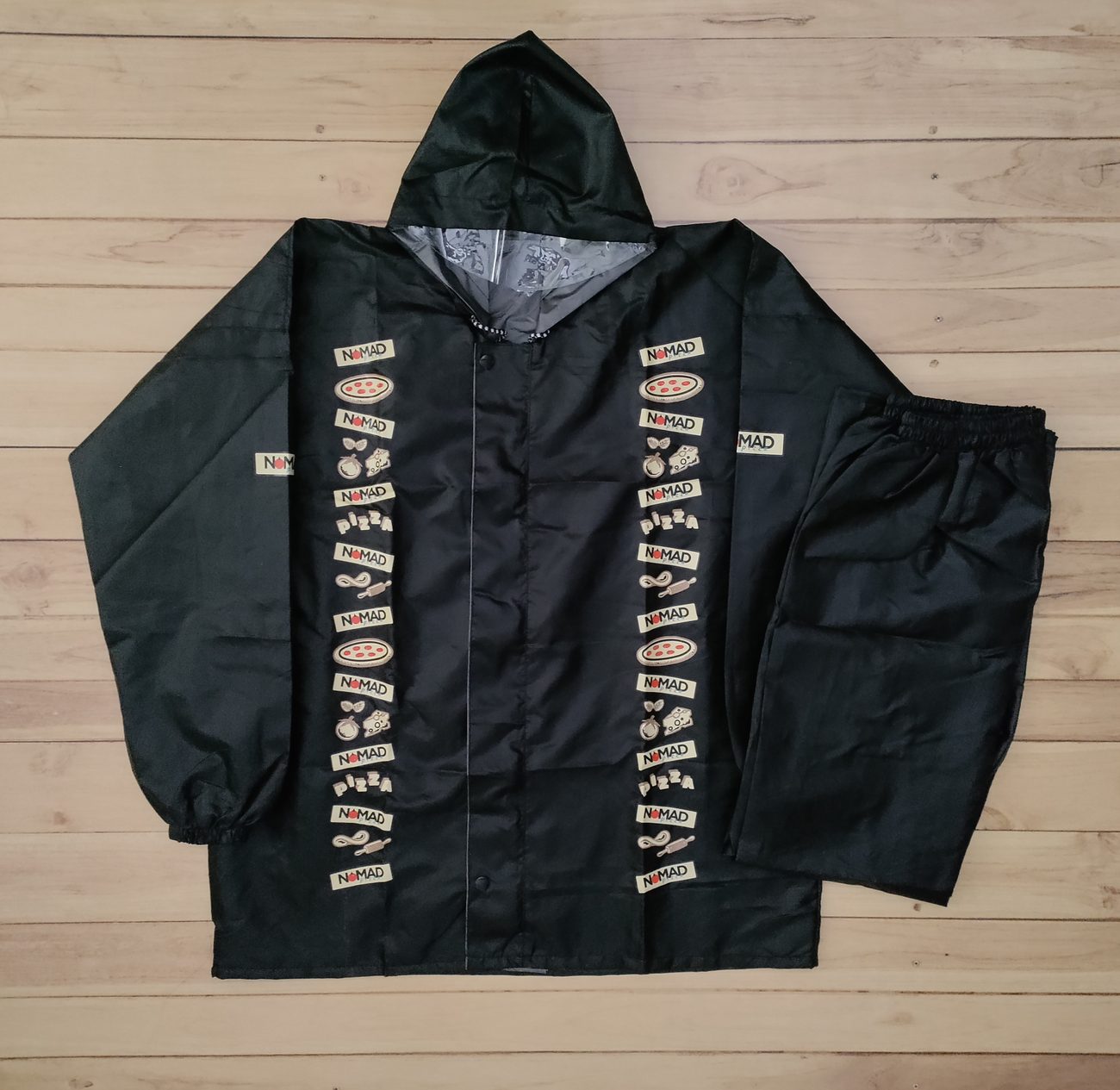
The monsoon is the season when a restaurant's outdoor team is most visible and least protected. Delivery orders spike the moment it rains, valets run between the porch and the parking lot every few minutes, and the staff who receive supplies or work the outdoor wash area are soaked by the first hour. A cheap plastic raincoat from the market solves the problem for a week. The right monsoon rainwear, properly branded, solves it for the season and turns your riders into moving signage while it does.
This guide covers rainwear for restaurant staff role by role: rain suits for delivery riders, long raincoats for valets and doormen, windcheaters for drizzle, and waterproof aprons for wet stations. It also explains the fabric and construction details that separate real rain protection from a jacket that only looks the part.
Which roles need rainwear, and what each one needs
Not every role needs the same garment. The rider on a scooter, the valet at the porch and the kitchen porter at the wash area get wet in completely different ways.
| Role | Best garment | Why |
|---|---|---|
| Delivery riders | Two-piece rain suit: hooded jacket plus trousers | Rain comes from every angle on a two-wheeler; trousers keep the lap and legs dry |
| Valets and doormen | Long hooded raincoat to the knee or below | Quick on and off over the uniform; covers trousers when standing and walking |
| Outdoor servers and terrace staff | Light hooded windcheater or packable rain jacket | Short dashes in drizzle; must not look heavy near guests |
| Security and gate staff | Long raincoat or rain suit, depending on shelter | Long periods outdoors, often without cover |
| Dishwash, receiving and outdoor prep | Waterproof bib apron, sometimes with sleeve covers | Splashes and spray rather than rain |
| Kitchen staff crossing open yards | Shared hooded ponchos kept at the door | Occasional use; no need for individual sets |
Our guide to cloud kitchen and delivery rider uniforms covers the rest of the rider kit, including insulated delivery bags, and our guide to valet parking uniforms covers what valets wear the rest of the year.
Waterproof vs water-resistant: the fabric decides
Most monsoon disappointments come from buying a water-resistant jacket and expecting it to be waterproof. The difference is in the fabric coating and how the garment is put together.
- PVC-coated polyester: fully waterproof, durable, easy to wipe clean. Heavier and less breathable, so it can feel sticky in humid weather. A good choice for valets and security who stand in the rain.
- PU-coated polyester or nylon: waterproof, lighter and softer than PVC, and folds small into a pouch. The best all-round choice for delivery riders.
- Polyester taffeta or microfibre with a water-repellent finish: sheds drizzle and blocks wind, but steady rain soaks through at the seams and shoulders. This is a windcheater, not a raincoat.
Ask your supplier which of these you are getting, and ask to see the sample in the rain, or under a running tap, before you approve it.
Construction details that keep riders dry
Two raincoats in the same fabric can perform completely differently. These are the details worth checking on the sample.
Seams
Every stitch line is a potential leak. The best rainwear has taped or sealed seams at the shoulders and the back yoke, where rain lands hardest. At minimum, the shoulder seams should sit slightly forward or be covered by a yoke so water runs off instead of into the stitching.
Zip and storm flap
A plain zip lets water straight through. A rider's jacket needs a storm flap, a strip of fabric that closes over the zip with press studs or hook-and-loop, so rain hitting the chest at speed does not reach the zip at all.
Hood
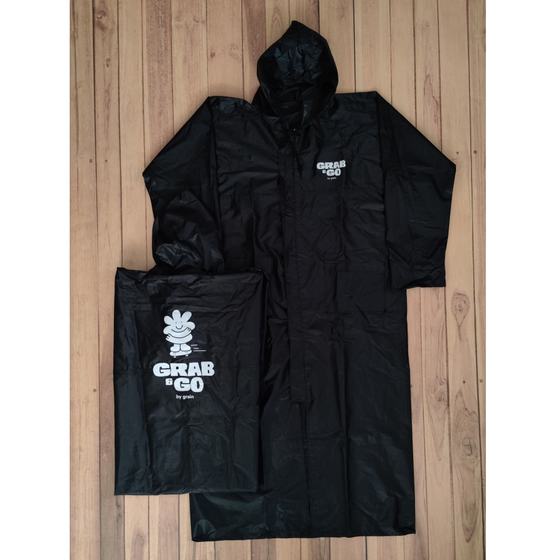
The hood should fit over a helmet or be designed to tuck into the collar when the rider wears one. A small peak keeps rain off the face, and a drawcord stops the hood blowing back. For valets and doormen, a hood that stows in the collar keeps the look tidy when it stops raining.
Cuffs, hems and trouser waist
Elasticated or adjustable cuffs stop water running up the sleeves when riders hold the handlebars. Trousers need an elastic waist with a drawcord, and ankle openings wide enough to pull on over shoes, with a press-stud tab to close them.
Ventilation and lining
Monsoon humidity makes sealed rainwear hot. A vented back yoke, underarm eyelets or a mesh lining makes a real difference on a six-hour shift. A printed or mesh lining also keeps the coated surface off the skin.
Carry pouch
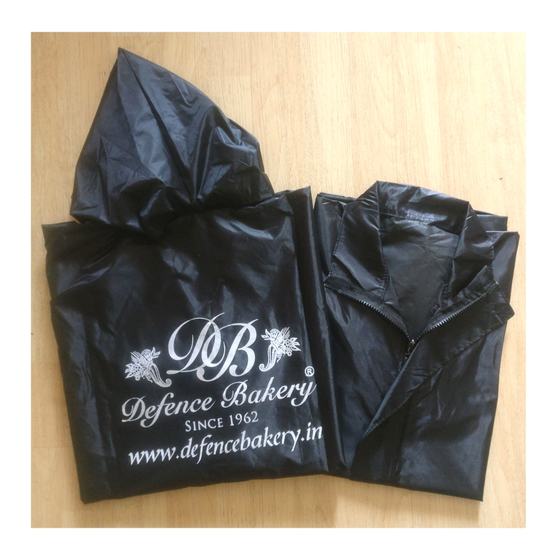
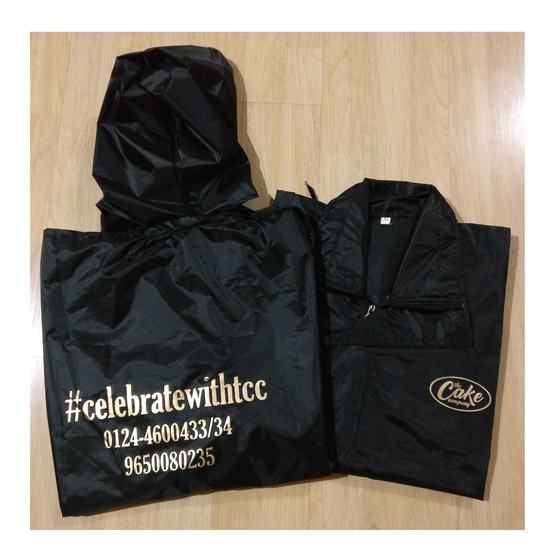
A matching pouch lets riders fold the suit into the delivery bag or under the scooter seat when the rain stops. It is also one more branded surface.
Kitting out riders or valets for the monsoon? Send us your headcount by role and your city. We will suggest the right fabric, a branding layout and a timeline planned around the rains.
WhatsApp +91 98213 34906 Email info@restrocart.comReflective details are a safety feature, not decoration
Riders spend monsoon evenings in rain, poor street lighting and heavy traffic. Reflective tape or piping on rainwear is one of the cheapest safety measures a delivery brand can take. Place it where headlights will catch it from behind and from the side:
- A horizontal band across the upper back, below the shoulder blades.
- Bands or piping on both sleeves, around the forearm.
- Piping along the shoulder seams or back yoke.
- A band around each trouser leg below the knee.
Valets working a dark driveway benefit from the same treatment, in a slimmer tape or piping that keeps the coat looking smart. Reflective details also make a printed logo readable at night, because the eye is drawn to the lit area.
Branding rainwear: print, don't embroider
This is the one place where we recommend printing over embroidery almost every time. Embroidery punches hundreds of needle holes through the waterproof coating, and the logo becomes the leakiest part of the jacket. A screen print or heat-transfer print keeps the fabric sealed. Our embroidery vs printing guide explains the difference on other garments.
Placement matters more on rainwear than anywhere else, because riders are seen from behind at traffic signals for minutes at a time:
- Large back print: the main branding surface. Logo, and if you like, a short line such as your order number, website or hashtag. Keep it bold and high-contrast so it reads from a car.
- Small chest print: the logo mark only, on the left chest.
- Sleeve print: a small mark on one sleeve, which is visible from the side on a scooter.
- Pouch and hood: a small logo on the pouch and, for valets, the back of the hood.
Keep it legible. A rain-streaked jacket with a thin, detailed logo just looks like a black jacket. Simplify the artwork for rainwear and let your design team adapt it.
Waterproof aprons for wet stations
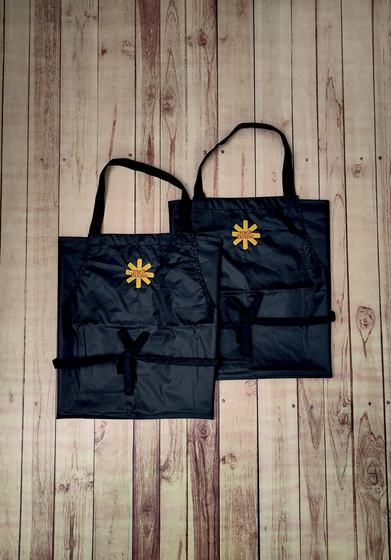
The monsoon also brings wetter back-of-house conditions: outdoor wash areas, deliveries unloaded in the rain, floors that never quite dry. Waterproof bib aprons in coated fabric protect the uniform underneath and wipe clean in seconds. We covered them in depth in our waterproof aprons guide; for the monsoon, the main points are a full-length bib that reaches below the knee, a neck strap that adjusts, and a printed logo so even the dishwash team looks part of the brand.
Colour and visibility
Black and navy are the most common rainwear colours for restaurant teams, because they hide mud splashes and look smart over any uniform. The trade-off is visibility. If your riders are on the road at night, either add generous reflective tape to a dark rain suit or use a brighter brand colour on the upper body. Some brands go further and make the rider rain suit in their signature colour so it is recognisable across a street; this works well when the colour is strong and the logo is printed large.
Care: making rainwear last the whole season
- Hang rainwear to dry in the shade after every shift. Folding it away wet is the fastest way to mildew and a sour smell.
- Rinse off mud with plain water and a soft brush; avoid machine washing on hot, which damages coatings and prints.
- Never iron over a print or a coated surface.
- Check seams, studs and zips weekly and replace a damaged set early rather than letting a rider ride wet.
- At the end of the monsoon, wash gently, dry completely and store folded in the pouch.
Monsoon rainwear order checklist
- Headcount by role: riders, valets, outdoor staff, wash area.
- Garment per role: rain suit, long raincoat, windcheater or waterproof apron.
- Fabric: PU or PVC-coated, confirmed on the quote.
- Storm flap over the zip, adjustable hood and elastic cuffs on rider jackets.
- Reflective tape positions for riders and valets.
- Printed branding: back, chest, sleeve and pouch artwork approved.
- Size spread, including a size up for wearing over winter layers later in the year.
- A spare set per rider on long shifts.
- In-hand date before the monsoon reaches your city.
Timeline: brief before the first clouds
The monsoon reaches Kerala first, arrives in Goa and Mumbai in early June, and moves north through June and into July. Suppliers get busy with rainwear from May. Working back from a mid-June in-hand date, brief your supplier in April or early May, approve a sample within two to three weeks, and allow two to four weeks for production. If you operate in several cities, order for the earliest one. The same timing applies if you want to add a matching windcheater or zipper jacket for the cooler months, since the two can share artwork and colour references.
Get a quote for branded monsoon rainwear
RestroCart makes custom rain suits, long raincoats, windcheaters and waterproof aprons for restaurants, cafes, cloud kitchens, bakeries and hotels, from our studio in Naraina, New Delhi, and we deliver anywhere in India. Send your headcount by role, city and logo on WhatsApp at +91 98213 34906, or put your request together on our quote page. You can also browse outerwear we have made in the winterwear and rainwear gallery.
Get your riders rain-ready. Share your rider count and logo today and we will send fabric options and a printed mockup.
WhatsApp +91 98213 34906 Email info@restrocart.comSee the real thing: 51 jackets and windcheaters we have made