Buying guide, Uniforms
Summer Kitchen Uniforms for Indian Heat: Breathable Fabrics, Half Sleeves, Ventilation Panels, Lighter Caps and How Many Sets per Cook
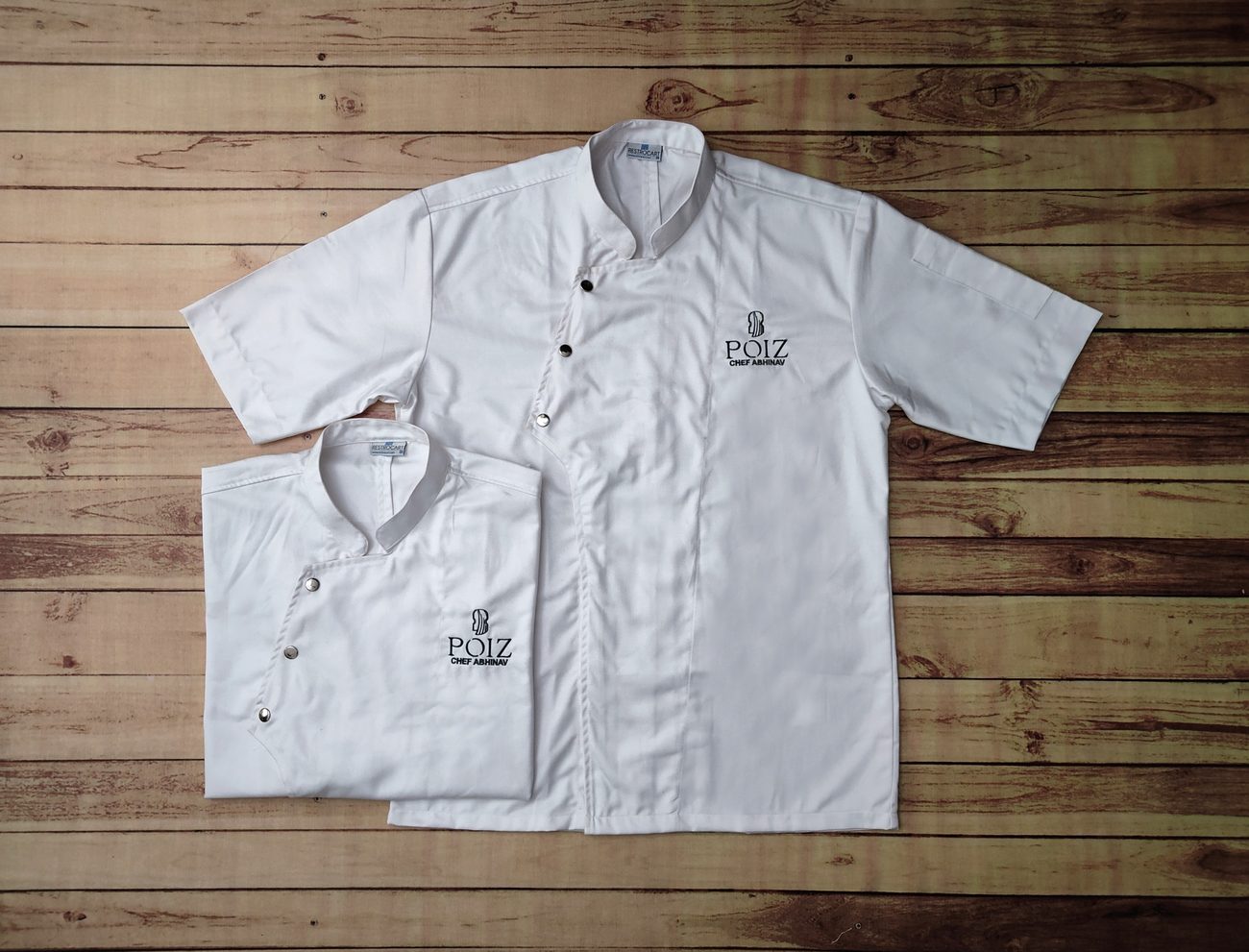
An Indian kitchen in May and June is one of the hottest workplaces in the country. Between tandoors, burners, fryers and the outside temperature, cooks can spend a full shift in serious heat. The right summer kitchen uniforms will not make that heat disappear, but a breathable fabric, a sensible sleeve, some ventilation and enough fresh sets make a real difference to comfort, hygiene and how your team feels at the end of the day.
This guide covers what we recommend to restaurants across north India and beyond when they ask how to keep cooks cool: fabric, weight, cut, sleeves, ventilation, headwear, t-shirt alternatives and how many sets to order.
Where the heat actually comes from
It helps to be clear about the problem. In a kitchen, heat reaches the cook in three ways: radiant heat from flames, tandoors and ovens; hot, humid air trapped under hoods and low ceilings; and the cook's own body heat, which rises with physical work. A good summer uniform does two things: it lets sweat evaporate and heat escape, and it still shields the body from direct heat and splashes. Too heavy and it traps heat; too thin or too short and it exposes skin to burns.
Fabric: the biggest decision for summer comfort
| Fabric | Summer comfort | Maintenance | Best for |
|---|---|---|---|
| 100% cotton (poplin or light twill) | Excellent: breathes and absorbs sweat | Creases, dries slowly, may shrink | Head chefs, pastry, open kitchens with good airflow |
| Cotton-rich blend (around 60:40 cotton to poly) | Very good | Balanced; easier ironing | Most restaurant kitchens in summer |
| Poly-cotton 65:35, lighter weight | Good if the GSM is low | Easy care, colour-fast, dries fast | High-volume kitchens with commercial laundry |
| Heavy poly-cotton twill (200 GSM and above) | Warm | Very durable | Winter, air-conditioned kitchens |
| Polyester dry-fit (for tees) | Wicks sweat, dries very fast | Easy care; not for direct flame | Chef tees for QSR, cloud kitchens, prep |
| Lightweight denim or chambray | Moderate | Needs gentle washing | Cafes and open kitchens, not hot lines |
As a rule of thumb, a summer chef coat fabric sits in the lighter range, around 150 to 190 GSM, while a winter or all-season coat can go heavier. Weave matters too: an open, plain weave breathes better than a dense twill of the same weight. Our chef coat fabric guide explains blends and GSM in detail.
A note on polyester: 100% polyester coats are cheap and hard-wearing, but standard polyester traps heat and can melt if it touches a flame. Keep it for tees in low-risk roles, and choose cotton-rich fabrics near open flame.
Sleeves, cut and collar
Half sleeves for most stations
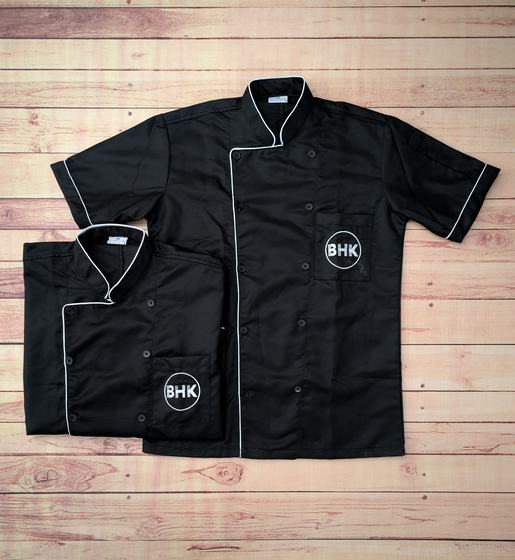
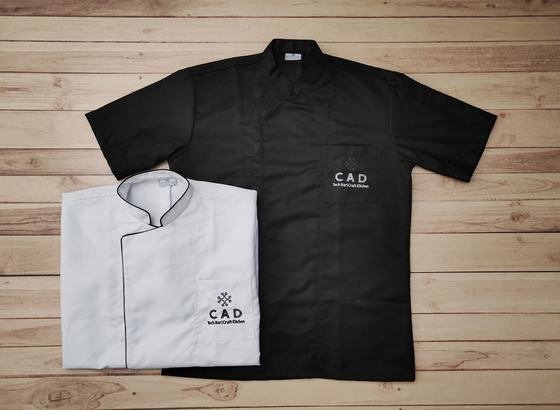
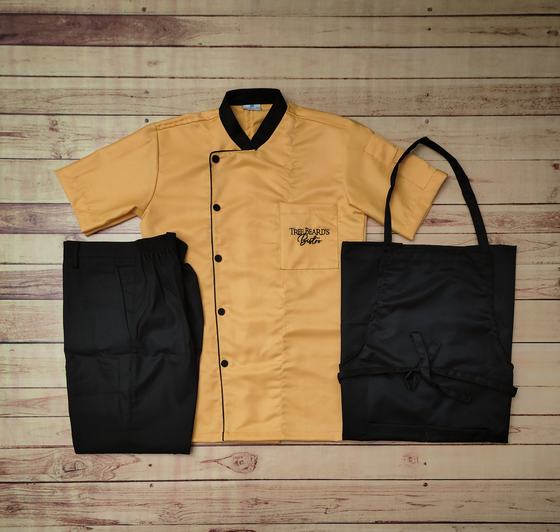
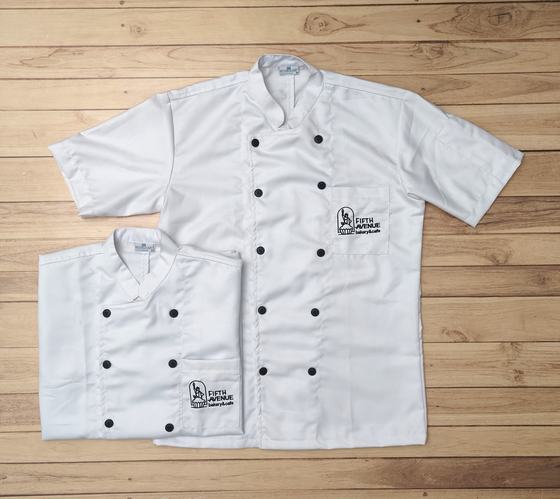
Half sleeves are the single biggest comfort upgrade for summer, and they make frequent hand and forearm washing easier. They suit prep, pastry, cold kitchen, bakery, cafes and many Indian curry lines.
Full sleeves where there is flame and oil
Keep full sleeves at the tandoor, grill, wok and deep fryer, where forearms need protection. A turn-back cuff lets cooks roll sleeves neatly between rushes. Our chef coat styles guide compares sleeve and front options.
A looser cut
Slim, tailored coats look sharp but trap heat. For summer, ask for a regular or relaxed fit with room across the back and under the arms, so air can move.
Softer, lower collars
A high, stiff collar is uncomfortable on a sweaty neck. A lower stand or mandarin collar with a soft, breathable lining is kinder in heat.
Ventilation: vents, mesh panels and single-breasted fronts
The body releases most heat and sweat from the underarms, upper back and sides. Uniform details that open these areas help more than anything else after fabric:
- Underarm mesh or eyelets let heat escape without exposing the front.
- A mesh or open-weave back yoke across the shoulders is popular for hot lines.
- Side mesh panels running from underarm to hem work well on half-sleeve coats.
- Side vents at the hem let air in at the bottom as the cook moves.
- Single-breasted or offset fronts are cooler than double-breasted, which puts two layers over the chest.
Mesh panels should be in a matching or darker colour so they do not look like a patch, and the seams need to be well finished so they survive daily washing.
Planning summer uniforms for your kitchen? Tell us your stations, cuisine and whether the kitchen is air-conditioned. We will suggest fabrics, sleeve lengths and ventilation details per role.
WhatsApp +91 98213 34906 Email info@restrocart.comChef t-shirts and polos: the coolest option
For cafes, QSR, cloud kitchens and prep teams, a branded chef t-shirt or polo with a bib apron is often the most comfortable summer uniform. In a moisture-wicking dry-fit fabric, sweat moves away from the skin and dries quickly. In a cotton or cotton-rich knit, it feels softer and more familiar.
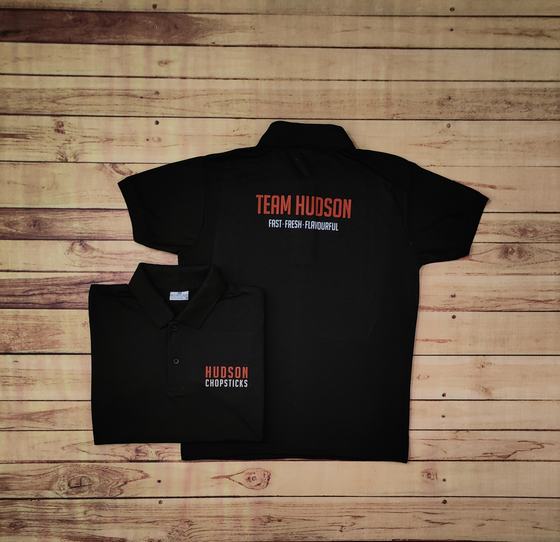
The trade-off is protection: a t-shirt does not shield the chest and arms from hot oil the way a coat does. A practical summer system is coats for flame and fryer stations and for the head chef, and branded tees for prep, pastry, packing and dispatch. Our guide to dry-fit vs cotton t-shirt uniforms explains the knit options.
Lighter caps and headwear
A thick cap traps heat and sweat around the head. Summer-friendly options:
- Skull caps in thin poplin or cotton, with a tie-back so they sit securely without a tight elastic band.
- Mesh-top or mesh-back skull caps, which contain hair but let heat out.
- Bandanas, which also absorb forehead sweat.
- Baseball-style caps with mesh backs for QSR and open counters.
Avoid tall toques and heavy caps on hot lines in summer. Our chef caps and headwear guide compares the styles.
Aprons and trousers in the heat
An apron adds a layer over the front of the body, so in summer it should be as light as it can be for the job. For most cooks, a poly-cotton or cotton bib apron is cooler than heavy canvas, and a waist apron is cooler still for stations where the chest does not need cover. Keep heavier or waterproof aprons for washing, butchery and fry stations, where protection matters more. Cross-back straps spread the weight across the shoulders and do not dig into a sweaty neck the way a single neck loop does.
Trousers matter too. Lightweight cotton or cotton-rich trousers with an elasticated or drawstring waist are far more comfortable than heavy polyester suiting trousers. Black and small checks hide spills; a relaxed fit lets air move around the legs.
How many sets per cook in summer?
In summer, a cook can sweat through a coat in a single shift. Wearing yesterday's coat is uncomfortable and unhygienic. Plan sets around that reality:
| Situation | Suggested sets per person |
|---|---|
| Standard kitchen, daily in-house laundry | 3 coats or tees, 3 caps, 2 to 3 aprons |
| Very hot line, cooks change mid-shift | 4 coats or tees |
| Staff wash at home or outsourced laundry with slow turnaround | 4 sets |
| Split system: coat for service, tee for prep | 2 to 3 coats plus 2 to 3 tees |
Add a small reserve of 10 to 15 percent for new joiners and size changes. Summer is also when turnover can rise, so it helps to keep a few spare sizes in stock.
Summer care: keeping uniforms fresh
Summer uniform care routine
- Wash after every shift; sweat left in fabric causes odour and yellowing.
- Pre-treat collars and underarms with a mild detergent before washing.
- Dry in shade or indoors with airflow; strong sun fades coloured coats quickly.
- Avoid fabric softener on dry-fit tees; it blocks the wicking effect.
- Check for mildew in humid months and never leave damp uniforms in bags or lockers.
- Retire coats with thinning underarms or broken studs rather than patching them.
More on wash temperatures and detergents in our uniform care guide.
Beyond the uniform: small things that help
Uniforms are one part of heat management. Kitchens that handle summer well also rotate cooks off the hottest stations, keep drinking water and electrolytes at the pass, fix exhaust hoods and fresh-air supply before summer, and schedule heavy prep for cooler hours. A cooler uniform works best alongside these.
Ordering summer kitchen uniforms from RestroCart
At RestroCart we make chef coats, chef tees, caps and aprons to order, with summer-weight fabrics, half sleeves and ventilation details specified per station. Our design team sends mockups and physical fabric swatches so you can feel the weight before deciding, then one sample per style. Production starts after you approve, typically two to four weeks after sampling, and we deliver anywhere in India. Order before the heat arrives: February and March are the ideal months to plan summer uniforms. You can see finished coats on our chef coats gallery, and if you are considering denim for an open kitchen, read our denim chef coats guide first.
Want cooler uniforms before the next heatwave? Send your team size and stations. We will reply with summer fabric options, swatches and a timeline.
WhatsApp +91 98213 34906 Email info@restrocart.comGet a quote for summer kitchen uniforms
A cook who is not fighting their uniform through a forty-degree afternoon can focus on the food instead. Message us on WhatsApp at +91 98213 34906 or list what you need in our quote builder, and we will come back with fabrics, samples and dates.
See the real thing: 31 dry-fit and full-sleeve t-shirts we have made