Buying guide, Uniforms
Denim Chef Coats for Open Kitchens and Cafes: Washes, Weights, Piping, Care, and When Denim Is the Wrong Choice
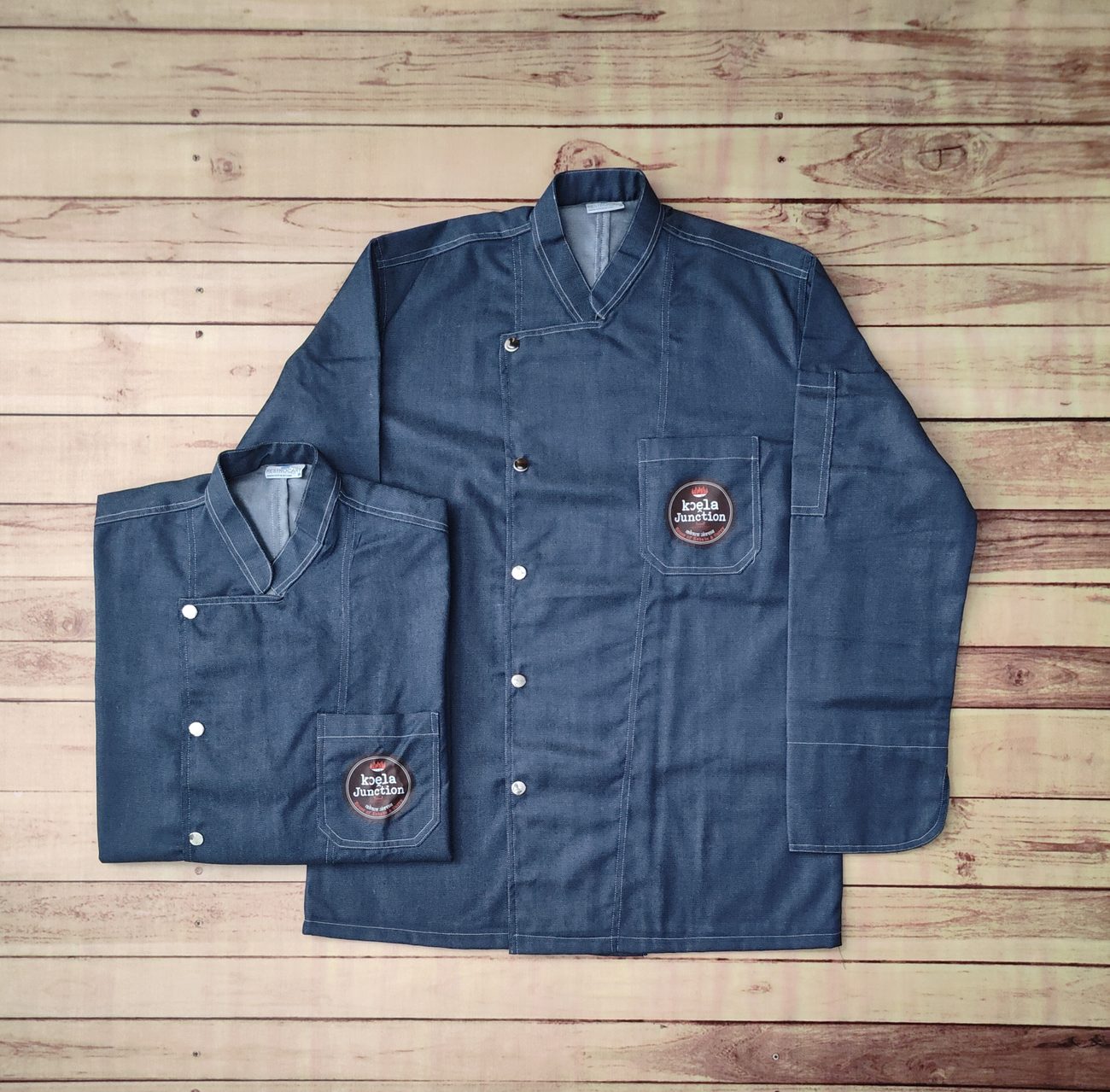
Denim chef coats have moved from a novelty to a standard choice for open kitchens, cafes, bakeries and chef-led bistros across India. When the kitchen is part of the room, a well-cut denim coat says "craft" in a way a plain white jacket cannot. But denim is also the fabric most often bought for the wrong kitchen, in the wrong weight, and then ruined in the wrong laundry.
This guide covers what we have learned making denim chef coats for restaurant teams from our New Delhi workshop: which weights and washes to choose, the construction details that make denim practical, how to brand it, how to care for it, and the kitchens where you should not use it at all.
Why denim chef coats work so well in open kitchens and cafes
Three things have made denim popular with chefs and restaurant founders:
- It photographs well. Open kitchens, chef's tables and counter seating put the cook in the guest's eyeline and on their phone. Denim reads warm and honest under restaurant lighting, where a bright white coat can look clinical.
- It forgives. A small sauce splash or flour smudge disappears into indigo far more easily than on white. For a cafe team doing breakfast, lunch and dinner, that matters.
- It ages well. A good denim coat fades gradually, which suits artisanal bakeries, coffee roasters and wood-fire kitchens whose brand is built on character rather than polish.
The catch is that denim is a heavier, denser weave than the poly-cotton or cotton twill most chef coats are made from, it bleeds dye in its early life, and it does not like bleach or very hot water. Everything below is about getting the benefits without those problems. If you are thinking about denim across the whole team, not just the kitchen, read our broader note on denim in restaurant uniforms.
Fabric weight: the decision that matters most
Denim is usually described by weight in ounces per square yard. Your jeans are probably 12 to 14 oz. That is far too heavy for a coat you will cook in. Chef coat denim should be light enough to breathe and move, and heavy enough to hold its shape and take embroidery without puckering.
| Denim weight (approx.) | How it feels | Best use |
|---|---|---|
| 4 to 5 oz (chambray, light denim) | Shirt-like, soft, cool | Cafes, baristas, pastry, hot north Indian summers |
| 6 to 8 oz (light to mid-weight denim) | Structured but breathable; the usual chef coat choice | Open kitchens, bistros, head chef at the pass |
| 9 to 11 oz | Stiff at first, warm | Occasional statement coats, cooler climates, short events |
| 12 oz and above | Jeans and apron weight | Aprons, not coats |
Blend matters too. Pure cotton denim breathes best and fades most naturally. A small amount of stretch (elastane) makes the coat easier to move in but can pucker around embroidery and does not like heat. Some kitchens choose a denim-look poly-cotton instead: it has the colour and texture of denim with better colour-fastness and easier laundering, at the cost of the authentic fade. Our chef coat fabric guide explains the base fabrics in more detail.
Choosing a wash: indigo, mid blue, light or black
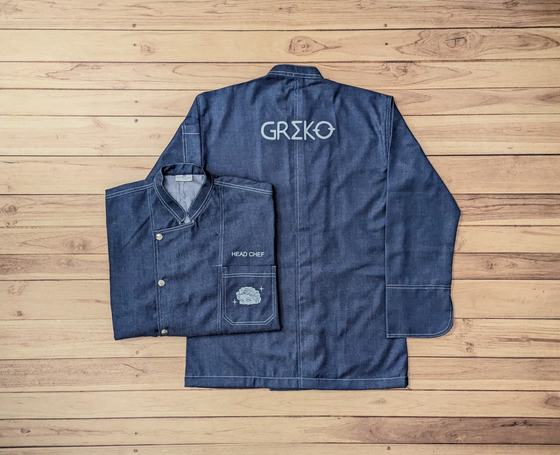
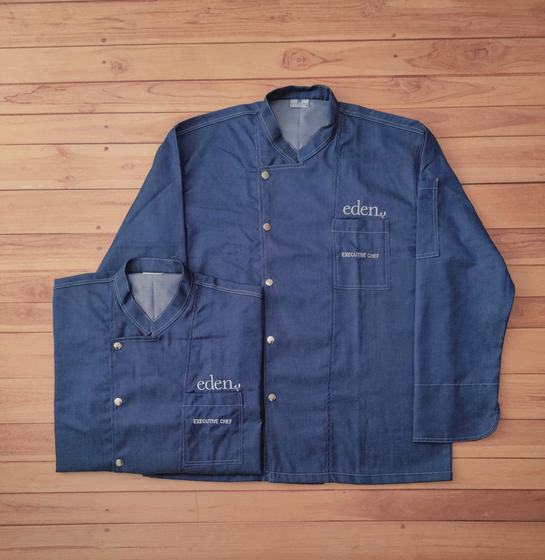
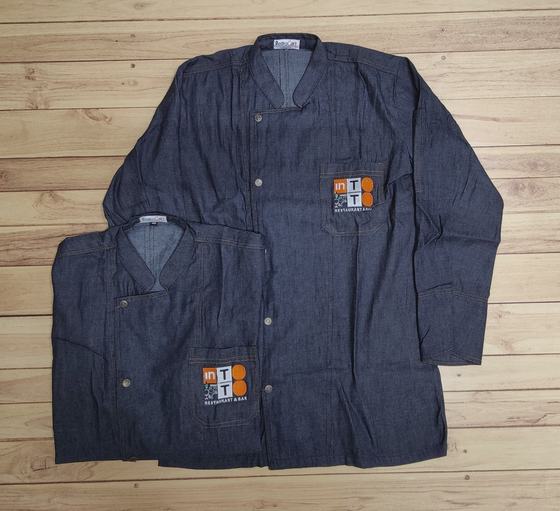
The wash sets the mood of the coat more than any other detail.
Dark or raw indigo
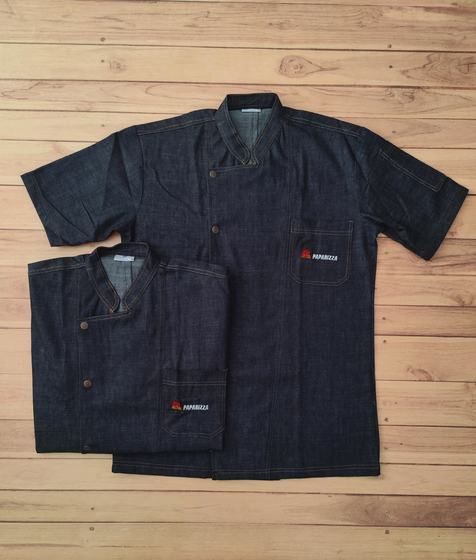
Deep, rich and the most "workwear" of the options. It hides stains best and looks sharp with bright embroidery or a coloured patch logo. It will bleed the most in early washes and fade the most over time.
Mid blue
The most versatile choice. It suits white or silver thread embroidery, looks good under warm lights and fades evenly.
Light wash and chambray
Cooler to wear and visually lighter, which suits cafes, brunch places and bakeries. It shows stains more than dark indigo, so pair it with a darker apron.
Black and grey denim
For brands whose palette is black, charcoal or monochrome. Black denim fades to grey over time; ask whether the fabric is sulphur-dyed or indigo-overdyed, because they age differently.
Whichever you choose, approve it from a physical swatch, not a screen. Denim shade varies from lot to lot, and warm restaurant lighting changes how it reads.
Construction details that make denim practical
A denim chef coat is still a chef coat. The details that make any coat work in a kitchen matter even more in a heavier fabric.
Specify these on a denim chef coat
- Stand or mandarin collar, lined with a lighter fabric so it does not chafe the neck.
- Metal press studs, rust-resistant, set into a reinforced facing. They suit denim, survive washing and open fast if a hot spill needs to come off.
- Offset or double-breasted front, so the coat can be reversed to hide a stain. Our chef coat styles guide compares the options.
- Sleeve pen or thermometer pocket on the left arm, and a chest pocket sized for a notepad.
- Contrast topstitching in tan, white or tone-on-tone thread. It is what makes denim look intentional.
- Side vents at the hem so the coat does not ride up when the chef bends.
- A lighter lining or no lining at all. Denim is warm enough on its own.
- Pre-washed or pre-shrunk fabric, so the fit you approve at sample stage survives the first laundry cycle.
Sleeve length
Full sleeves protect forearms from splatter and are standard for the pass. Half sleeves suit bakeries, cafes and hot pastry sections, and are common in dark denim.
Piping and contrast
On white or black coats, contrast piping on the collar and placket is the usual way to add brand colour. On denim, piping can look busy; contrast thread, a coloured collar lining, a leather-look tab or a coloured press stud often does the job more subtly. If you do want piping, keep it to one colour and one or two lines.
Want to see denim swatches before you decide? Tell us your kitchen type, team size and brand colours. We will suggest weights and washes and send physical swatches.
WhatsApp +91 98213 34906 Email info@restrocart.comBranding on denim: embroidery, patches and print
Embroidery is the natural partner for denim. White, cream, silver or a single brand colour on mid-blue denim looks crisp and survives washing. Large back embroidery, with the brand name across the shoulders, is popular for open kitchens because guests see the chef's back as often as the front.
Embroidered or woven patches suit busy multi-colour logos that would be too dense to embroider directly, and they sit neatly on a chest pocket. Screen or heat-transfer printing is the least suitable method on denim for kitchen use: the texture of the weave can crack prints, and heat transfers can lift after repeated washing. Embroidery almost always outlasts print on this fabric.
Designations such as Head Chef, Executive Chef or Sous Chef embroidered above the pocket are an easy way to show rank on denim without changing the coat colour.
When denim works, and when it does not
This is the part most buyers skip. Denim is the right call in some kitchens and the wrong one in others.
| Kitchen or role | Denim chef coat? | Why |
|---|---|---|
| Open kitchen or chef's counter | Yes | Guest-facing, moderate heat, brand impact is high |
| Cafe, brunch or all-day kitchen | Yes, light weight | Hides stains, pairs with denim or canvas aprons |
| Artisanal bakery or pastry | Yes, chambray or half sleeve | Looks good, but flour shows on dark indigo |
| Head chef or chef de cuisine only | Yes | Signals rank at the pass while the line wears hardier coats |
| Tandoor, grill or high-heat wok line | No | Too warm for a full shift; choose breathable poly-cotton or cotton twill |
| Deep-fry and high-volume QSR lines | No | Oil stains set in denim; frequent hot washes destroy it |
| Central kitchen or production floor | No | White or light colours make soiling visible, which hygiene audits prefer |
| Kitchens using commercial hot-water laundry | Usually no | High heat and strong detergents cause fast, uneven fading |
If your kitchen is a mix, a split system is often the answer: denim for the chef at the pass and front counter staff, and white or black coats in a lighter fabric for the hot line. Our guide to keeping cooks cool in Indian summers covers the fabric choices for the hottest stations.
Caring for denim chef coats
Most complaints about denim coats are laundry problems. These rules keep them looking good for longer:
- Wash new coats separately for the first three or four washes. Indigo will bleed and can stain white coats, aprons and towels.
- Cold or cool water, inside out, with a mild liquid detergent. Turning the coat inside out protects the surface colour and the embroidery.
- No bleach, ever. For grease, pre-treat the spot with dish liquid and wash as normal.
- Dry in the shade. Strong sun fades denim quickly and unevenly.
- Iron inside out on medium heat, and avoid ironing directly over press studs and patches.
- Rotate three sets per chef, so no single coat is washed every day.
Our uniform care guide has the full routine for kitchen and service uniforms.
Pairing denim coats with aprons, caps and trousers
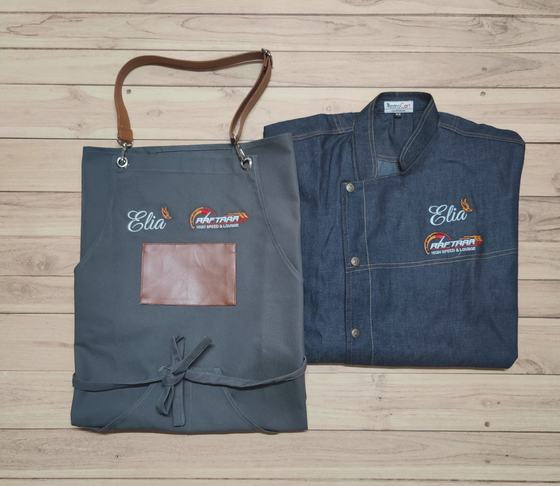
Denim coats look best with contrast. A canvas or leather-trim apron in tan, grey or olive gives the classic workwear look; a black apron keeps it sharp. Avoid a denim apron in exactly the same wash as the coat unless you want a head-to-toe denim look, which can read heavy. Our canvas vs denim vs leather apron guide helps with the pairing. For caps, a black or charcoal skull cap or bandana works with every wash. Trousers are best in black or charcoal, or a small check for a traditional kitchen look.
Ordering custom denim chef coats
At RestroCart we make denim chef coats to order, alongside regular chef coats, aprons, caps and the rest of the team's uniforms. You can see finished coats on our chef coats gallery. The process is the same as for any custom uniform:
- Brief: send your kitchen type, roles, headcount, logo and deadline on WhatsApp or email.
- Design and swatches: our design team sends mockups and physical denim swatches in two or three weights and washes.
- Sample: one complete coat per style in your chosen denim and branding, so you can check weight, fit and wash in your kitchen.
- Production: bulk production after approval, with quality checks on stitching, studs and embroidery.
- Delivery: packed by role and size and delivered anywhere in India.
Your denim, thread colours and embroidery files stay on file, so the coats you reorder for new hires match the originals as closely as the fabric lot allows.
Planning denim coats for your open kitchen? Send us your roles, team size and opening date. We will reply with denim options, a sampling plan and timelines.
WhatsApp +91 98213 34906 Email info@restrocart.comGet a quote for denim chef coats
If you are opening a cafe or refreshing an open kitchen, denim can give your team a distinct look that guests remember, as long as it is the right weight, in the right kitchen, with the right care. Message us on WhatsApp at +91 98213 34906 or build your list in our quote builder, and we will come back with swatches, a sample plan and a clear timeline.
See the real thing: 9 denim chef coats we have made