Buying guide, Uniforms
How to Reorder Restaurant Uniforms: Matching Colours, Sizes and Logos for New Staff, Replacements and New Outlets
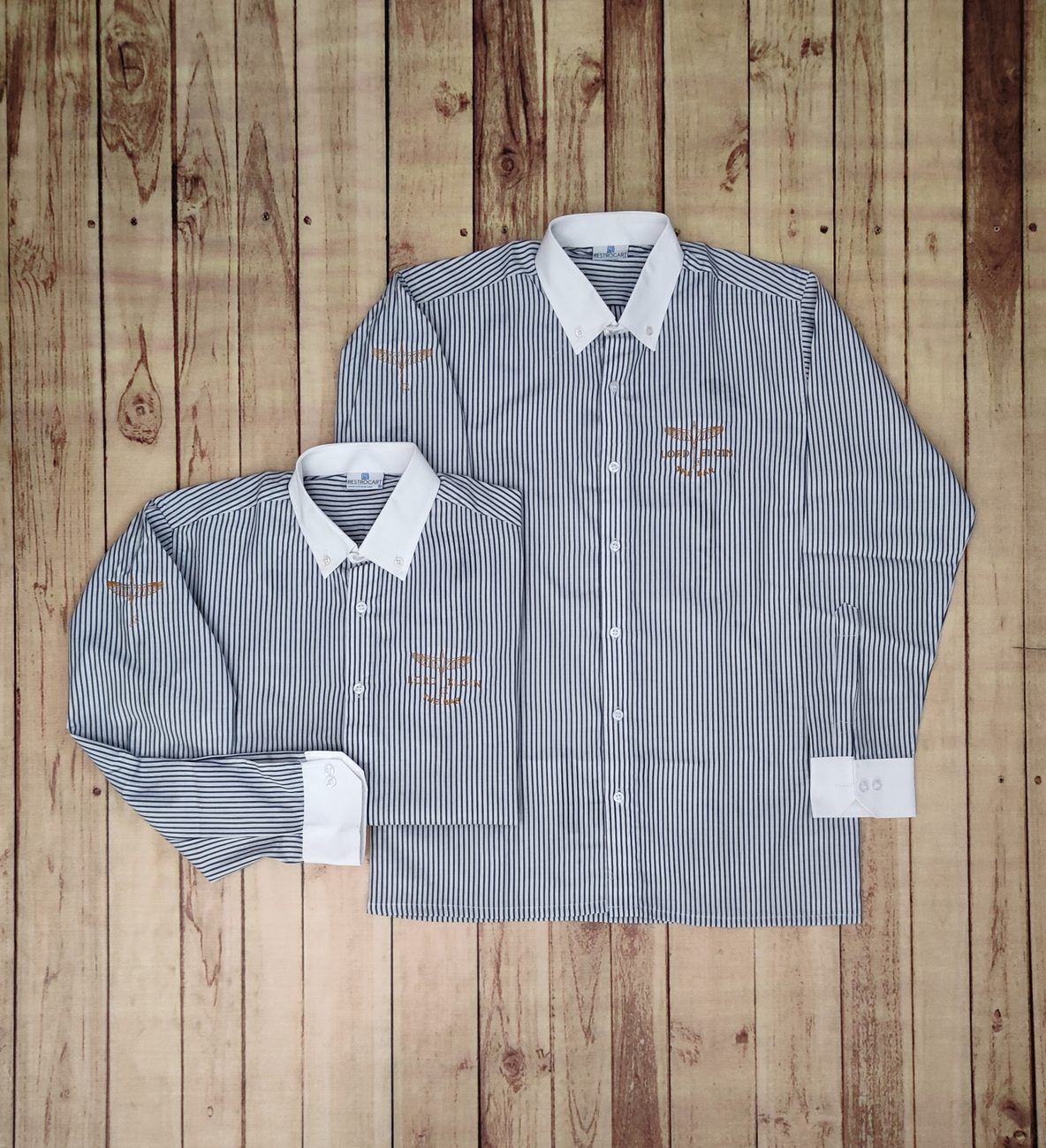
The first uniform order gets all the attention: the mockups, the fabric swatches, the sample, the big delivery before opening. The reorder gets almost none, and that is where most restaurant uniforms quietly go wrong. Three months later a new server turns up in a navy shirt that is visibly bluer than everyone else's, a chef's embroidered logo is a size smaller, and the only spare in stock is XXL. This guide explains how to reorder restaurant uniforms for new staff, replacements and new outlets so that batch two looks exactly like batch one.
Why uniform reorders go wrong
When reordered uniforms do not match, the cause is almost always one of four things:
- Colour drift. The fabric came from a different dye lot, or the supplier substituted a "similar" fabric.
- Fit drift. The pattern was not kept, or a different tailor cut it, so the same size fits differently.
- Logo drift. The embroidery file was re-made, or someone sent a slightly different logo, so the size, thread colour or position changed.
- Timing. The reorder went in when someone ran out, not before, so the restaurant accepted whatever was available.
All four are preventable with a little record-keeping at the first order and a clear process for every order after it. That is also why choosing a supplier who keeps your specifications on file matters; it is one of the questions in our guide to choosing a restaurant uniform manufacturer.
Colour and dye-lot consistency
Fabric is dyed in batches, called dye lots. Even with the same fabric code and the same colour name, two lots can differ slightly in shade. On a single garment you would never notice. On a line of six servers standing side by side under restaurant lighting, you will.
Some colours are far more sensitive than others. Navy, black, maroon, bottle green, khaki and pastels such as pink or mint show lot differences most. Denim varies with every wash batch and continues to change as it is laundered. White and mid-greys are the most forgiving.
How to keep colour consistent across reorders
- Ask your supplier to record the fabric code, blend, GSM and shade reference for every garment on the first order, and confirm they keep it on file.
- Keep one unworn piece of each garment as a master sample, bagged and out of the light. It is your reference for every future batch.
- Order spares with the first batch. They come from the same dye lot and will match perfectly.
- For contrast trims, piping and check fabrics, ask the supplier to hold back extra trim fabric from the original lot.
- When you reorder, ask for the new fabric to be shade-matched against the master sample before cutting.
- If a lot does not match closely enough, replace the whole role at once rather than mixing old and new on the same shift.
- Launder new pieces a couple of times before issuing them alongside washed originals; worn uniforms fade slightly, new ones catch up.
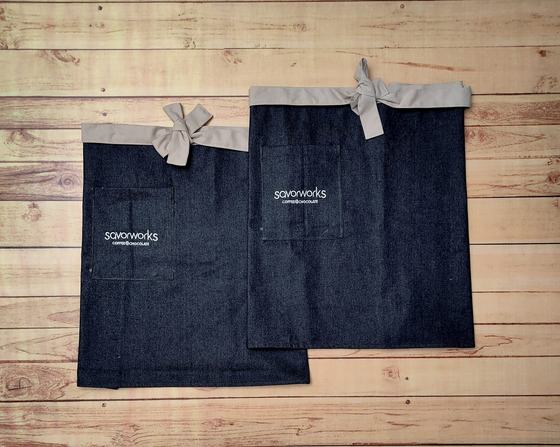
If you are planning colours from scratch, our uniform colours guide covers which shades are easiest to keep consistent, and the uniform care guide explains how washing affects fading.
Size buffers: how many spares to hold
Restaurants are high-turnover workplaces. New joiners arrive with a day's notice, staff change size, and uniforms get damaged. A size buffer, a small stock of unissued uniforms held back from the first order, is the difference between a new joiner in full uniform on day one and a new joiner in their own black t-shirt for three weeks.
Our standard advice is a buffer of 10 to 15 percent above current headcount, spread intelligently rather than evenly:
| Situation | Suggested buffer | How to spread it |
|---|---|---|
| Stable team, low turnover | Around 10 percent | Mostly in your two most common sizes |
| Typical restaurant or cafe | 10 to 15 percent | Weighted to service and kitchen helper roles, which turn over fastest |
| High turnover or seasonal hiring | 15 percent or more | Add one or two pieces at each end of the size range |
| Multi-outlet group | Per outlet plus a small central stock | Central stock in the sizes every outlet runs short of |
| Personalised pieces (names embroidered) | Buffer the plain garment | Add names locally or in small top-up orders |
Look at your first order's size split to set the buffer. The middle sizes (M and L for most Indian teams) run out first, but the sizes that cause the most trouble are the ends of the range, XS and XXL, because nobody stocks them. Keep ladies' fits in the buffer too, not just unisex sizes. Our uniform sizing guide covers size charts and measuring, and the guide to women's restaurant uniforms explains why a ladies' cut matters.
Keep a uniform register
A uniform register is simply a spreadsheet that tracks who has what. It takes ten minutes to set up and it turns every reorder from a guess into a list. It also helps with deposits, exit returns and planning replacements.
| Column | What to record | Why it helps |
|---|---|---|
| Staff name and role | Who the uniform is issued to | Tells you which roles turn over fastest |
| Pieces issued | E.g. 3 chef coats, 3 aprons, 2 caps | Shows real sets per person |
| Size and fit | Size, and ladies' or unisex fit | Builds your real size curve for reorders |
| Issue date and batch | Date issued, and which order it came from | Links garments to dye lots |
| Condition and return date | Good, worn, damaged; date returned on exit | Tells you what can be reissued and what needs replacing |
| Personalisation | Name embroidered, if any | Flags pieces that cannot be reissued |
Alongside the register, keep one folder, physical or digital, with the original quote, the approved mockups, sample photos, the fabric and trim references, the embroidery file and the supplier's invoice number. When you reorder, you send that reference, not a description from memory.
Need to reorder? Send us your brand name, the original order date or invoice number, and the sizes you need. We work from the patterns and files we kept.
WhatsApp +91 98213 34906 Email info@restrocart.comThree kinds of reorder, three approaches
1. New staff
Issue from the buffer first, and set a trigger point: when the buffer for any role drops to one or two pieces in a key size, place a top-up order. Small top-ups are best combined, so collect needs for a few weeks unless you are genuinely short. If your uniforms carry staff names, keep plain garments in the buffer and add names in a small batch.
2. Replacements
Uniforms wear out at different speeds. Kitchen pieces washed daily at high temperatures age faster than a manager's waistcoat. Use the register to review condition every few months and replace by role, not piece by piece, so the whole team stays in the same shade. Plan a larger refresh once a year, ideally before your busiest season. Our kitchen uniform hygiene guide explains when a chef coat is past its useful life.
3. New outlets
A new outlet is a reorder with extras. The design is already approved, so confirm what stays the same and what changes (an outlet name, a different climate, a new role such as a bar team or delivery riders). Build the size list from the new team, reuse the approved patterns and embroidery files, and plan backwards so uniforms are in the building two weeks before opening, in time for training. Our multi-outlet uniform programme guide covers central stock, packing by outlet and outlet-specific pieces, and the restaurant opening supplies checklist covers everything else a new site needs.
When to re-sample before a reorder
A straight repeat of an approved design, from the same supplier, in the same fabric, does not need a new sample. Everything else probably does. Ask for a fresh sample, or at least a fabric swatch and a sew-out of the embroidery, when:
- The original fabric has been discontinued or the supplier proposes a substitute.
- Your logo has changed, even slightly. A new mark can need a different embroidery size or thread colours. Our story on Xero Degrees uniforms shows two versions of one brand's logo on delivered pieces, and our guide to rebranding and uniform refresh covers the changeover.
- You are changing the fit, for example adding a ladies' cut or changing sleeve length after staff feedback.
- You are moving to a new supplier. Send them your master sample and ask for a counter-sample before bulk.
- Your laundry has changed, say from in-house washing to a commercial laundry, which may need a sturdier blend.
- It has been a long gap since the last batch and you want to check the shade against your master sample before cutting.
For how sampling fits into the overall process, see how custom uniforms are made.
What to send when you reorder
A good reorder message is short and specific. Include:
Your reorder message
- Brand and outlet name, and the original order date or invoice number.
- Each item with sizes and quantities, for example: chef coat M x4, L x2; bib apron x6.
- Names for embroidery, spelled exactly, if your uniforms are personalised.
- Anything that should change from last time, and anything that must not.
- A photo of the master sample next to a worn piece, if colour matching is critical.
- The date the uniforms must be in the building.
If you do not have the original details to hand, send a clear photo of the garment, the care label and the logo, and we will work from that.
How RestroCart handles reorders
RestroCart keeps patterns, fabric codes and artwork on file for every client, precisely so reorders match. A straight repeat skips the design and sampling stage and goes into production against the approved specification, typically two to four weeks depending on the item and quantity. We pack by role and size, or by staff name if you prefer, and deliver anywhere in India. If you are in the NCR, our guide to finding a restaurant uniform supplier in Gurgaon covers local delivery too, and you can browse finished work in our uniform gallery.
Ready to reorder, or setting up a reorder process for a new outlet? Send your details on WhatsApp +91 98213 34906, email info@restrocart.com, or use our quote builder for a new programme.
Opening another outlet? Tell us the opening date and team size. We will reuse your approved designs and plan the reorder backwards from your date.
WhatsApp +91 98213 34906 Email info@restrocart.com