Buying guide, Uniforms
Polo T-Shirt or Shirt for Service Staff? A Decision Guide by Concept, Climate, Budget, Laundry and Branding
It is one of the first questions every restaurant owner asks us: polo t-shirt or shirt for the service staff? Both are good answers. The wrong one is simply the garment that does not match how your restaurant runs: the weather on your terrace, how your uniforms get washed, how formal your menu is, and how much your team moves.
This guide compares polo t-shirts and woven shirts for service staff on the five things that actually decide it: concept, climate, budget, laundry and branding. At the end there is a quick checklist so you can make the call in ten minutes.
The short answer: polo t-shirt or shirt for service staff?
If your restaurant is casual, busy and warm, start with polos. If it is formal, layered or evening-led, start with shirts. If it is somewhere in between, which most restaurants are, mix them by role or by shift. The rest of this guide explains why.
| Factor | Polo t-shirt | Woven shirt |
|---|---|---|
| Look | Casual, friendly, sporty | Polished, tailored, formal |
| Comfort | Knit fabric stretches and breathes | Less stretch; comfort depends on cut and fabric |
| Heat | Good, especially dry-fit polos | Good in cotton-rich fabric with half sleeves |
| Ironing | Not needed | Needed, unless a wrinkle-resistant blend |
| Layering | Works with half aprons and caps | Works with waistcoats, blazers, ties and long aprons |
| Branding | Chest embroidery, large back prints, contrast tipping | Small embroidery, contrast collars, piping |
| Typical fabric | Cotton or cotton-poly pique, dry-fit polyester | Poly-cotton twill or poplin, cotton |
| Best for | Cafes, QSR, family dining, outdoor seating | Bistros, bars, fine dining, hotels |
Decide by concept
Your uniform should look like your menu. A pizza bar serving by the slice looks odd with servers in waistcoats; a tasting-menu room looks unfinished with servers in polos.
- Cafes, QSRs, dessert and waffle brands, family restaurants: polos, often in a bold brand colour. They feel approachable and give you room for a big back print.
- Casual dining and bistros: either. A shirt with a long apron looks more "restaurant"; a polo with a half apron looks more "cafe". This is the category where mixing works best.
- Bars and cocktail lounges: shirts, often dark, with sleeves rolled and a leather or denim apron. See our bartender uniform guide.
- Fine dining and hotels: shirts, full sleeve, usually with a waistcoat or blazer. Our fine-dining uniform guide covers the full look.
Decide by climate
Much of India spends several months above 35 degrees, and a service team walks many kilometres a shift. Climate is not a detail.
Hot, humid or outdoor service
Polos have the edge. Knit fabric breathes, stretches and hides sweat better than a woven shirt. For outdoor terraces, rooftops and busy open kitchens, consider a dry-fit polyester polo, which wicks moisture and dries fast. Our guide to dry-fit and cotton t-shirt uniforms compares the fabrics.
Air-conditioned dining rooms
Shirts are comfortable here, and you can use full sleeves without penalty. A cotton-rich poly-cotton in a twill or poplin weave is the usual choice.
North Indian winters
Shirts layer more neatly under sweaters, cardigans and waistcoats. Polos can be layered under zip jackets or full-sleeve tees, but look bulkier. If your outlets see a real winter, plan the winter layer at the same time. A sweater or zip jacket in the same colour family keeps the team looking consistent through December and January.
Decide by budget
We do not quote prices on a blog, because they depend on fabric, quantity and branding. But the cost shape is predictable:
- Per piece, a polo is usually the lower-cost garment, because knitting and stitching are simpler than cutting and constructing a shirt with a collar stand, cuffs and a placket.
- Per month, a polo is cheaper to run, because nobody has to iron it. For a team of twenty, daily shirt pressing adds up in time or laundry charges.
- Per year, the gap narrows. A cheap polo that pills and fades in four months costs more than a good shirt that lasts a year. Buy the better fabric of whichever you choose.
If budget is tight, the smartest spend is usually a good polo plus a good apron, rather than a cheap shirt plus a cheap waistcoat.
Want to compare both? Tell us your team size and concept. We will quote a polo option and a shirt option with the same branding, so you can compare fairly.
WhatsApp +91 98213 34906 Email info@restrocart.comDecide by laundry
This is the factor owners forget, and it decides how the uniform looks in month three.
| Laundry setup | Polo t-shirt | Woven shirt |
|---|---|---|
| Staff wash at home | Best choice; forgiving, no ironing | Risky; shirts often arrive creased |
| In-house machine, no press | Good | Choose a wrinkle-resistant poly-cotton |
| Commercial laundry with pressing | Good; ask for colour-fast dye | Good; shirts come back crisp |
| Hot washes and strong detergent | Cotton-poly or dry-fit fades less than pure cotton | Poly-cotton handles it well |
Two quality checks save a lot of grief. For polos, ask for a flat-knit collar that will not curl and a fabric that is colour-fast, especially in reds, pinks and blacks. For shirts, ask for a fused collar and cuffs so they stay sharp after washing. Our uniform care guide has the full washing advice we give clients.
Decide by branding
How you want your logo to appear often settles the question.
Polos
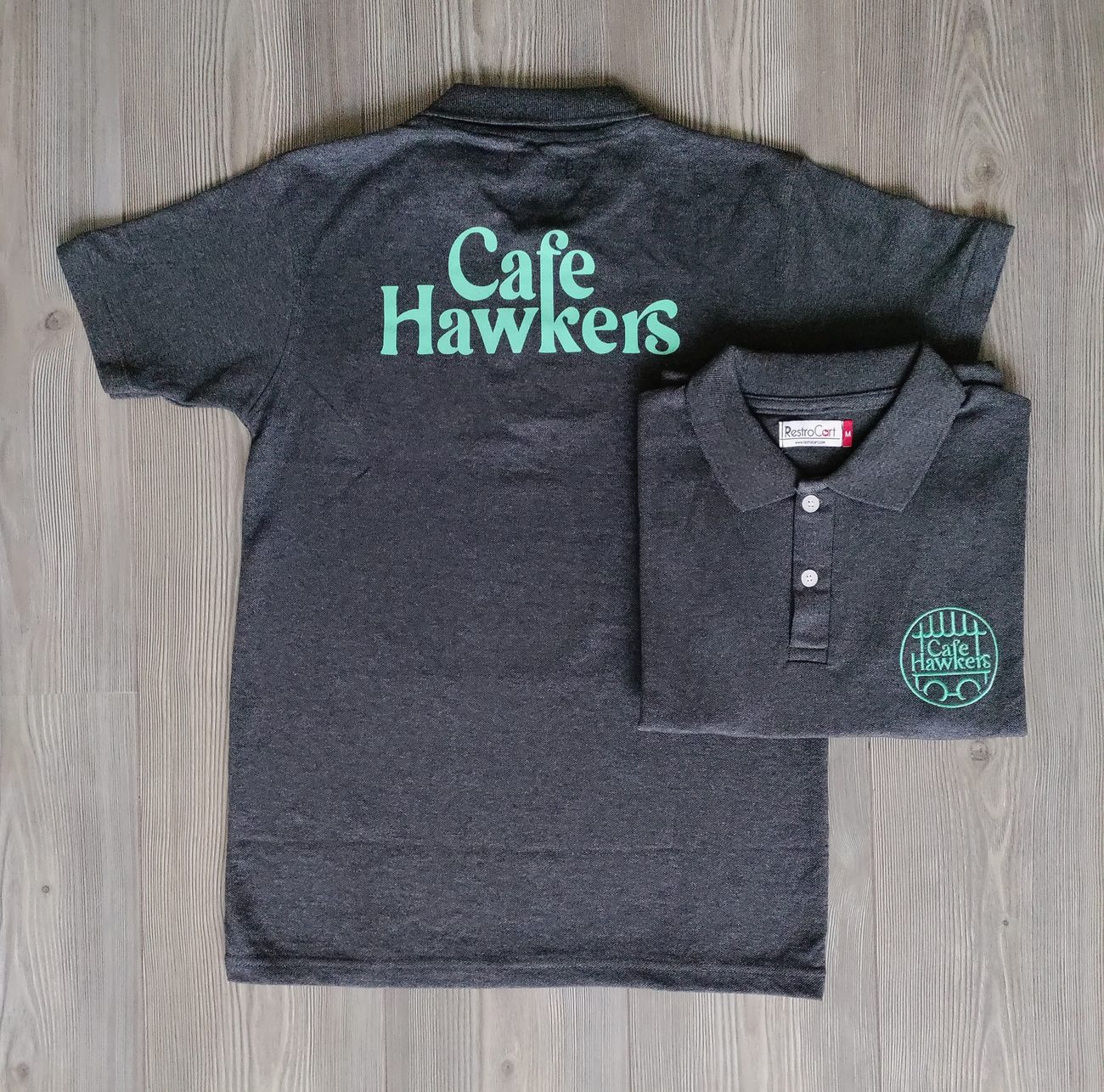
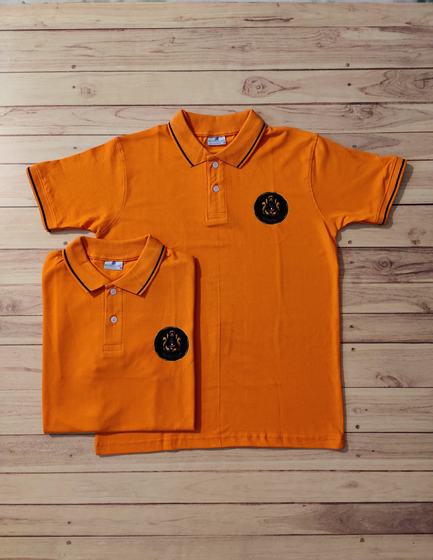
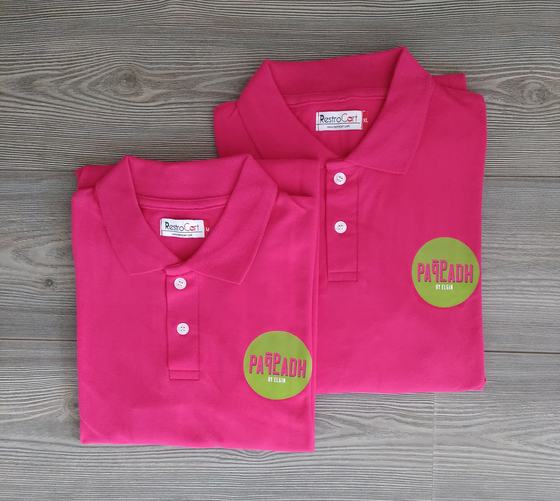
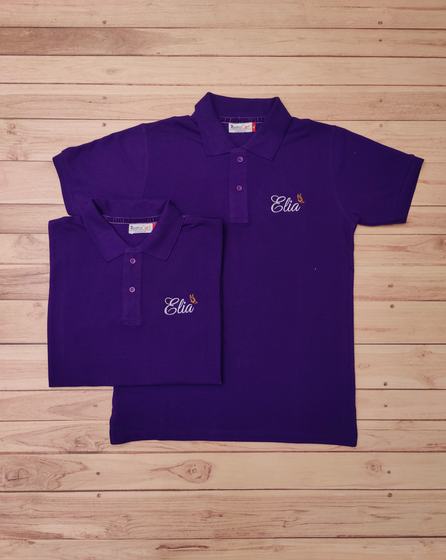
Polos are a generous canvas. The standard is an embroidered logo on the left chest, and the back can carry a large print, a tagline or a playful message for guests to read as staff walk away. Contrast collar tipping and cuff tipping add a brand colour cheaply. The polos we made for Cafe Hawkers, pictured at the top of this guide, pair a large back print with a small round embroidered logo on the chest.
Shirts
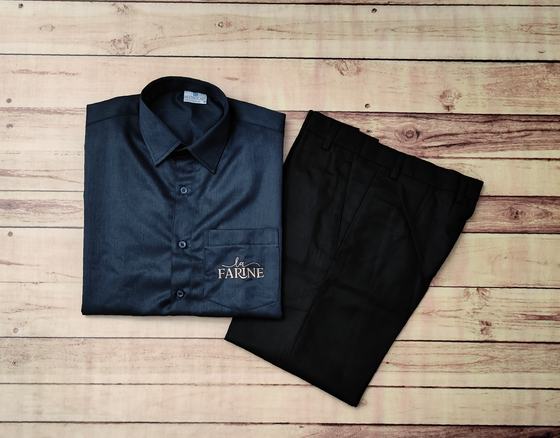
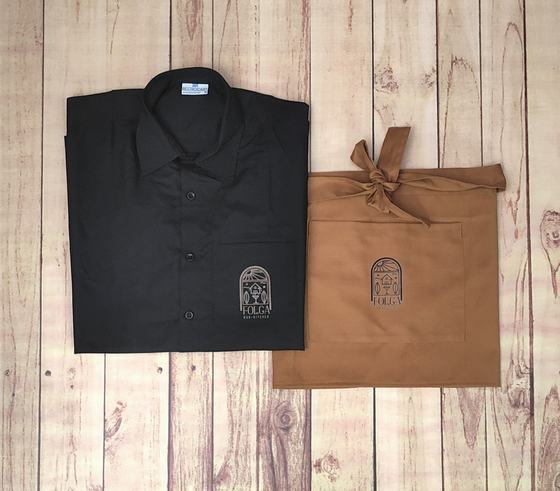
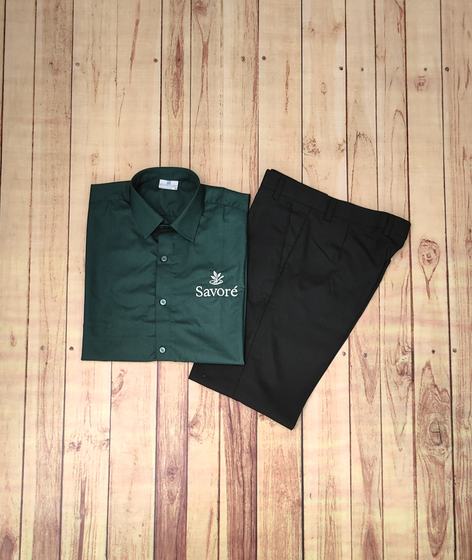
Shirts want restraint. A small embroidered logo on the chest or pocket, a contrast collar or inner collar band, piping along the placket, or a coloured shirt in your brand shade. Large prints look out of place on a woven shirt.
For the technical side of logo placement and thread versus print, see embroidery vs printing on uniforms.
The mixed approach: polos and shirts in one team
Many restaurants end up mixing, and it works well when it is planned:
- By role: floor staff in polos, captains and managers in shirts, so guests can spot the senior person.
- By shift: polos for breakfast and lunch, shirts for dinner service when the lights go down.
- By area: polos for the terrace and takeaway counter, shirts for the main dining room.
- By season: polos in summer, shirts with a sweater or waistcoat in winter.
The rule that keeps a mixed team looking like one brand: use the same colour family, the same logo file and the same apron across both garments.
Quick decision checklist
Tick the lines that apply to your restaurant
- Our service is casual or counter-led: lean polo.
- Staff wash uniforms at home or we have no ironing: lean polo.
- We have outdoor seating or a hot floor: lean polo, consider dry-fit.
- We want a big back print or a playful message: polo.
- Our menu is formal or evening-led: lean shirt.
- Staff will wear waistcoats, blazers or ties: shirt.
- We use a commercial laundry with pressing: either works; shirt is easy.
- We need managers to look distinct: shirts for managers, polos or shirts for the floor.
If your ticks split evenly, you are a mixed team. That is a good answer, not an indecisive one.
What a good service polo and a good service shirt look like
Whichever way you go, the difference between a uniform that lasts and one that embarrasses you by month three is in the construction details. These are the points we look at on every sample.
A good service polo
- Flat-knit collar and cuffs that lie flat after washing, rather than a collar cut from the body fabric, which curls.
- Taped neck seam on the inside, so the back of the collar does not stretch out of shape.
- A two or three-button placket with reinforced stitching at the base, where polos usually tear first.
- Side vents or a slightly longer back hem, so the polo stays tucked or sits neatly when staff bend over tables.
- A ladies' cut option with shaped side seams and shorter sleeves, so women on the team are not wearing a boxy men's polo.
A good service shirt
- Fused collar and cuffs that stay crisp through repeated washing and pressing.
- A chest pocket sized for a pen and order pad, if your team takes orders by hand.
- Enough length in the tail to stay tucked in when a server reaches across a table.
- Sleeve options: half sleeves for hot floors, full sleeves with button cuffs that can be rolled for busy service.
- A female cut with darts and correct button spacing at the bust, so the placket does not gape.
If a supplier cannot tell you how the collar is made, ask to see a sample that has been washed a few times.
Fabric notes before you order
Polos: ask for the fabric composition (100% cotton, cotton-poly or polyester dry-fit), the GSM and the knit (pique is standard). Around 200 to 240 GSM suits most service roles. Our polo GSM guide goes deeper.
Shirts: ask for the blend and weave. A 65:35 or 60:40 poly-cotton twill or poplin is the practical restaurant standard: it breathes, resists creasing and survives frequent washing. 100% cotton feels lovely but creases and shrinks more.
Whichever you choose, get a physical sample in the real fabric with the real branding before bulk production, and wash it a few times the way your team will.
Ready to decide? Send your concept, city and headcount. We will recommend polo, shirt or a mix, and send swatches.
WhatsApp +91 98213 34906 Email info@restrocart.comYou can browse real work on our t-shirt uniforms and uniform shirts galleries. When you are ready, message us on WhatsApp or build your order in our quote builder.
See the real thing: 146 polo t-shirt uniforms we have made