Buying guide, Uniforms
Sweaters and Cardigans for Restaurant and Hotel Staff: A North Indian Winter Guide to Knits, Necklines and Logos
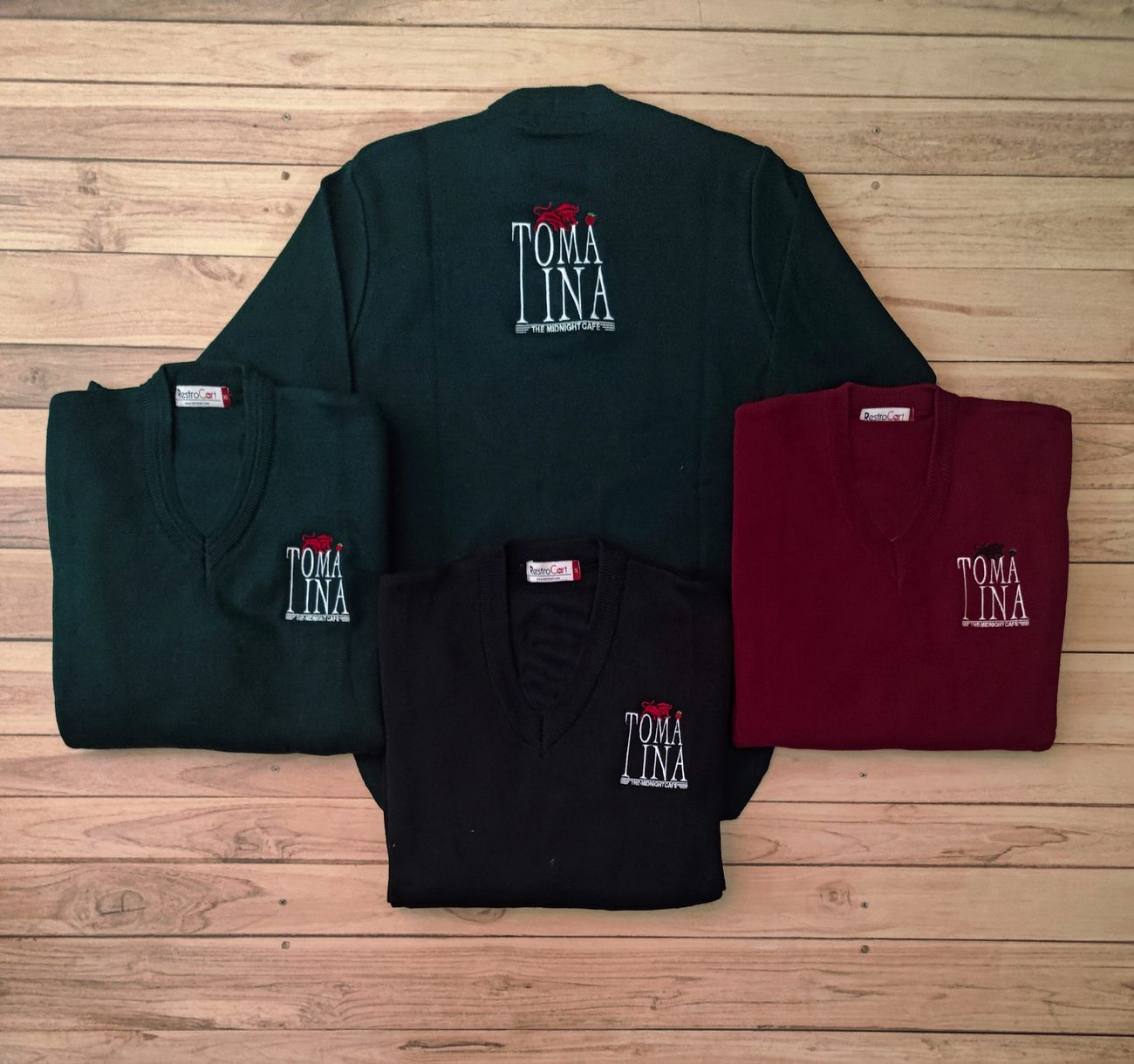
Every November, the same thing happens on restaurant floors across Delhi, Punjab and Jaipur. The evenings turn cold, and staff start layering whatever they own over the uniform: a grey school sweater here, a brown jacket there, a scarf at the host stand. Within a week the carefully planned uniform has disappeared. The fix is simple and it is not a hoodie. For most service teams, the right answer is a well-made knitted sweater or cardigan in your colours, with your logo, sized for everyone.
This guide is about sweaters and cardigans for restaurant and hotel staff specifically: which yarn to choose, what knit gauge means, V-neck vs round neck vs cardigan, how to layer knits over shirts, waistcoats and aprons, and how to brand them properly. If you are still deciding between hoodies, zippers and knits in general, start with our restaurant winterwear guide and come back here once knits are on the list.
Why knits work better than hoodies on a service floor
Hoodies and sweatshirts are brilliant for cafes, kitchens and delivery teams. On a fine-dining floor, a hotel lobby or a banquet hall they look too casual. A knitted sweater reads as part of a uniform rather than something staff threw on, because it has a structured neckline, ribbed cuffs and hem, and a surface that sits close to the body without bulk.
Knits also layer better. A V-neck sweater lets the shirt collar and tie show, so the uniform underneath still does its job. A cardigan can be worn open over a waistcoat, closed over a shirt, or taken off in thirty seconds when the tandoor side of the dining room gets warm. That flexibility matters in North India, where a single evening can move from a cold terrace to a heated dining room several times.
Finally, knitwear is quiet. It does not rustle like a windcheater or bunch up like a heavy hoodie under an apron. For roles that stand close to guests, such as hosts, captains, sommeliers and managers, that matters.
Choosing the yarn: acrylic, wool blend or cotton blend
The yarn decides warmth, feel, washability and how the sweater looks after two winters. Here is how the common options compare for staff use in India.
| Yarn | Warmth | Care | Best for |
|---|---|---|---|
| Anti-pill acrylic | Good | Machine wash, holds shape, dries fast | Most restaurant and cafe teams; the practical default |
| Acrylic-wool blend | Very good | Gentle machine wash, avoid hot water | Hotels, fine dining, colder cities such as Amritsar and Srinagar |
| Pure wool or lambswool | Excellent | Hand wash or dry clean; felts in hot water | Small premium teams with careful laundry, managers |
| Cotton or cotton-acrylic | Moderate | Easy wash, soft on skin | Milder winters, indoor roles, staff who find wool itchy |
For most restaurant teams we suggest a good anti-pill acrylic or an acrylic-wool blend. Cheap acrylic pills quickly, leaving little fuzz balls around the underarms and where apron straps rub, so ask specifically for anti-pill yarn. If your team has a commercial laundry with hot washes, stay away from pure wool: one wrong cycle can shrink a whole batch.
Knit gauge and weight in plain English
Woven uniforms are specified in GSM. Knitwear is described differently, mainly by yarn and gauge, which is how many needles per inch the knitting machine uses. A higher gauge means a finer, flatter, smoother knit. A lower gauge means a chunkier, more textured knit.
- Fine gauge (around 12 to 14 gauge): smooth, neat and slim under a blazer or apron. The usual choice for service, hotels and managers, and the best surface for embroidery.
- Medium gauge (around 7 to 10 gauge): warmer and more casual, with visible knit texture. Good for outdoor hosts, valet and cafes that want a cosier look.
- Chunky (below 7 gauge): very warm but bulky; hard to wear under an apron and hard to embroider cleanly. Rarely right for a uniform.
You do not need to specify the gauge yourself. Tell your supplier where the sweater will be worn, indoors or out, and in which city, and ask to see the knit in person before approving. A swatch or a sample in your hand tells you more than any number.
V-neck, round neck, cardigan or sleeveless?
The neckline is the biggest design decision, because it decides what the sweater does to the uniform underneath.
V-neck pullover
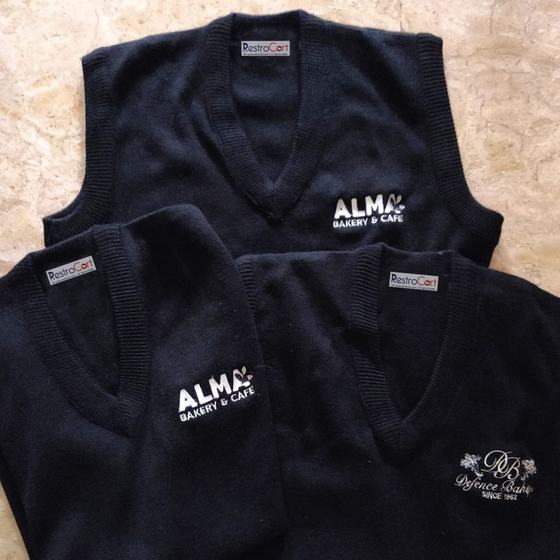
The classic staff sweater. It shows the shirt collar and tie, looks formal, and is the easiest knit to wear under a blazer. Best for stewards, captains, bartenders in winter, hotel front office and managers. If your service shirt has a mandarin or band collar, a V-neck still works and looks modern.
Round neck (crew neck) pullover
A round neck covers the collar, so it works best over a t-shirt or a collarless kurta and for teams where the tee is the uniform. It reads more casual and slightly warmer at the throat. Good for cafes, bakeries and back-office roles.
Button cardigan
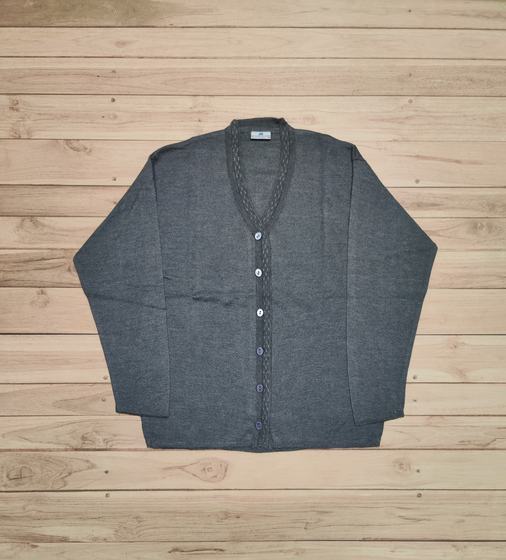
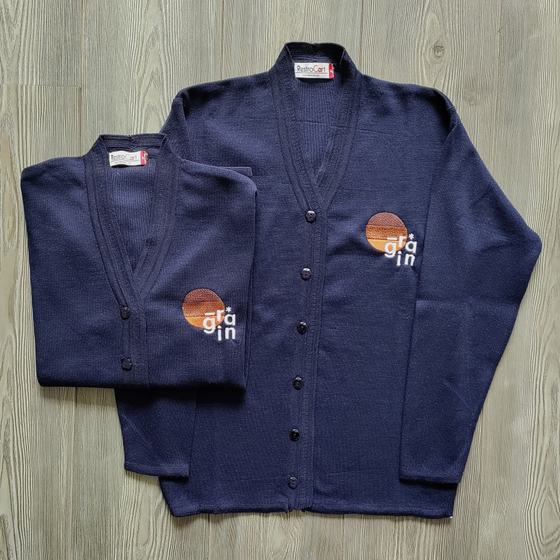
The most flexible option. Staff can wear it open or closed, and take it off fast when they move into a warm area. Cardigans suit hosts and hostesses, housekeeping, spa and wellness teams, and hotel staff who move between air-conditioned and open spaces. Ask for a slightly longer body so it covers the waistband when staff bend.
Sleeveless sweater vest
A knitted vest gives core warmth without bulk at the arms, which suits bartenders, baristas and servers who carry plates and need free movement. It also looks sharp over a shirt with rolled sleeves, and can stand in for a waistcoat in winter.
Planning winter knits for your team? Tell us your roles, headcount and city. We will suggest yarn, neckline and colours, and send a sample before production.
WhatsApp +91 98213 34906 Email info@restrocart.comLayering knits over your existing uniform
A sweater is not a standalone garment in a restaurant. It goes over something and often under something else. Plan the whole stack.
- Over a service shirt: the shirt collar should sit outside a V-neck. Check that the sweater neck is deep enough for your collar style; a shallow V crushes a spread collar.
- Under an apron: choose a fine gauge so the apron lies flat. Bib aprons with a neck loop sit well over a V-neck; cross-back aprons can bunch a chunky knit at the shoulders.
- With a waistcoat: most teams swap the waistcoat for the sweater in peak winter rather than wearing both. If you want both, a thin sweater vest under a waistcoat or blazer works better than a pullover.
- Under a blazer: fine-gauge V-neck only, fitted, in a colour that tones with the blazer rather than contrasts.
- In the kitchen: keep knits away from the line. Use a thermal inner under the chef coat, and a fleece zipper jacket for cold stores and early morning prep.
Colour: make the sweater part of the palette
The sweater will be the most visible garment on your floor for three to four months, so treat it as part of your uniform colour system, not an afterthought. The safest choices are the darker shades in your palette: navy, charcoal, black, bottle green, maroon and deep brown hide wear and pilling best. Light greys and creams look beautiful but show stains from service quickly.
A useful trick for larger teams is to vary the colour by role while keeping the same knit and logo: bottle green for service, black for bar, maroon for managers, for example. Guests see one family of garments, and your managers can spot roles at a glance.
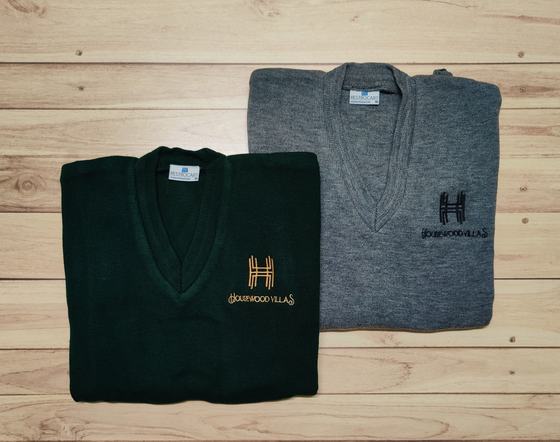
Branding knitwear: embroidery, patches and placement
Knitted fabric has a textured, stretchy surface, so screen and DTF prints do not sit well on it and tend to crack as the knit stretches. Embroidery is the right method for sweaters and cardigans. Our embroidery vs printing guide explains why in more detail.
A few rules keep embroidery on knits looking clean:
- Keep it compact. A left-chest logo sized to sit neatly within the width of a hand is the standard. Large back designs on knits pull the fabric.
- Simplify fine text. Thin serif lettering and tiny taglines blur into the knit. Use the logo mark or the name alone.
- Ask about backing. A good manufacturer adds a stabiliser behind the embroidery so the knit does not pucker or stretch around the design.
- Consider a woven patch. For very detailed crests, a woven or embroidered patch stitched onto the sweater gives crisp detail without stressing the knit.
- Tone-on-tone for formality. A black logo on a black sweater or gold thread on navy looks expensive and quiet; a bright contrast logo suits cafes and casual brands.
Hotels often add the department or role in small embroidered text under the logo, such as "Housekeeping" or "Front Office", which helps guests and saves on name badges in winter.
Fit and sizing for knitwear
Knits behave differently from shirts. They stretch in wear and can shrink slightly in the first wash, so size charts for knitwear need a little care.
Before you approve the sample
- Try the sample on the smallest and largest people on your team, not just one medium.
- Check the sleeve length with arms extended, as if carrying a tray; cuffs should not ride up to the forearm.
- Check the body length covers the waistband when bending, especially on cardigans.
- Put an apron over it and check the chest and neck do not bunch.
- Wash the sample once the way your team will wash it, then re-measure length and width.
- Ask for ladies' fits where needed; a straight men's cut looks boxy on many women.
- Order a few spares in the two most common sizes for mid-season joiners.
Our uniform sizing guide covers how we collect sizes from a team, including remote teams who send measurements on WhatsApp.
Caring for staff sweaters so they last two winters
A decent staff sweater should comfortably last more than one season. Most early failures come from the laundry, not the knit.
- Wash in cool or lukewarm water on a gentle cycle; never with the hot kitchen whites load.
- Turn sweaters inside out to protect the embroidery and reduce pilling.
- Dry flat or on a wide hanger in the shade; hanging a wet knit by the shoulders stretches it.
- Remove pills with a fabric shaver rather than pulling them off.
- At the end of winter, wash, dry fully and store folded with naphthalene or neem leaves.
If knitwear goes to a commercial laundry, tag it clearly as "gentle, no heat" so it never joins the hot chef coat cycle.
Timeline: when to order for North Indian winters
Winter orders are the most time-sensitive uniform orders of the year, because the season is short and every supplier is busy from October. Working back from the cold:
| When | What to do |
|---|---|
| August to September | Decide which roles need knits, pick colours, share logo files and headcount |
| September | Review mockups and yarn swatches; approve a sample per style |
| Early October | Confirm sizes and place the order |
| November | Sweaters delivered, packed by size or staff name, before the first cold nights |
| December to February | Top up with spares for new joiners |
Our typical timeline is two to three weeks for design and sampling and two to four weeks for production, which is why a September brief matters. You can see winter pieces we have made on the winterwear gallery, and if you run a hotel or villa with several departments, our guide to boutique hotel and villa staff uniforms shows how knits fit into a wider programme.
Get a quote for staff sweaters and cardigans
RestroCart makes custom sweaters, cardigans and sweater vests for restaurants, cafes, hotels and caterers from our studio in Naraina, New Delhi, and delivers anywhere in India. Send us your roles, headcount, city and logo on WhatsApp at +91 98213 34906, or build your request on our quote page. We will reply with yarn and neckline options, colours and a sampling plan.
Beat the winter rush. Brief us early so there is time to have your team's knits ready before the first cold week.
WhatsApp +91 98213 34906 Email info@restrocart.comSee the real thing: 32 sweaters and cardigans we have made