Style guide, Uniforms
Fine-Dining Restaurant Uniforms: What Servers, Sommeliers, Captains and Hosts Should Wear
In a fine-dining room, the uniform is part of the plate. Guests notice a server's cuffs when a dish is placed in front of them, the sommelier's apron when a bottle is presented, and the host's jacket before they notice the menu. Fine-dining restaurant uniforms have one job: to look as considered as the food, without ever pulling focus from it.
This guide covers what each fine-dining role should wear, the fabrics and tailoring that separate a premium uniform from an ordinary one, how to use colour with restraint, and how long aprons, waistcoats and blazers fit into the system. It is based on the questions we work through with restaurants and hotel F&B teams at our studio in New Delhi.
The principles of fine-dining uniforms
- Fit before fabric, fabric before logo. A well-fitted uniform in a good suiting looks premium with no branding at all. A loose one looks cheap even with gold embroidery.
- Every role readable at a glance. Guests should be able to tell the server, the sommelier, the captain and the host apart without reading a badge.
- Restraint in colour. Two or three colours, drawn from the room.
- Quiet branding. Tonal embroidery, a crest on the lapel, a coloured lining, custom buttons.
- Built for movement. Fine-dining service is still physical work: carrying, bending, pouring, clearing. Tailoring must allow for it.
Fine-dining uniforms by role
| Role | Core outfit | Signature detail | Practical need |
|---|---|---|---|
| Servers | Shirt, long bistro apron or waistcoat, tailored trousers | Long apron in a room colour, or a five-button waistcoat | Pockets for pen and wine key; room to reach and bend |
| Sommelier | Shirt, waistcoat or jacket, dark or leather long apron | Darker tone or a leather apron to mark the role | Wine-key pocket, apron that resists spills |
| Captains / maitre d' | Shirt with double-breasted waistcoat or blazer | Lapels, contrast collar or blazer | Must look senior; often on their feet all night |
| Hosts | Tailored jacket, dress, or refined tunic or kurta set | Most individual outfit on the team | First impression; comfortable standing for hours |
| Runners and bussers | Simplified server look: shirt and shorter apron | Same palette, fewer layers | Speed, durability, easy laundering |
| Managers | Blazer and trousers or suit | Blazer in the house colour | Distinct from captains in formal rooms |
Servers
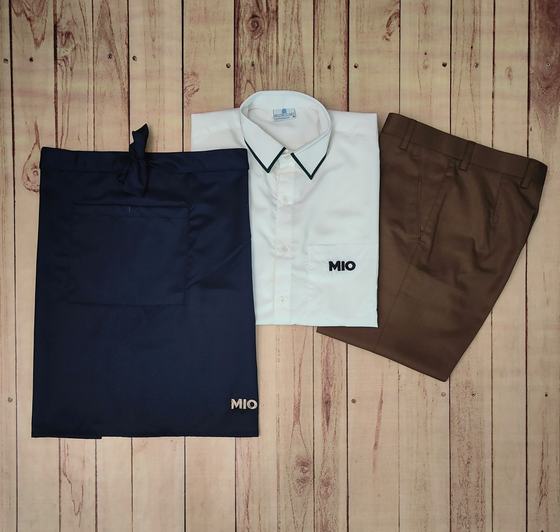
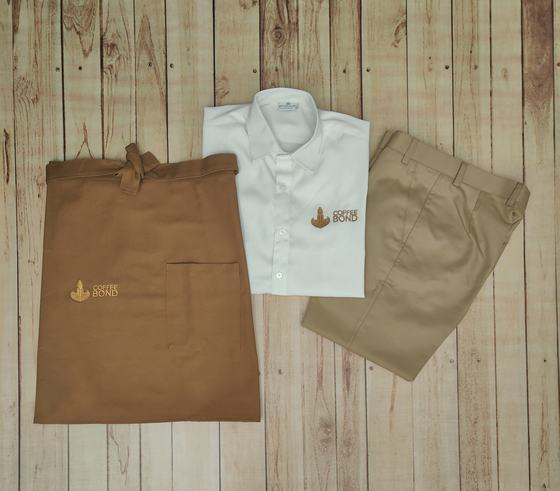
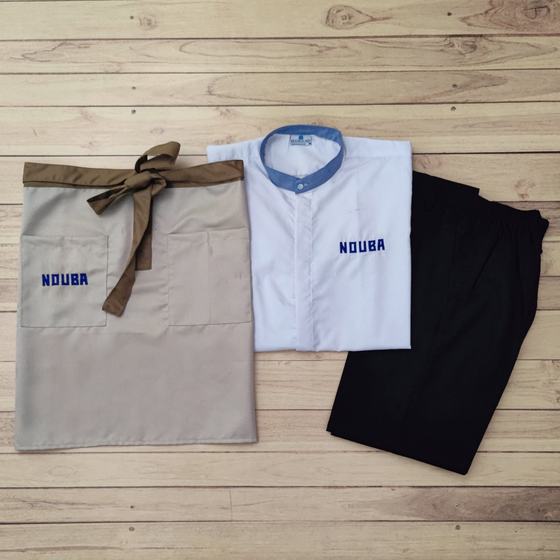
The server look is usually a shirt with either a long bistro apron or a waistcoat, and sometimes both. A long apron ending around or just below the knee reads as classic European service; tied at the natural waist and wrapped slightly round the body, it looks elegant and protects trousers during clearing. A waistcoat gives a sharper, more structured silhouette. Our waiter waistcoat styles guide covers necklines, button counts and fit in detail.
Sommeliers
The sommelier needs to be identifiable as the wine specialist. The usual approach is a darker or more formal version of the server outfit: the same shirt, a waistcoat or jacket in a deeper shade, and a long apron in leather, leatherette or a dark heavy twill. A dedicated pocket for a wine key and a loop for a cloth are small details that make a real difference. Our guide to canvas, denim and leather aprons explains the materials.
Captains and the maitre d'
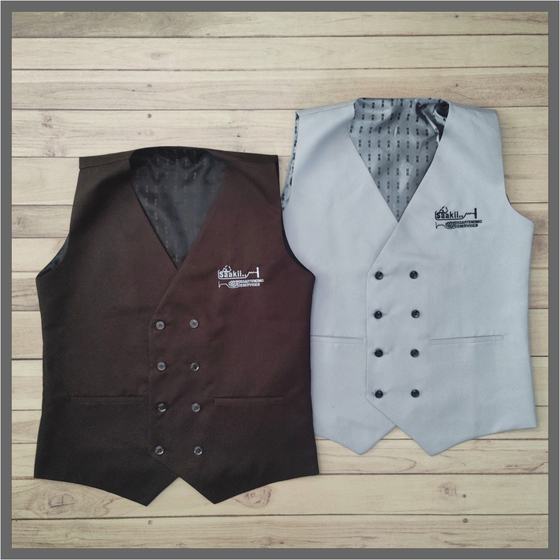
Captains run sections and handle guest issues, so they must look senior. A double-breasted waistcoat, a waistcoat with lapels, or a blazer over the shirt all work. In smaller rooms where the manager also acts as maitre d', a well-cut blazer in the house colour is the simplest signal. See our manager waistcoat and blazer guide.
Hosts
The host is often the most visible person in the restaurant and usually has the most individual outfit: a tailored jacket, a well-cut dress, or for Indian fine dining, a refined kurta or tunic set. It should sit in the same colour family as the team, but it does not need to match. Our hostess uniform guide has more ideas.
Planning a fine-dining uniform system? Send us your roles, headcount and a few photos of the room. Our design team will suggest a look per role and send swatches.
WhatsApp +91 98213 34906 Email info@restrocart.comFabrics that look premium and survive service
Fine-dining uniforms need to look expensive at a distance of one metre, under warm lighting, after forty washes. That narrows the fabric choice.
- Shirts: a fine cotton-rich poplin or twill, or a good poly-cotton blend for easier care. Look for a smooth face, a slight sheen and a fused collar that stays crisp. White and ivory shirts need enough density that they are not see-through.
- Waistcoats and blazers: poly-viscose suiting (commonly 65:35 or 70:30) holds shape, resists creasing and is machine washable. Wool blends drape beautifully but usually need dry cleaning. Textured weaves such as herringbone and fine checks add depth under low light.
- Long aprons: a cotton or poly-cotton twill or drill heavy enough to hang straight, usually in the 240 to 300 GSM range, or leather and leatherette for sommeliers and bar staff.
- Trousers: the same suiting as the waistcoat, or a poly-viscose trouser fabric with a little stretch for comfort.
Ask for physical swatches and look at them under your own restaurant lighting. A navy that looks rich in daylight can turn black under warm evening light.
Tailoring and fit
In fine dining, fit is the difference between a uniform and a costume. We recommend:
Fine-dining fit checklist
- Take individual measurements for every waistcoat, blazer and trouser, or run a size set trial on site.
- Offer women's cuts for shirts, waistcoats, blazers and trousers, not unisex sizes.
- Check sleeve length: shirt cuffs should show slightly beyond a blazer sleeve.
- Check trouser length with the shoes staff will actually wear.
- Make sure waistcoats cover the waistband when staff lean over a table.
- Check armholes allow a tray or bottle to be lifted to shoulder height.
- Hem long aprons consistently, so every server's apron ends at the same point on the leg.
- Allow for alterations: a few staff will need adjustments after the first week.
Our uniform sizing guide explains how we handle measurements for teams outside Delhi.
Colour restraint: building the palette
The most elegant fine-dining uniforms we make use no more than three colours. A reliable approach:
- Base colour from the room: the upholstery, the wood, the wall finish. Often charcoal, navy, deep green, chocolate or black.
- Shirt colour: white, ivory, pale blue or a soft stripe, chosen to contrast with the base.
- Accent: your brand colour, used only in piping, lining, thread, a collar or the apron ties.
Separate roles by shade within the palette rather than by adding new colours: servers in a mid tone, sommeliers and captains in the deepest tone, hosts in the most refined fabric. Our restaurant uniform colours guide explains how lighting and cuisine affect the choice.
Blazers: when a fine-dining team needs them
Blazers are the most formal layer and the most expensive to make well. They make sense for managers and maitre d's, for hotel fine-dining outlets, for private dining and events, and for north Indian winters, when a blazer does double duty as warmth. For servers, a blazer usually gets in the way of carrying and clearing; a waistcoat gives the same polish with more freedom.
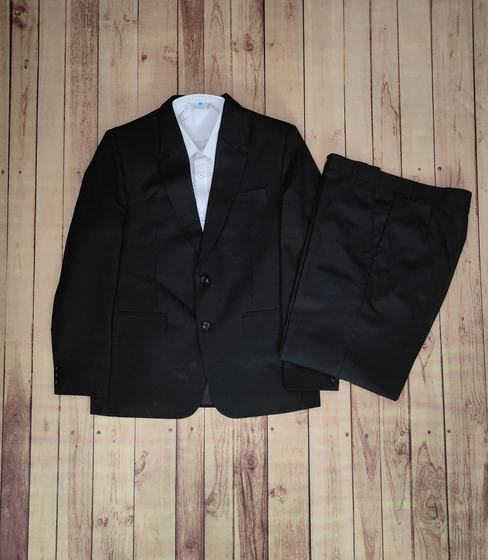
If you add blazers, get the shoulder and sleeve fit right first. Everything else can be adjusted; shoulders cannot.
Branding that stays quiet
- Tonal embroidery: the logo stitched in a thread one shade lighter or darker than the fabric.
- Lapel crest or pin: a small metal pin on a blazer or collared waistcoat.
- Coloured lining: brand colour inside the waistcoat or blazer, visible only in movement.
- Custom buttons for heritage and hotel properties.
- Name badges in brushed metal rather than printed plastic. See our name badges guide.
Common fine-dining uniform mistakes
- Choosing from a catalogue photo, not the room. A uniform that looks great on a white background can clash with your walls and lighting. Always check swatches in the dining room at service time.
- Too many colours. Each new role gets a new colour, and within a year the floor looks like a rainbow. Separate roles by shade and layer instead.
- Logos that are too big. A large embroidered logo on a waistcoat instantly reads as mid-market. Go smaller and tonal.
- Ignoring the shoes. Trousers hemmed without the real shoes break in the wrong place, and scuffed shoes undo a good uniform.
- One sample, no trial. Tailored pieces need a size set on real bodies. The cost of a trial is tiny compared with re-cutting a team's waistcoats.
- Forgetting runners, bussers and hosts. They are in the room too. A simplified version of the server look keeps the whole team consistent.
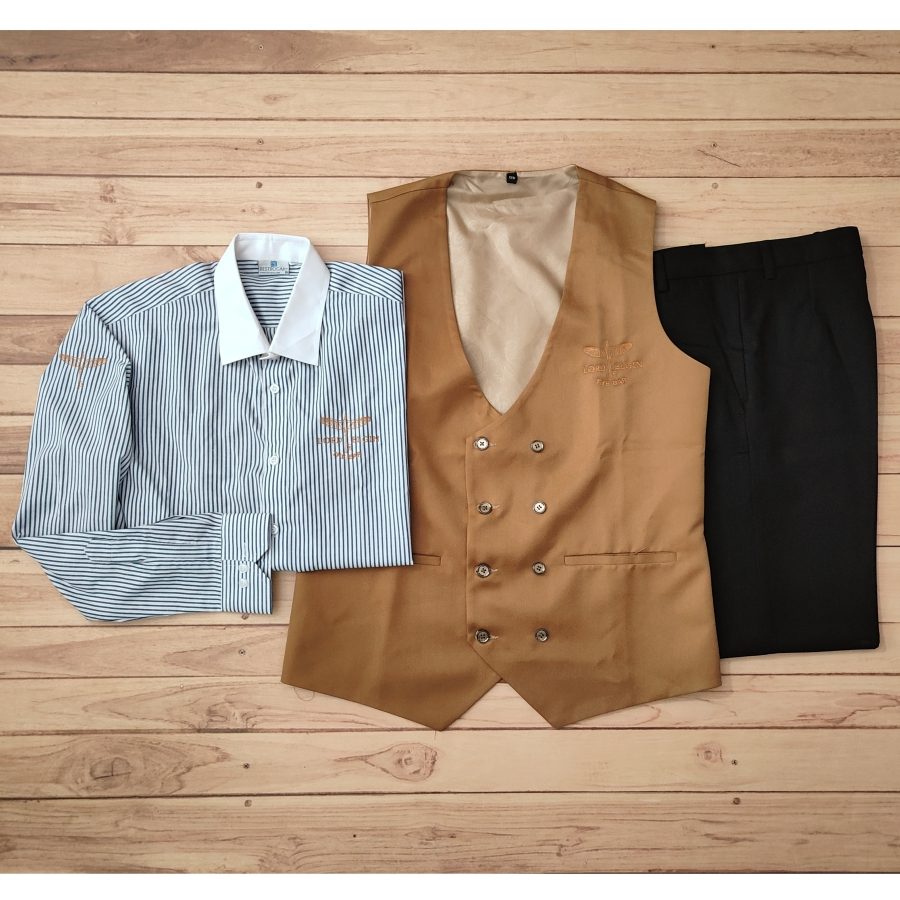
The Lord Elgin set at the top of this guide shows the idea in practice: a striped shirt, a tan double-breasted waistcoat and black trousers, three pieces in a restrained palette that read as formal without a single large logo.
Care and replacement
Fine-dining uniforms are only as good as their condition on a Saturday night. Plan three shirts per person, two waistcoats or aprons per person, and one blazer per manager with a spare in common sizes. Use a commercial laundry with pressing if you can. Check uniforms weekly and replace anything with shine at the seat, frayed cuffs or faded aprons; in a fine-dining room, guests notice. We keep your fabric codes, patterns and artwork on file, so replacements match the originals as closely as possible.
Want a fine-dining look that matches your room? Send photos of your interiors and your team structure. We will propose a palette and a look per role.
WhatsApp +91 98213 34906 Email info@restrocart.comSee real service work in our waiter uniforms gallery. When you are ready, message us on WhatsApp or build your order in our quote builder.
See the real thing: 32 sweaters and cardigans we have made · 39 waistcoats we have made · 12 manager blazers we have made