Style guide, Uniforms
Kitchen Brigade Uniforms by Rank and Section: How to Colour-Code Executive Chef, Sous Chef, CDP, Commis and Stewarding Uniforms
In a busy kitchen, anyone should be able to see who is in charge in a second. Kitchen uniforms by rank make that possible: the executive chef, sous chef, chefs de partie, commis and stewarding team each wear something a little different, while still looking like one brigade. Done well, it speeds up service, helps front-of-house find the right person, and gives junior cooks something visible to work towards.
This guide explains how to colour-code and differentiate kitchen uniforms by rank and by section, with the practical systems we recommend to restaurant and hotel kitchens.
Why differentiate kitchen uniforms at all?
- Speed. When a server needs a decision on an allergen or a refire, they should find the sous chef without asking.
- Accountability. Designations and names on coats make it clear who signed off a dish or a temperature log.
- Hygiene. Section colours on aprons show when someone has walked from raw meat to pastry without changing.
- Motivation. In a brigade, moving from commis to CDP is a real step. A visible change in uniform recognises it.
- Guest perception. In open kitchens and at chef's tables, a clear hierarchy looks professional.
The golden rule: one design language, a few variables
The most common mistake is designing a completely different coat for each rank. It looks disjointed and costs more in patterns, samples and reorders. Instead, fix the things that make the team look like one team, and vary a small number of markers.
| Keep the same for everyone | Vary by rank |
|---|---|
| Logo, embroidery style and thread colour | Coat colour (for one or two ranks only) |
| Fabric and fit | Collar or piping colour |
| Trouser colour and style | Closure type: studs for the line, cloth buttons for seniors |
| Apron style for the same section | Headwear: toque, skull cap or bandana |
| Size chart | Embroidered name and designation |
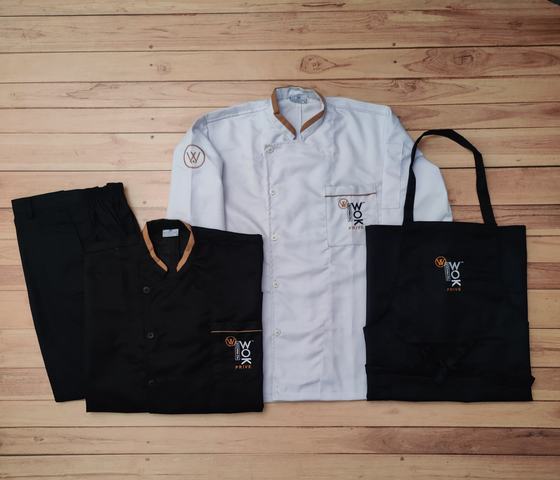
Kitchen uniforms by rank: a practical system
The table below is a starting point we often suggest. It follows the classic brigade structure; adapt it to your own titles.
| Rank | Coat | Distinguishing marker | Headwear |
|---|---|---|---|
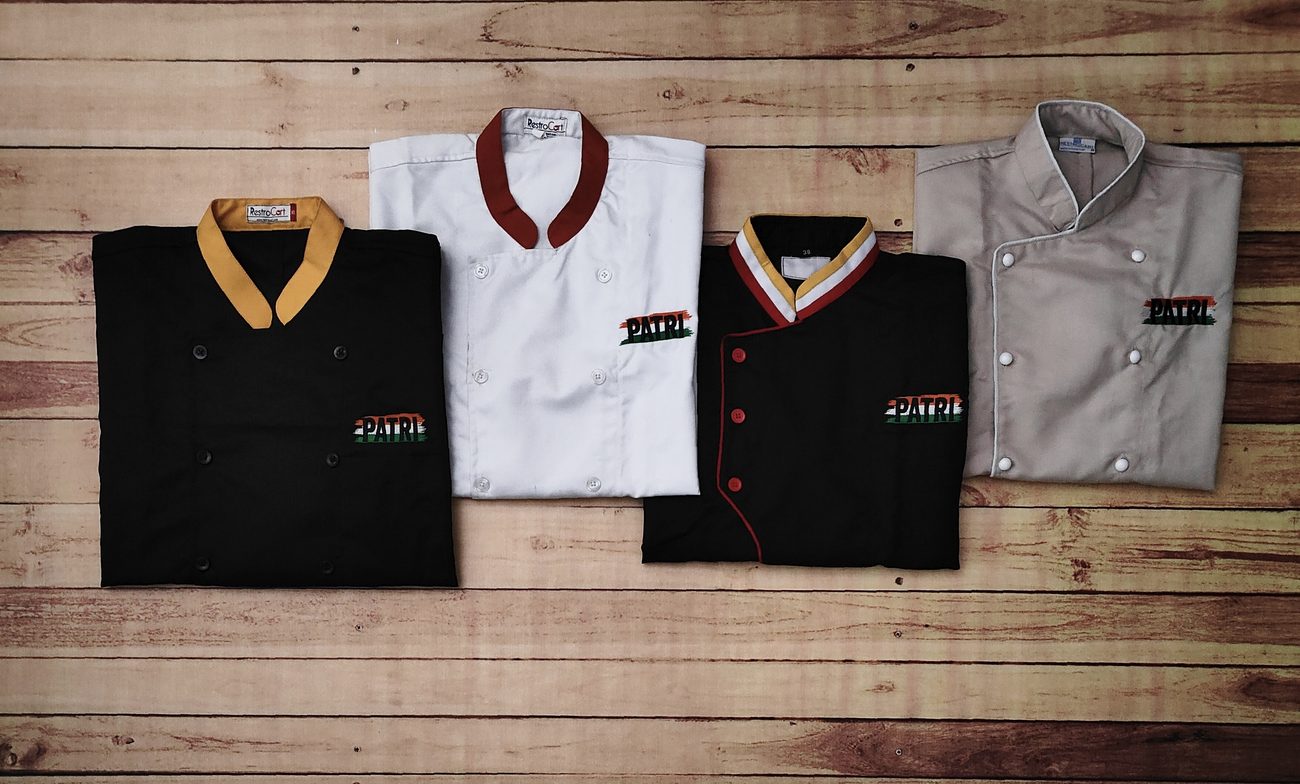
| Executive chef / chef de cuisine | Double-breasted, full sleeve, premium fabric | White with black or gold piping, or black with a brand-colour collar; knot buttons; name and title embroidered | Tall toque or no cap at the pass |
| Sous chef | Double-breasted or offset, full sleeve | Contrast collar or a second piping colour; 'Sous Chef' embroidered | Short toque or branded skull cap |
| Chef de partie (CDP) | Offset single-breasted, full or half sleeve | Piping colour by rank or section; name embroidered | Skull cap or cap in section colour |
| Demi chef / commis | Single-breasted, half sleeve | Plain coat in team colour, logo only | Skull cap or bandana |
| Kitchen trainee / intern | Same as commis | Different cap colour or 'Trainee' on the pocket | Skull cap |
| Stewarding / pot-wash | Polo or t-shirt, not a chef coat | Different garment altogether; dark colour | Cap |
Executive chef
The executive chef's coat is the most visible, so it justifies the best fabric and the most careful detailing: a double-breasted front, knot or cloth buttons, a softer collar lining, and name and title embroidered on the chest. Some chefs prefer black or denim, which is fine; what matters is that it is distinct from everyone else's.
Sous chef
The sous chef should be recognisable from across the kitchen without looking like a different restaurant. A contrast collar or a second piping colour does this cleanly. Embroidering "Sous Chef" above the pocket removes any doubt.
Chefs de partie
CDPs run sections, so it is useful if their marker also tells you which section. Piping or cap colour by section works well here.
Commis and trainees
Keep commis coats simple: team colour, logo, half or full sleeve depending on the station. Simple coats are cheaper to replace, which matters because this is the rank with the most turnover. If you run a training programme, a different cap colour for trainees is a helpful safety signal for the rest of the kitchen.
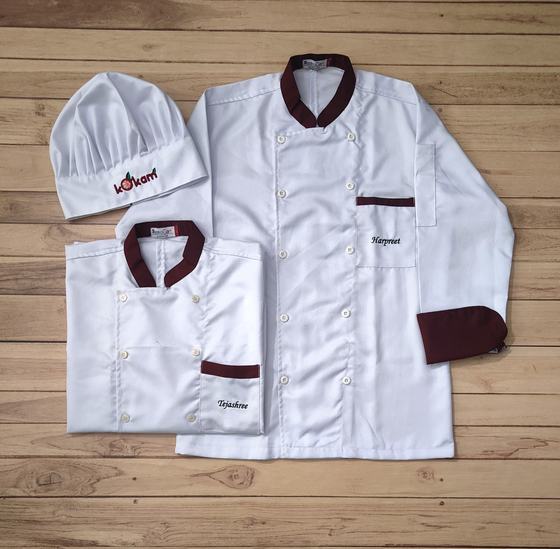
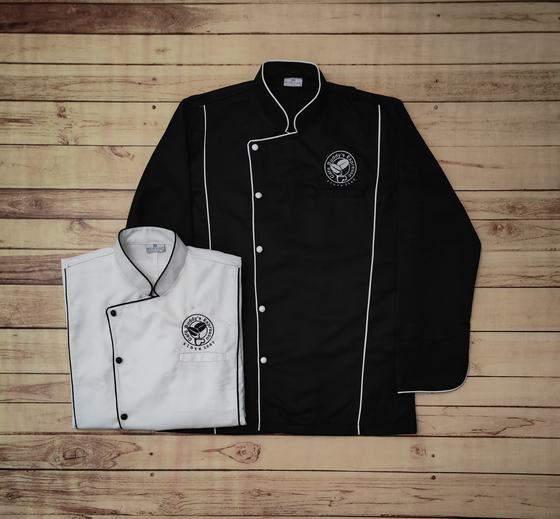
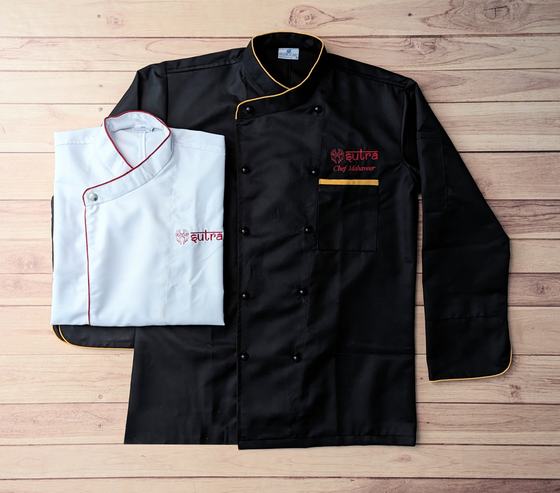
Planning a uniform system for your brigade? Send us your kitchen ranks and headcount. We will map a coat, collar, cap and apron combination for each rank and send mockups.
WhatsApp +91 98213 34906 Email info@restrocart.comColour-coding kitchen uniforms by section
Rank tells you who is in charge. Section tells you where someone has been working. Many kitchens borrow the logic of colour-coded chopping boards and apply it to aprons, caps or neckerchiefs, especially where raw meat, seafood, vegetarian and pastry work happen close together.
| Section | Example apron or cap colour | Why it helps |
|---|---|---|
| Butchery and raw meat | Red or maroon | Flags raw protein handling; hides staining |
| Seafood | Blue | Separates from meat and ready-to-eat areas |
| Vegetarian and Indian curries | Green | Useful in kitchens serving strict vegetarian guests |
| Pastry and bakery | White or cream | Flour-friendly; signals a clean, allergen-aware zone |
| Hot line (tandoor, grill, wok) | Black or charcoal | Hides soot and oil |
| Garde manger and cold kitchen | Light grey or sky blue | Ready-to-eat zone, visibly distinct |
The colours above are examples. Choose your own and write them into your kitchen SOP. Section colour-coding works best on aprons and caps rather than coats: they are cheaper, they change more often, and a cook moving between sections can swap an apron in seconds. Our chef caps and headwear guide covers cap styles that take colour well, and our kitchen uniform hygiene guide explains how uniforms fit into a food safety routine.
The stewarding team needs its own uniform
Stewards and pot-wash staff are often handed old chef coats. It is the wrong garment: their work is wet, not hot, and a chef coat soaks through within an hour at the sink. A better kit is a dark polo or t-shirt in a quick-drying fabric, a waterproof bib apron, a cap and non-slip shoes. It also makes the stewarding team clearly identifiable, which helps when the kitchen needs clean pans in a hurry. Our guide to waterproof aprons for kitchens covers the apron options.
Names and designations: the quiet marker
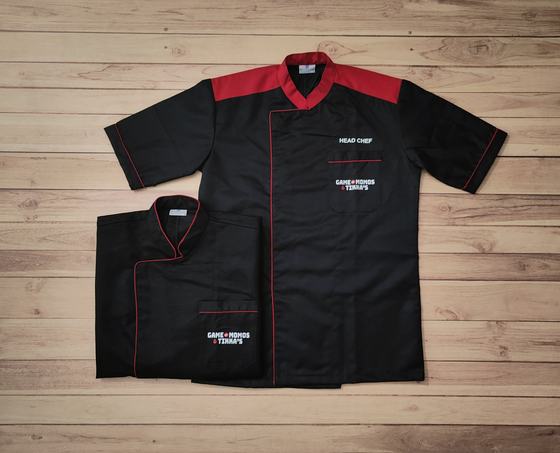
Embroidering a designation such as Executive Chef, Head Chef or Sous Chef above the chest pocket is the simplest and most economical way to show rank. Adding the chef's name makes the coat personal and is a small, welcome gesture for senior staff. For commis and CDPs with higher turnover, many kitchens use a removable name badge instead, so coats can be reissued. See our name badges guide for options.
Before you finalise a rank system
- List every kitchen title you use and group them into four or five levels at most.
- Choose one visible marker (collar, piping or coat colour) and one quiet marker (embroidered title).
- Decide whether section colours go on aprons, caps or both.
- Give stewarding a practical kit of its own.
- Plan spares by level: commis and stewards need more reserve stock than senior chefs.
- Keep a written spec per rank so reorders and promotions are simple.
Common mistakes with rank-based uniforms
- Too many levels. Six coat variations for a twelve-person kitchen is confusing. Four or five levels is plenty, and many restaurants need only three: head chef, line, stewarding.
- Rank markers nobody outside the kitchen understands. Brief the floor team and managers on the system, ideally with a one-page chart in the pass area.
- Premium fabric only for seniors. Commis work the hottest, longest shifts. Give everyone a breathable, well-cut coat; save the premium details, not the comfort, for senior chefs.
- Coat colours that fade into each other. Charcoal and black look identical after a few months of hot washing. Choose markers with clear contrast.
- No plan for promotions. Keep a small stock of the next-level coat or piping so a promoted cook gets the new uniform in days, not weeks.
Rank systems for hotels and multi-outlet groups
Hotels and restaurant groups often run several kitchens under one roof or brand: an all-day diner, a specialty restaurant, banqueting and a central kitchen. Keep the rank system the same across outlets so a sous chef moving from banqueting to the specialty restaurant still wears the sous chef's marker, and let the outlet identity show through the logo or coat colour. Our guide to hotel multi-outlet uniform programmes explains how to structure this across a property, and our chef coat styles guide explains the coat options for each rank.
For production kitchens that supply several outlets, see our guide to central kitchen and production uniforms, where hygiene zoning matters more than rank.
What it looks like to order a brigade uniform system
At RestroCart, we start with your list of ranks and headcount, then our design team sends a single mockup sheet showing every rank side by side, so you can see the hierarchy at a glance. We send fabric and piping swatches, make one sample per rank, and start production after you approve. Garments are packed by rank and size, and delivered anywhere in India. Because patterns, fabric codes and embroidery files are kept on file, promoting a commis to CDP later is as simple as a WhatsApp message.
Want a rank-by-rank mockup for your kitchen? Share your titles, headcount and logo, and we will send a side-by-side design for the whole brigade.
WhatsApp +91 98213 34906 Email info@restrocart.comGet a quote for your kitchen brigade
A clear rank system makes a kitchen calmer and faster, and it costs little more than a uniform with no system at all. Message us on WhatsApp at +91 98213 34906 or start in our quote builder, and we will come back with mockups, fabrics and a timeline.
See the real thing: 44 chef caps we have made