Buying guide, Uniforms
Uniforms for Central Kitchens, Bakery Production Floors and Food Manufacturing: Lab Coats, Hair Covers, Aprons and Hygiene Zoning
A central kitchen, bakery production floor or small food manufacturing unit is a different world from a restaurant kitchen. There are no guests watching, but there are auditors, clients and brands relying on you to produce safe food at volume. Central kitchen uniforms, including production coats, lab coats, hair covers and aprons, are part of that food safety system, not a branding exercise.
This guide explains what production staff should wear, how to set up hygiene zoning with colour, and the construction details that matter on a production floor. It is written for operators of central kitchens for restaurant chains and cloud kitchen brands, bakery and patisserie production units, caterers and packaged food start-ups.
Why production uniforms are different from restaurant uniforms
In a restaurant, the uniform does three jobs: it protects the cook, it expresses the brand, and it looks good in front of guests. On a production floor, the order of priorities changes:
- Protect the product from the person. Hair, fibres, buttons, sweat and contamination from street clothes must stay out of the food.
- Make hygiene visible. Supervisors should be able to see at a glance whether a uniform is clean and whether someone is in the right zone.
- Protect the person. From heat at ovens and kettles, cold in chillers, and water at wash stations.
- Identify the team. Branding still matters for client audits and visitors, but it comes last.
Our kitchen uniform hygiene guide covers the general hygiene expectations for food handlers in India. This article goes further into production-specific choices.
The core central kitchen uniform, role by role
| Role or area | Upper garment | Head | Apron | Notes |
|---|---|---|---|---|
| Hot kitchen cooks (bulk gravies, rice, kettles) | White or light chef coat, full sleeve | Skull cap over hair net | Waterproof bib apron | Breathable poly-cotton; press studs |
| Bakery production (mixing, shaping, ovens) | White half or full-sleeve coat | Skull cap or bakers' cap over net | Cotton or poly-cotton bib apron | Flour-friendly; no dark colours |
| Butchery and raw prep | White coat or lab coat in zone colour | Cap and net, beard cover | Waterproof apron in zone colour | Change apron between raw and cooked |
| Portioning and packing | Knee-length lab-style coat | Bouffant or skull cap over net | Disposable apron if needed | Covers street clothes completely |
| Cold room and chillers | Coat plus insulated jacket for long stints | Cap and net | None | Keep chiller jackets on site and zone-coloured |
| Stewarding and pot-wash | Dark polo or t-shirt | Cap | Heavy waterproof apron | Non-slip footwear |
| Stores, dispatch, maintenance | Polo or shirt in a distinct dark colour | Cap | None | Colour shows they stay out of high-care areas |
| Visitors and auditors | Disposable or washable visitor coat | Disposable cap | None | Keep a stock at the entry |
Lab coats and production coats: what to specify
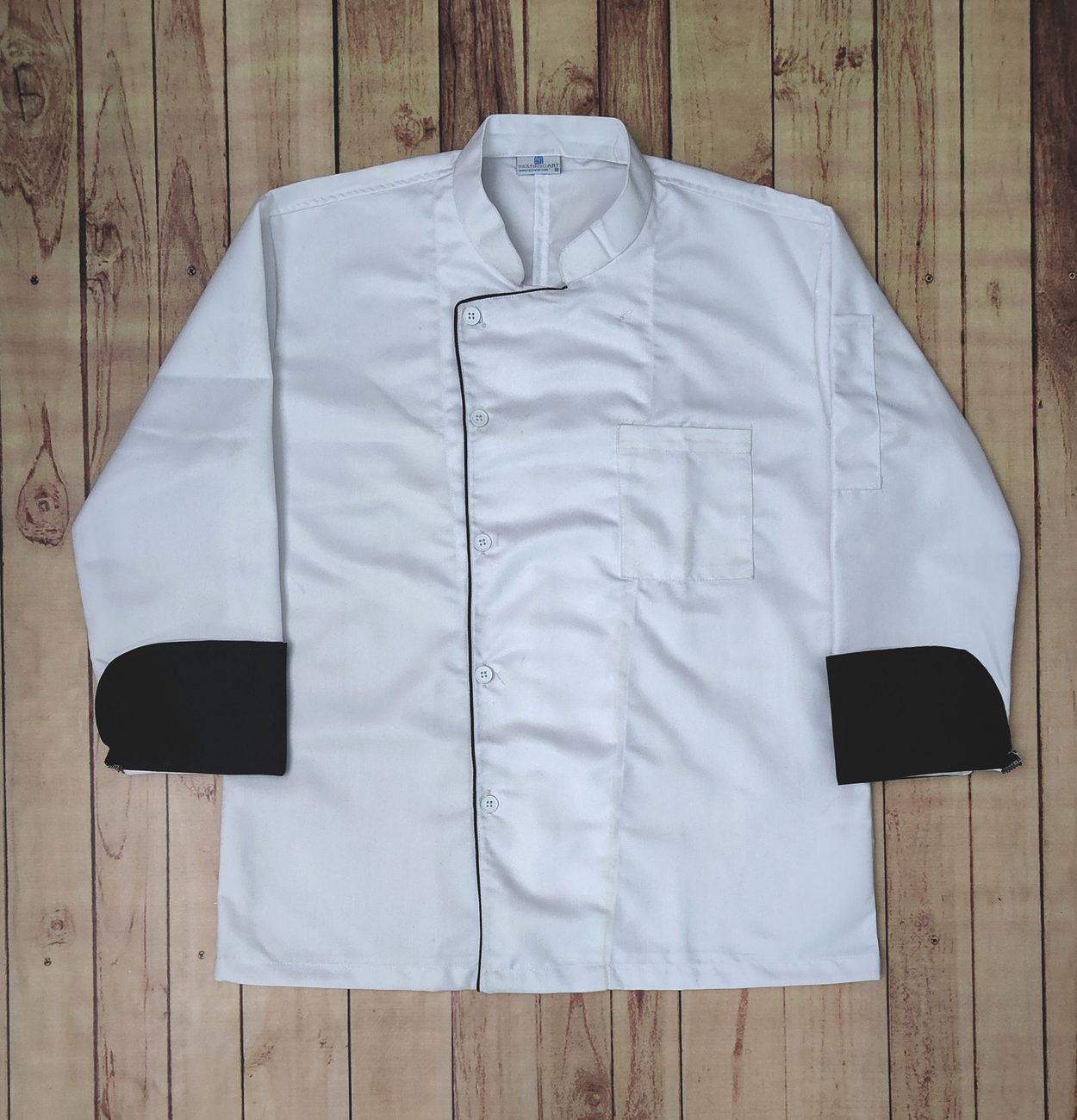
For portioning, packing, quality control and supervisors, a longer coat is often better than a chef coat. It covers street clothes to the knee and is quick to put on over a base uniform. Whether you call it a lab coat, a production coat or a white coat, these are the details that make it right for food:
Production and lab coat specification
- Press studs or a concealed fastening, not sewn buttons, to avoid buttons falling into product.
- No external pockets above the waist. Lower pockets or an inside pocket only.
- Knitted or elasticated cuffs on full sleeves, or half sleeves where arms are washed frequently.
- Knee length for packing and portioning, with side vents for movement.
- No loose trims: avoid decorative piping that can fray, and use embroidered logos with backing rather than badges or pins.
- White or light zone colours so soiling is visible and coats can be washed hot.
- Durable poly-cotton that tolerates hot, frequent laundering without shrinking or pilling.
- Collar studs or a close stand collar so nothing hangs loose at the neck.
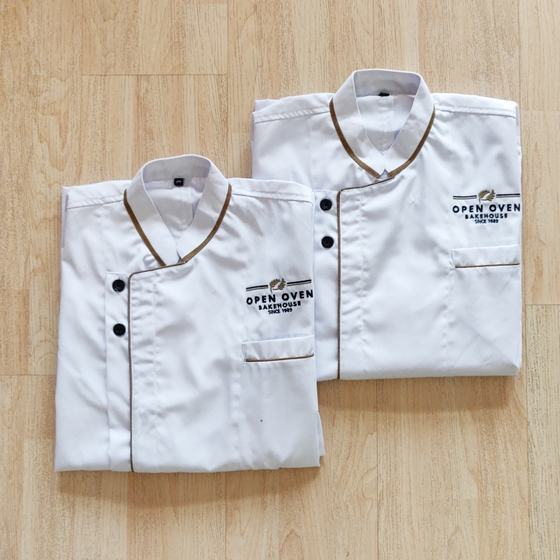
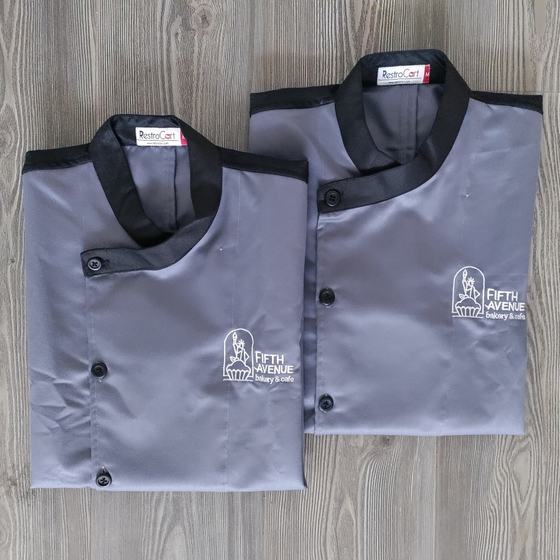
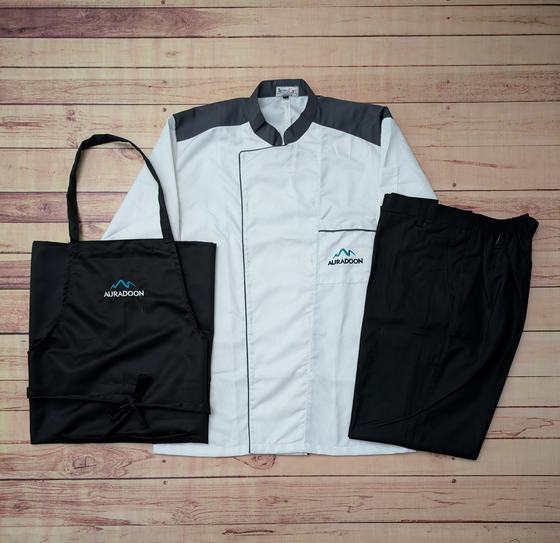
Standard white chef coats also work well on production floors if they meet these rules. Our coats for kitchens with regular audits usually use a white or light body, contrast only at the cuffs or collar, and embroidery rather than print.
Hair covers, caps and beard covers
Hair is one of the most common physical contaminants in food complaints, so head covering is the part of the production uniform to get absolutely right.
- Hair nets contain the hair fully. They are usually disposable and bought as a consumable.
- Skull caps and bouffant-style caps go over the net. They carry the zone colour and the brand, and they are washable. Tie-back skull caps adjust to different head sizes and stay put through a shift.
- Beard covers are needed for staff with beards or moustaches working with open product.
- Turbans and head coverings worn for religious reasons can be accommodated with a clean cover or net over them; agree the approach with your staff and auditor.
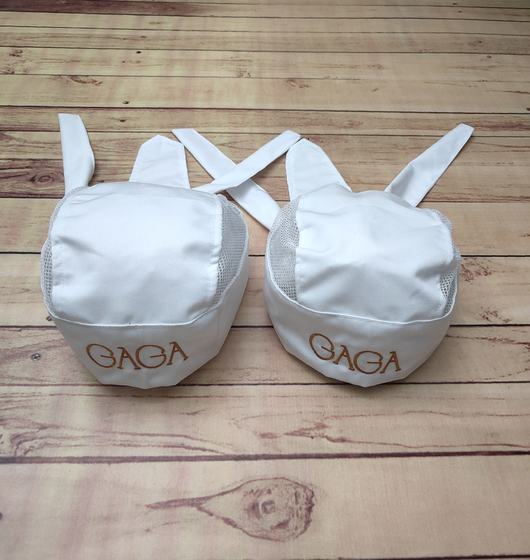
We make branded skull caps and cooks' caps in any zone colour; disposable nets are best bought from a hygiene consumables supplier. Our chef caps guide compares cap styles.
Setting up a central kitchen or bakery unit? Send us your zones, headcount per zone and shift pattern. We will propose a coat, cap and apron plan with zone colours and set counts.
WhatsApp +91 98213 34906 Email info@restrocart.comHygiene zoning: using colour to separate areas
Zoning means dividing the facility into areas by risk: where raw material comes in, where it is cooked, where cooked food is handled, and where it is packed. People and uniforms should not move from a lower-hygiene area into a higher one without changing. Colour makes this visible.
| Zone | Typical activities | Example uniform colour |
|---|---|---|
| Goods-in and stores | Receiving, dry stores, dispatch | Navy or grey |
| Raw preparation | Butchery, vegetable washing, marination | White with red or maroon cap and apron |
| Cooking | Kettles, ovens, tandoor, fryers | White with black cap and apron |
| High-care (post-cook) | Portioning, cooling, assembly of ready-to-eat food | White with light blue or green cap and apron |
| Packing | Sealing, labelling, boxing | White lab-style coat, zone cap |
| Stewarding and washing | Pots, trays, crates | Dark polo with heavy waterproof apron |
The colours are examples. What matters is that each zone has a clear colour, the colour is on the most visible pieces (caps and aprons are ideal), and the rules are written into your SOP and explained to every new joiner. If your facility also runs a restaurant brigade, our guide to kitchen uniforms by rank and section shows how zone colours and rank markers can work together.
Aprons on the production floor
Aprons do the heavy lifting in a production kitchen: they take the splashes, carry the zone colour, and are cheaper to change than a coat. A practical mix is:
- Waterproof bib aprons for washing, raw prep, butchery and kettle work. Wipeable and quick to sanitise. See our waterproof aprons guide.
- Poly-cotton bib aprons for bakery and general cooking, laundered with coats.
- Disposable aprons for high-care tasks, visitors and short changeovers.
Avoid canvas and leather aprons on production floors. They look great in a cafe but are hard to launder hot and hold on to contamination.
Laundry, changing rooms and set counts
Production uniforms only work if they stay clean from the changing room to the line. The practical rules:
- Uniforms stay on site. Staff change on arrival and leave uniforms in a soiled bin at the end of the shift. Uniforms worn on the bus or at home defeat the purpose.
- Central laundering. An in-house machine or an outsourced laundry gives you control over temperature and detergent, which home washing does not.
- Plan sets around turnaround. If staff need a clean coat every shift and the laundry returns every two days, each person needs enough sets to cover the gap plus a spare.
- Label by size, not name, for high-turnover teams, so sets can be pooled and reissued.
- Retire damaged garments. Frayed cuffs, missing studs and loose threads are foreign-body risks.
Our uniform care guide covers wash temperatures and detergents for poly-cotton and cotton.
Bakery production floors: special considerations
Bakeries have their own challenges: flour everywhere, hot deck and rotary ovens, early morning shifts, and often a retail counter at the front. Keep production staff in white or light coats, half sleeve for mixing and shaping, full sleeve for oven work, with caps over nets. Give the retail counter a different, customer-friendly uniform so production garments never go front-of-house. Our bakery and patisserie uniform guide covers the counter side in detail.
Ordering production uniforms from RestroCart
At RestroCart we make coats, lab-style production coats, caps and aprons to a written specification, with zone colours and discreet embroidered branding. The process is the same as for our restaurant work: you share your zones, headcount and laundry set-up; our design team proposes a uniform plan per zone; we send swatches and a sample set; and production starts only after approval. Typical timelines are two to three weeks for design and sampling and two to four weeks for production. Orders can be packed by zone and size and delivered anywhere in India, and your specifications stay on file so replacement stock matches. You can see our coats on the chef coats gallery.
Need a uniform plan for your production floor? Share your zones and headcount. We will reply with a zone-by-zone uniform proposal and a timeline.
WhatsApp +91 98213 34906 Email info@restrocart.comGet a quote for central kitchen uniforms
A production floor with the right coats, caps, aprons and zone colours is easier to supervise, easier to audit and safer for your product. Message us on WhatsApp at +91 98213 34906 or add the pieces you need in our quote builder, and we will come back with a plan and timeline.