Style guide, Uniforms
Waistcoats for Waiters, Bartenders and Managers: Collared vs V-Neck, 4, 5 or 6 Buttons, Fabric and Fit
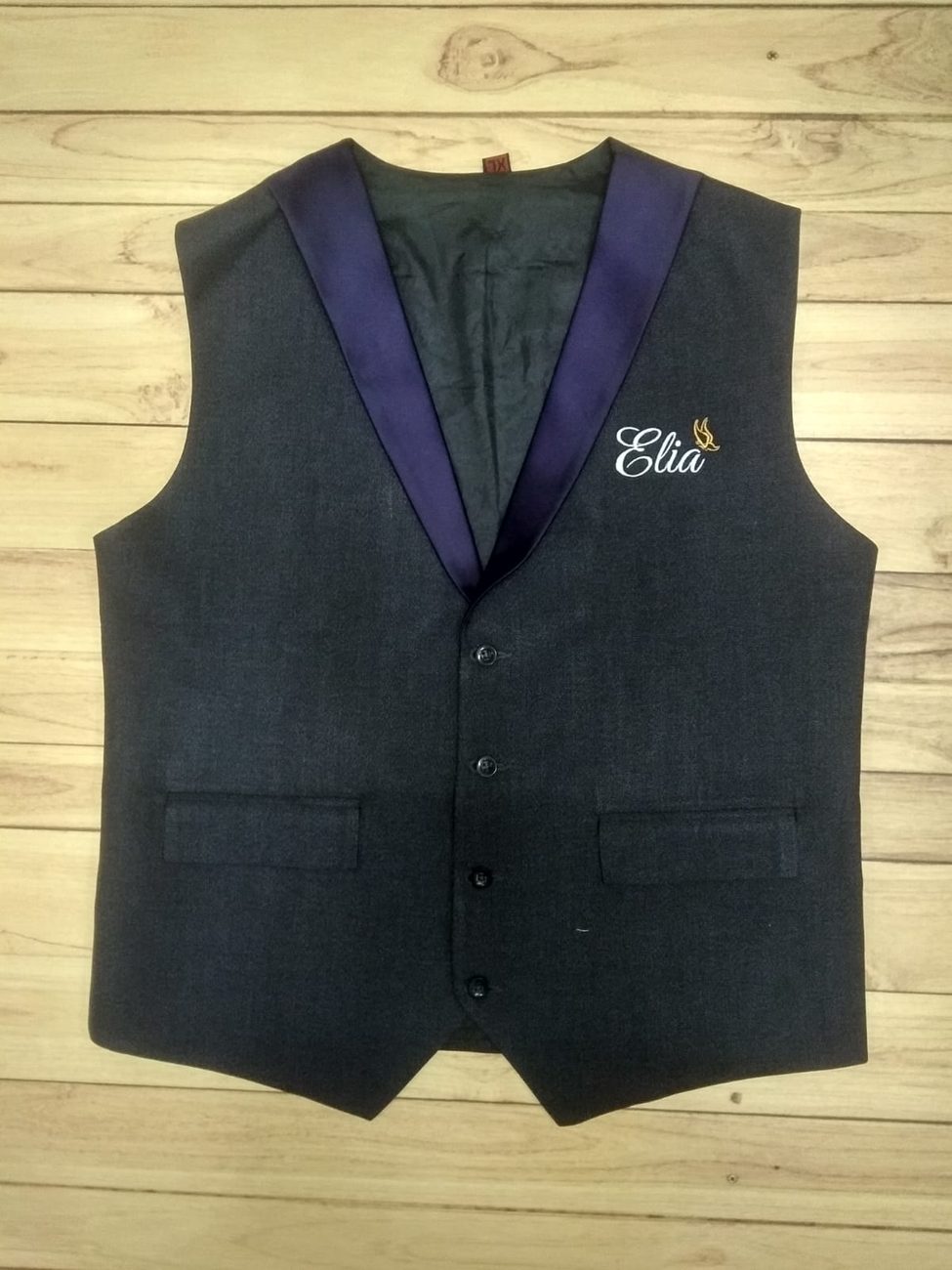
A waistcoat is the quickest way to make a service team look finished. It sharpens a plain shirt, gives the floor a clear visual identity, hides the creases a long shift puts into a shirt front, and gives you a place for a logo that does not shout. That is why waistcoats for waiters, bartenders and managers are a regular request at our workshop in Naraina, New Delhi.
The trouble is that "waistcoat" covers a lot of garments. A V-neck five-button vest, a shawl-lapel cocktail waistcoat and a mandarin-collar Nehru-style jacket all count, and each says something different about your restaurant. This guide walks through the choices we discuss with every client: neckline and collar, button count, single or double-breasted, fabric, fit, back straps, and how to pair a waistcoat with shirts and aprons.
Waistcoat styles for waiters: the four families
Almost every restaurant waistcoat falls into one of four families. Start here, because the family you pick decides most of what follows.
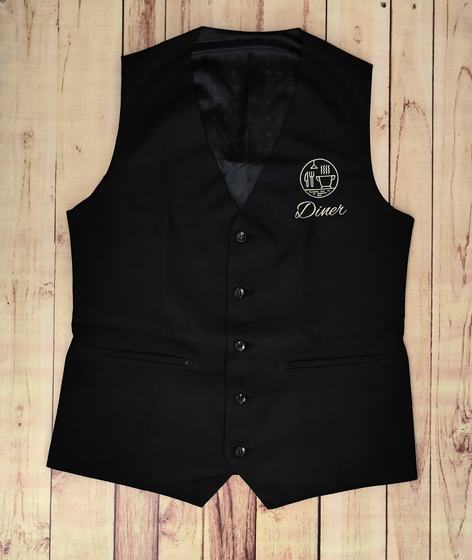
1. V-neck, no collar
The classic waiter waistcoat. A clean V opening, welt pockets, a straight or pointed hem and a lined back. It works in almost every setting, from a bistro to a hotel coffee shop, and it is the easiest to fit across a mixed team. If you are unsure, start here.
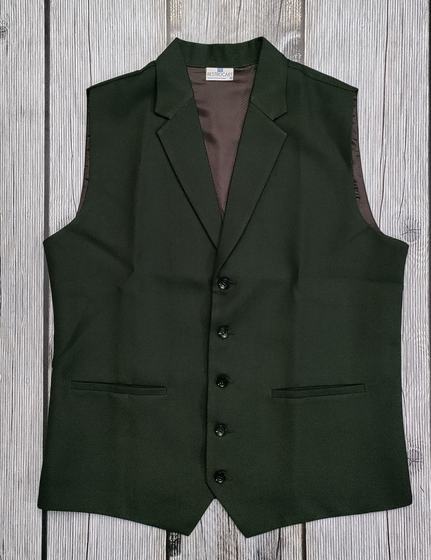
2. Collared: notched or shawl lapel
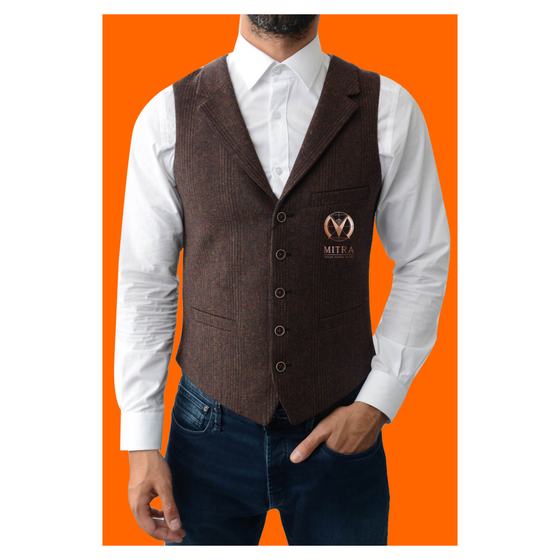
A lapel turns the waistcoat into something closer to tailoring. A notched lapel looks like a jacket collar and reads as sharp and modern. A shawl lapel is a smooth rolled collar, often in a contrast fabric, and reads as evening, cocktail-bar and slightly theatrical. Both are excellent for managers, captains and head bartenders.
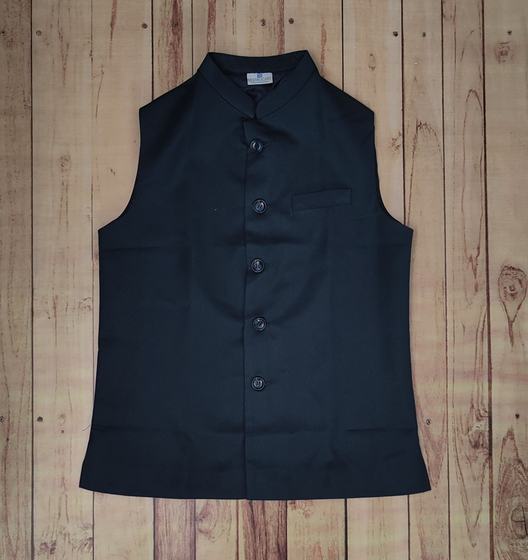
3. Mandarin or Nehru collar
A short standing collar with a straight front, sometimes called a bandhgala or Nehru waistcoat. It suits Indian and modern Indian restaurants, heritage properties and banquet teams, and pairs naturally with kurta-style or mandarin-collar shirts. It is also the most forgiving for staff who find a deep V uncomfortable.
4. Double-breasted
Two columns of buttons and an overlapping front. It is formal, confident and a little old-world, which is exactly why fine-dining rooms and cocktail bars like it. It is less forgiving on fit, so it needs a proper size trial.
4, 5 or 6 buttons: what the button count changes
Button count is not just decoration. On a single-breasted waistcoat, it decides how deep the V is, how much of the shirt and tie shows, and how formal the garment looks.
| Front | How it looks | Best for | Watch out for |
|---|---|---|---|
| 4 buttons | Deep V, shows plenty of shirt and tie, relaxed and modern | Cocktail bars, cafes, younger concepts, bartenders | Can gape when staff lean over tables; needs a good fit at the chest |
| 5 buttons | Balanced V, the standard waiter look | Most restaurants, hotel coffee shops, banquets | Few drawbacks; the safe default |
| 6 buttons | High closure, covers more shirt, formal and traditional | Fine dining, heritage properties, captains | Can feel warm and stiff; shorter staff may find it covers too much |
| Double-breasted (6 or 8) | Formal, structured, distinctive | Managers, head bartenders, fine-dining captains | Least forgiving on fit; always trial a size set |
Two small details matter as much as the count. First, the hem: a pointed hem is dressier and sits well over trousers; a straight hem is more casual and works well over a long apron. Second, the buttons themselves: a matte black or horn-look button disappears into the fabric, while a metal button with a pattern becomes part of the brand. Ask to see button options alongside the fabric swatches.
Waistcoats by role: waiters, bartenders and managers
Waiters and stewards
For the floor team, choose comfort and consistency. A five-button V-neck in a mid-weight suiting, with two functional welt pockets for a pen and a notepad, is the workhorse. Keep the colour dark or mid-tone, because waistcoats are washed less often than shirts and a pale front shows every splash. For more on the full server outfit, see our steward and server uniform guide.
Bartenders
Bartenders stretch, reach and shake all shift, so the armholes and back matter more than the front. Ask for a slightly deeper armhole, a breathable lining back and an adjustable strap so the waistcoat stays put when arms go up. A four-button front or a shawl lapel suits most cocktail bars. Our bartender uniform guide covers aprons and shirts for the bar.
Managers and captains
Managers need to be easy to spot. Give them the same colour family as the floor, then change one thing: a notched or shawl lapel, a contrast collar, a double-breasted front, or a blazer over the waistcoat for formal service. Our manager uniform guide explains when a blazer is worth it, and you can see real manager sets on our manager uniforms gallery.
Not sure which waistcoat suits your floor? Send us your concept, roles and brand colours. We will suggest a style per role and send fabric swatches.
WhatsApp +91 98213 34906 Email info@restrocart.comFabrics: what a good waistcoat is made of
A waistcoat has two sides, and they should be made of different things.
- Front panels: a suiting fabric. For restaurants, a poly-viscose blend (commonly 65:35 or 70:30 polyester to viscose) in roughly the 220 to 280 GSM range is the practical choice. It holds a crisp line, resists creasing through a shift, drapes better than pure polyester and survives machine washing. Checks, herringbone and tweed-look weaves add character for bars and heritage spaces; plain weaves are easier to match across reorders.
- Back panel and lining: a smooth polyester or satin-finish lining. It keeps the waistcoat light and cool, slides easily over a shirt and lets you add a contrast colour that only shows when the waistcoat is open.
- Interlining: a light fusible interlining on the front keeps the V and the pocket welts sharp after washing. Cheap waistcoats skip it, which is why they go limp by month two.
Avoid pure cotton fronts for waistcoats. Cotton creases and shrinks, and a waistcoat that has shrunk half an inch at the hem looks worse than one that was never there. If you want a softer, more casual look, a cotton-rich twill or a denim waistcoat can work for cafes, but plan for more pressing. Denim and chambray waistcoats are their own category, with their own care rules.
Getting the fit right
A waistcoat that fits looks expensive even in a modest fabric; one that does not fit looks wrong even in a fine one. These are the points we check at every size trial.
Waistcoat fit checklist
- The hem covers the trouser waistband and belt with the staff member standing and reaching forward.
- No pulling or X-shaped creases across the buttons when buttoned.
- The V does not gape when the wearer leans over a table to serve.
- Armholes are deep enough to lift a tray to shoulder height without the waistcoat riding up.
- The back strap is adjustable, so one size can be tuned across slightly different bodies.
- Shoulders sit flat and do not extend past the wearer's shoulder point.
- Pockets are functional and sized for a pen, notepad or wine key, not just decorative welts.
- The trial is done over the real shirt and apron, not over a T-shirt.
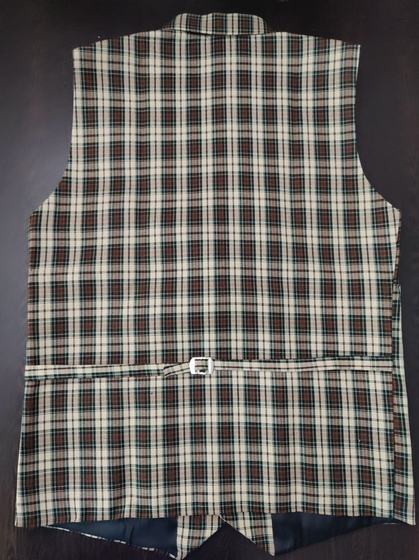
For teams with a wide range of body types, ask for a size set so staff can try on before bulk production, and ask for a ladies' cut where needed: a women's waistcoat is shorter in the body, shaped at the waist and cut with more room at the bust. Our uniform sizing guide explains how to run a size trial.
Pairing waistcoats with shirts, ties and aprons
Shirts
A white or light shirt under a dark waistcoat is the classic contrast. For a warmer, more contemporary look, try a coloured shirt in the same family as the waistcoat, such as a maroon shirt under a sand waistcoat. Full sleeves look more formal and can be rolled in busy service; half sleeves suit hot floors. Mandarin-collar waistcoats pair best with mandarin-collar shirts.
Ties and bow ties
A six-button waistcoat hides most of a tie, so choose a four or five-button front if the tie is part of the look. Bow ties suit shawl lapels and cocktail bars. Many modern restaurants skip neckwear entirely and let an open collar and a good waistcoat do the work.
Aprons
Waistcoats and aprons can clash if you do not plan them together. With a long bistro apron, tie the apron at the natural waist and let the waistcoat hem sit just over the ties, so the waistline looks clean. With a bib apron, the waistcoat usually comes off; a bib over a waistcoat looks bulky. Match the apron to the trousers or the waistcoat, not to both.
Branding a waistcoat without overdoing it
A waistcoat is tailoring, and tailoring wants restraint. The placements that work best:
- Left chest embroidery above or beside the welt pocket, a few centimetres wide, in a thread one or two shades from the fabric colour.
- A monogram or crest on the lapel of a collared waistcoat.
- A contrast lining or collar in your brand colour, which brands the garment without a logo at all.
- Custom buttons in a metal finish, for properties that want a heritage feel.
Printing rarely suits a waistcoat, because suiting fabrics do not take print as cleanly as cotton and a printed logo looks cheap against tailoring. Our embroidery vs printing guide goes into the detail.
Care and reorders
Poly-viscose waistcoats are easy to live with: turn them inside out, wash gently at 30 to 40 degrees, line dry and press on a low setting through a cloth. Keep them away from bleach and high-heat tumble drying, which can shine the fabric and melt fusing. Two waistcoats per person, with three shirts underneath, covers most rotations.
Because suiting is dyed in lots, the colour of a reorder can drift slightly from the first batch. We keep your fabric code, pattern and embroidery artwork on file so the next order matches as closely as possible.
How to order custom waistcoats from RestroCart
Send us your roles, headcount, brand colours and a few reference photos. Our design team will suggest a waistcoat style per role, send fabric and button swatches, and make one sample per style for your approval. Typical timelines are two to three weeks for design and sampling and two to four weeks for production, depending on quantity. We deliver anywhere in India, packed by role and size.
Ready to dress your floor? Tell us how many waiters, bartenders and managers you have, and we will send waistcoat options with swatches.
WhatsApp +91 98213 34906 Email info@restrocart.comIf you are building the whole service look, browse our waiter uniforms gallery and the uniforms catalogue. When you are ready, message us on WhatsApp or use our quote builder to get a price for your team.
See the real thing: 10 catering uniforms we have made · 39 waistcoats we have made