Buying guide, Uniforms
Round-Neck T-Shirt Uniforms for Cafes, QSRs and Bakeries: GSM, Fabrics, Print Methods and What to Pair Them With
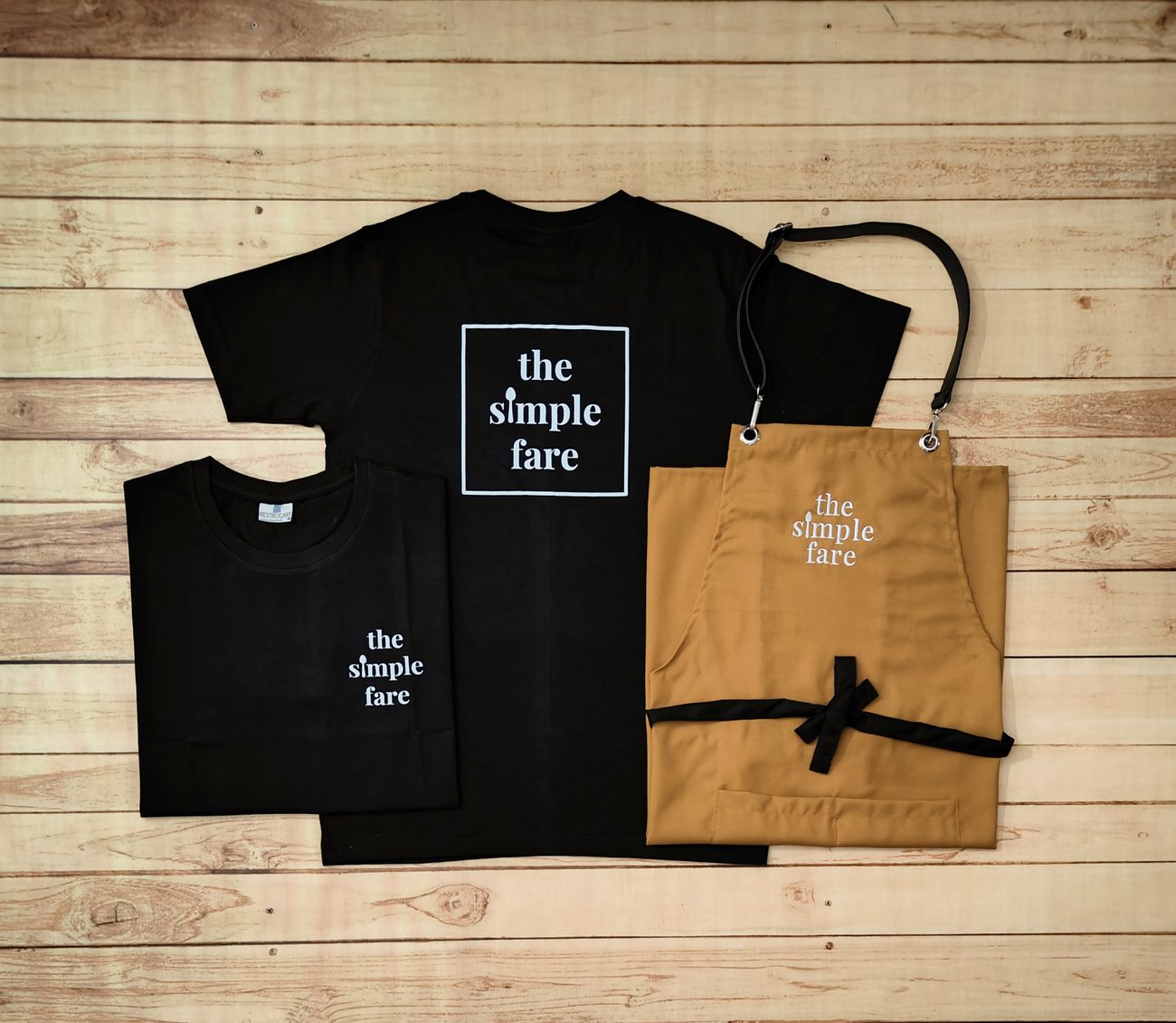
The round-neck t-shirt has quietly become the default uniform of the Indian cafe. Walk into a specialty coffee bar, a burger joint, a bakery or a bubble tea counter and there is a good chance the team is in a crew-neck tee, an apron and a cap. It is comfortable in the heat, easy to wash, cheap to replace, and it gives your brand a big clean canvas. It also goes wrong easily: thin fabric, a collar that sags after ten washes, a print that cracks, a colour that fades to grey.
This guide is about getting round-neck t-shirt uniforms right for cafes, QSRs and bakeries: which GSM and fabric to choose, how the collar and seams are made, which print method to use where, how to pick colours, and how to pair the tee with aprons and caps into a complete look. If you are weighing up collars, our polo t-shirt GSM guide covers polos, and our guide to dry-fit, cotton and full-sleeve tees covers performance fabrics and sleeves.
Why round-neck tees work for cafes, QSRs and bakeries
A round-neck t-shirt does three things well. It is cool: no collar, no placket, nothing trapping heat around the neck when a barista is working a steam wand or a QSR crew is on the fryer. It is casual in the right way: it matches the tone of a counter-service brand, where guests order at a till and the staff are part of the vibe. And it is a blank canvas: the front, back and sleeves can carry your logo, a slogan or a playful graphic, which is how many young brands express personality.
It is less suited to formal floor service, fine dining or hotel restaurants, where a shirt or polo reads better. Many brands mix: round-neck tees for counter and kitchen, and a shirt or polo for managers and floor leads.
GSM and fabric: the numbers that matter
GSM, grams per square metre, is the weight of the fabric. For round-neck uniform tees it is the single most useful number on a quote.
| GSM | Feel | Best for |
|---|---|---|
| 150 to 170 | Light, airy, can look thin in pale colours | Very hot kitchens, event tees, short-term use |
| 180 to 200 | Substantial but breathable; the uniform standard | Daily wear for baristas, QSR crew, bakery counters |
| 210 to 240 | Heavy, structured, premium hand-feel | Air-conditioned counters, merchandise, oversized or boxy fits |
Then choose the fibre:
- 100% combed cotton, bio-washed: soft, breathable and comfortable in Indian summers. Combing removes short fibres, so the fabric pills less; bio-washing gives a smoother, softer surface. The default for most cafe tees.
- Cotton-rich blends (such as 60:40 cotton-poly): hold shape and colour better through commercial laundry, wrinkle less and dry faster, with a slightly less natural feel. Good for QSRs with high wash volumes.
- Cotton with a little elastane: a closer, stretchier fit that recovers well. Suits slim and ladies' fits.
- Polyester dry-fit: wicks sweat and dries very fast, ideal for kitchens and outdoor events, but holds odour and feels sporty. Covered in our dry-fit guide.
Whatever the fibre, ask for fabric that is pre-shrunk and reactive-dyed. Pre-shrinking stops a medium turning into a small after the first wash; reactive dyes bond with cotton and fade much more slowly than cheaper dyes.
Construction details that keep a tee looking like a uniform
Two tees in the same GSM can look completely different after a month. The difference is construction.
- Rib collar: a collar in 1x1 rib with a little lycra keeps its shape; a flat, thin collar ripples and sags. This is the first place a cheap tee gives itself away.
- Shoulder taping: a tape along the inside of the shoulder seam and back neck stops stretching when staff pull tees on and off.
- Double-needle hems: on the sleeves and bottom, so hems do not curl or unravel.
- Side seams: side-seamed tees hold their shape and sit straighter than tubular ones, which can twist after washing.
- Fit options: a regular fit for the men's range and a proper ladies' fit, not just smaller sizes. Collect sizes from every team member before ordering rather than guessing a size spread.
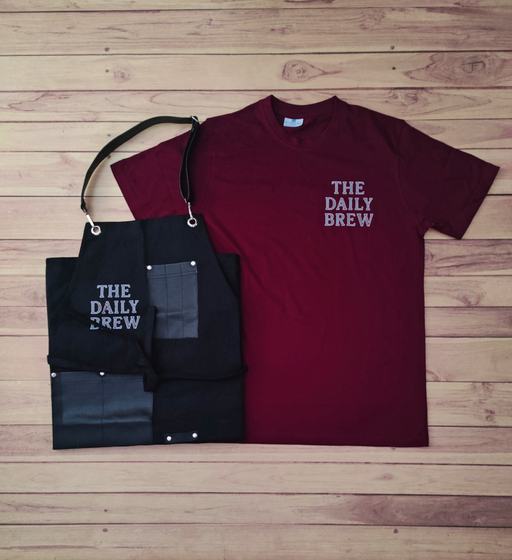
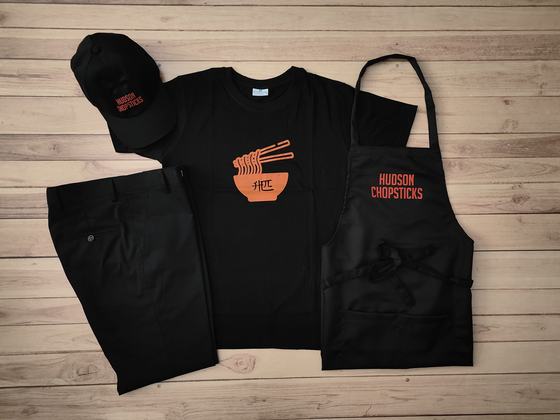
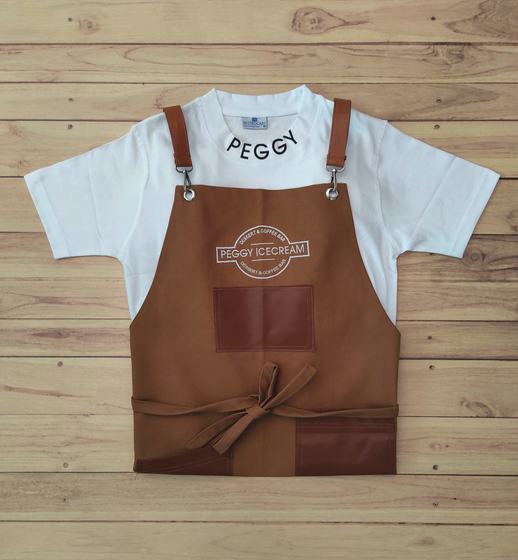
Print methods and placement
The print method decides how the logo looks on day one and how it looks after fifty washes. Our embroidery vs printing guide goes deeper; here is the short version for tees.
| Method | Best for | Watch out for |
|---|---|---|
| Screen print | Simple logos in one to three colours; large back prints; bulk runs | Setup per colour, so less economical for tiny runs or many colours |
| DTF (direct to film) | Full-colour logos, gradients, fine detail, smaller quantities | Quality varies; ask for a wash-tested sample |
| Embroidery | Small chest logo with a premium, durable finish | Not for large designs; can pucker on light tees without backing |
| Puff or high-density print | Raised, textured logos for merchandise-style tees | Better on heavier GSM; not ideal on the chest under an apron strap |
| Vinyl heat transfer | Names and one-off personalisation | Cracks and peels on tees washed daily; avoid for the main logo |
Where to put the logo
- Left chest or centre chest, small: visible above the apron bib. Keep it compact.
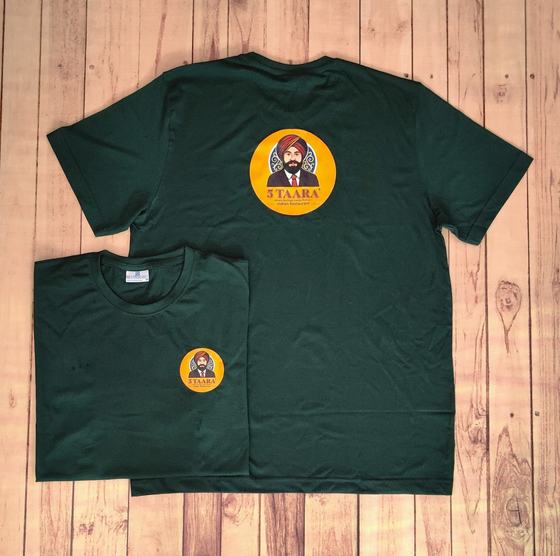
- Full back: the big statement. When staff turn to the coffee machine or the grill, the back is what guests see.
- Back neck: a small name or icon just below the collar, a neat touch that shows above a cross-back apron.
- Sleeve: a small mark or tagline; useful when the chest is covered by an apron.
Remember that an apron covers most of the front. Design the tee with the apron on, not in isolation.
Want a mockup of your tee, apron and cap together? Send your logo, headcount and colours. Our design team will send a complete set mockup with print placements.
WhatsApp +91 98213 34906 Email info@restrocart.comChoosing colours for tee uniforms
Colour is where a tee uniform either looks deliberate or generic. A few practical rules:
- Dark colours for kitchens and busy counters. Black, charcoal, navy, bottle green and maroon hide coffee splashes, sauce and flour marks.
- White and pastels for bakeries and dessert brands that want a clean look, with the understanding that they need more frequent replacement.
- Brand colours for QSRs. A bright orange, red or yellow tee makes a small counter instantly recognisable. Check the shade on a physical swatch, because bright colours vary a lot between fabric lots.
- Contrast the apron. A black tee with a mustard or tan apron, or a white tee with a brown apron, looks more designed than a tee and apron in the same colour.
Pairing tees with aprons and caps
A tee on its own is casual wear. A tee, an apron and a cap in one palette is a uniform. Plan them together.
Aprons
- Bib aprons with an adjustable neck strap: the most common pairing for cafes and bakeries. Canvas or twill, with a chest pocket for pens and thermometers.
- Cross-back aprons: more comfortable over long shifts because the weight sits on the shoulders, not the neck. Popular with baristas; see our guide to barista aprons.
- Half or waist aprons: for front-counter and service staff who need pockets for a card machine and order pad but not full coverage.
Caps
For QSRs and bakeries, a cap is a hygiene requirement as much as a branding piece. Baseball caps with an embroidered front logo are the usual choice; bakeries sometimes prefer a skull cap or bandana. Match the cap to the tee or the apron, not a third colour. Our headwear guide covers the options.
A complete round-neck uniform set per staff member
- Three round-neck tees, 180 to 200 GSM, pre-shrunk, chest and back print.
- Two aprons in a contrast colour with the same logo.
- One or two caps with embroidered logo.
- Optional: a full-sleeve tee or zipper jacket for winter.
- Optional: a name badge for counter staff.
Care: keeping tees and prints looking new
- Turn tees inside out before washing to protect prints and reduce pilling.
- Wash in cold or lukewarm water; avoid bleach on coloured tees.
- Dry in the shade. Direct sun fades dark cotton quickly.
- Never iron directly on a print; iron inside out on low heat if needed.
- Replace tees as a set when the collar starts to ripple, so the team stays uniform.
Round-neck vs polo vs oversized: a quick decision
If you want a relaxed, graphic-led look and your team works in heat, go round-neck. If you want a slightly more formal floor look, go polo. If your brand is fashion-forward and you want the uniform to double as merchandise, look at our guide to oversized t-shirt uniforms. Plenty of brands combine two of these across roles, and the same logo and colour references can run across all of them.
Get a quote for round-neck t-shirt uniforms
RestroCart makes round-neck t-shirt uniforms with matching aprons and caps for cafes, QSRs, bakeries, dessert brands and cloud kitchens, from our studio in Naraina, New Delhi, and delivers anywhere in India. See recent tee sets in our t-shirt uniforms gallery, then send your logo and headcount on WhatsApp at +91 98213 34906 or through our quote page. We keep your fabric and print specifications on file so reorders match.
Ready to dress your counter team? Share your logo and team size and we will reply with fabric options, a set mockup and a timeline.
WhatsApp +91 98213 34906 Email info@restrocart.comSee the real thing: 46 round-neck t-shirt uniforms we have made