Buying guide, Uniforms
Barista Aprons: Cross-Back vs Neck Strap, Canvas, Denim or Leather, and the Pockets Your Coffee Bar Actually Needs
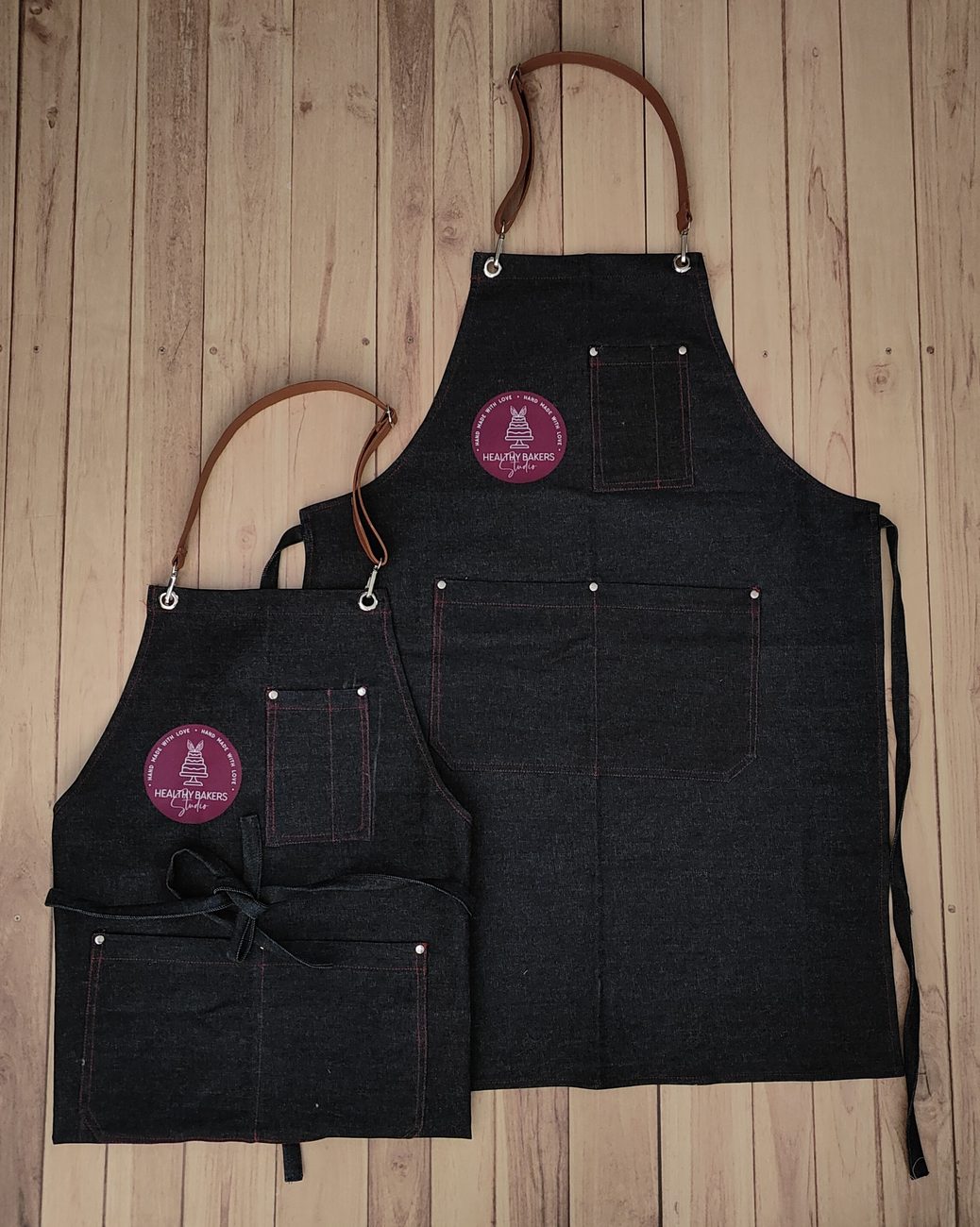
In a specialty coffee bar, the barista apron is the uniform. Guests may not notice the tee or the trousers, but they notice the apron: the denim that has faded at the pocket edges, the leather strap across the back, the logo stitched on the bib. It is also a working tool that carries thermometers, markers and a cloth, soaks up milk splashes and survives a steam wand eight hours a day. Getting it right means thinking like a barista and a brand at the same time.
This guide covers barista aprons for specialty coffee shops, espresso bars and roasteries: cross-back vs neck strap, canvas, denim and leather, pockets for tools, length, hardware and branding. For a broader comparison of apron materials across restaurant roles, see our canvas vs denim vs leather aprons guide, and for the rest of the coffee bar look, our cafe uniform ideas.
Cross-back vs neck strap: the comfort decision
The strap system is the first thing baristas notice and the first thing they complain about. There are two main options.
Neck strap
The classic bib apron hangs from a single strap around the neck and ties at the waist. It is quick to put on and take off, easy to share between staff, and simple to adjust if the strap has a buckle, slider or D-ring. The drawback is that all the weight, including whatever is in the chest pocket, hangs from the back of the neck. Over a long shift, some baristas feel it. A wider strap, a padded or leather strap, or a strap that sits lower on the neck all help.
Cross-back
Cross-back aprons have two straps that cross between the shoulder blades and attach to the sides of the apron, like a pinafore. The weight sits on the shoulders, not the neck, and the apron stays put when the barista leans over the machine. Most cross-backs slip on over the head; better ones use snap hooks, loops or buttons so the straps can be released without pulling the apron over the hair. They are the favourite of specialty coffee teams, and they look distinctive from behind, which is the view guests get most often at the machine.
| Neck strap | Cross-back | |
|---|---|---|
| Comfort on long shifts | Good with a wide or padded strap | Best; weight on the shoulders |
| On and off | Fastest | Slower unless straps have quick-release hooks |
| Sharing between staff | Easy; one adjustable size | Better sized per person |
| Stays in place when leaning | Can swing forward | Stays close to the body |
| Look from behind | Simple tie at the waist | Distinctive X across the back |
Many coffee bars use cross-backs for the baristas on the machine and neck-strap or waist aprons for cashiers and runners.
Canvas, denim, leather or twill?
Cotton canvas
The all-rounder. A 10 to 12 oz canvas is sturdy, breathable, easy to wash and takes embroidery beautifully. It comes in the widest colour range, from black and charcoal to olive, mustard, tan and rust, so it is the easiest fabric to match to a brand palette. Canvas softens with washing rather than wearing out.
Washed denim
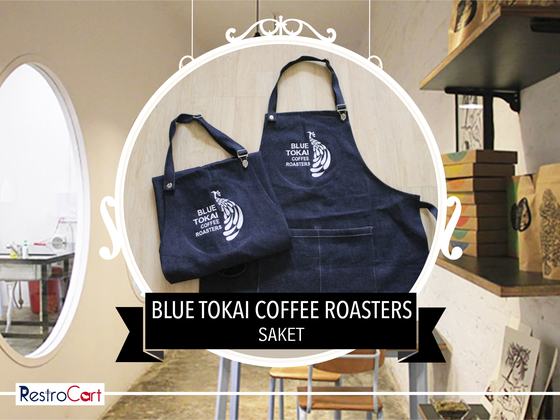
Denim is the signature fabric of specialty coffee because it ages with character, fading at the fold lines and pocket edges and taking on the shape of the wearer. A washed denim around 9 to 11 oz is comfortable from day one. New denim can bleed dye in the first few washes, so wash it separately at first. Our guide to denim in restaurant uniforms goes further.
Leather and leatherette
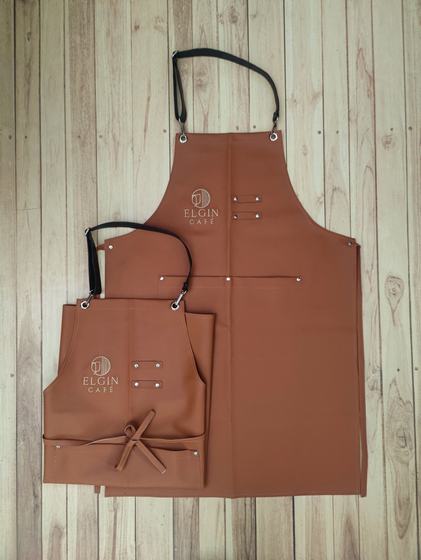
Nothing looks more crafted than a leather apron behind an espresso machine. The trade-offs: genuine leather is heavy, warm and cannot be machine washed. Most coffee bars get the look with leatherette, which wipes clean, or with a canvas or denim body and leather straps, pocket trims and a leather logo patch.
Poly-cotton twill
Smooth, light and the most economical option, twill is ideal for printed aprons and for large teams that want a clean, simple look. It washes easily and dries quickly.
Pockets designed around barista tools
Pockets are where a generic apron becomes a barista apron. Before finalising the design, ask your team what they actually carry during a shift. Typically:
- Milk thermometer and markers: a chest pocket with a narrow pen slot or two, deep enough that a thermometer does not fall out when the barista leans forward.
- Bar towel: a loop, tab or D-ring at the waist to hang a cloth, so it is always to hand for wiping the steam wand and portafilter.
- Phone and order pad: a hip or waist pocket, ideally on the side rather than the centre, so it does not swing into the machine.
- Portafilter brush or small tools: an extra slim slot on the chest pocket.
- Nothing in the lower centre: a big pouch low on the apron fills with grounds and water and makes the apron sag. Keep lower pockets shallow or leave them out.
For roasteries, add pockets for a sample scoop, notebook and marker, and consider a reinforced bib, since roasting and packing work is rougher on fabric.
Designing aprons for your coffee bar? Tell us your strap preference, fabric and what your baristas carry. We will send a mockup and a fabric swatch before sampling.
WhatsApp +91 98213 34906 Email info@restrocart.comLength, fit and hardware
Length
A knee-length or just-above-knee bib apron is the standard for bar work. It protects trousers from milk and espresso splashes and does not catch when crouching to the under-counter fridge. Waist aprons suit cashiers and front-counter staff who do not steam milk. Short bibs that end at mid-thigh look modern but protect less.
Fit
One size fits most in aprons, but not all. Offer an adjustable neck strap or two cross-back sizes, and check the bib width on the smallest and tallest people on your team. Waist ties should be long enough to wrap and tie at the front, which is quicker and keeps the knot out of the way when leaning back against a counter.
Hardware
Coffee bars are wet. Rivets, eyelets, snap hooks and buckles should be brass, antique-finish or powder-coated metal that resists rust, or they will leave marks on the fabric within weeks. Check that the hardware is smooth on the inside so it does not scratch skin or snag a tee.
Branding a barista apron
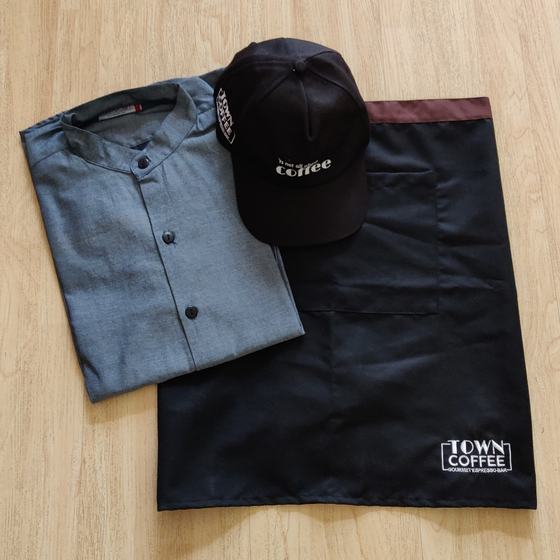
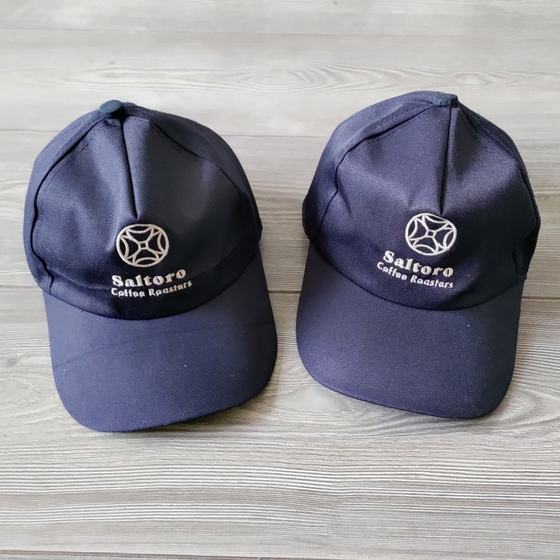
The apron is the most photographed item in a coffee bar, so the branding deserves thought. Our embroidery vs printing guide covers the methods in detail; for barista aprons:
- Embroidery on canvas or denim is durable and premium. Keep the logo on the upper bib, where it is visible above the counter.
- Leather or leatherette patches, debossed or printed with the logo, suit denim and canvas aprons with leather straps.
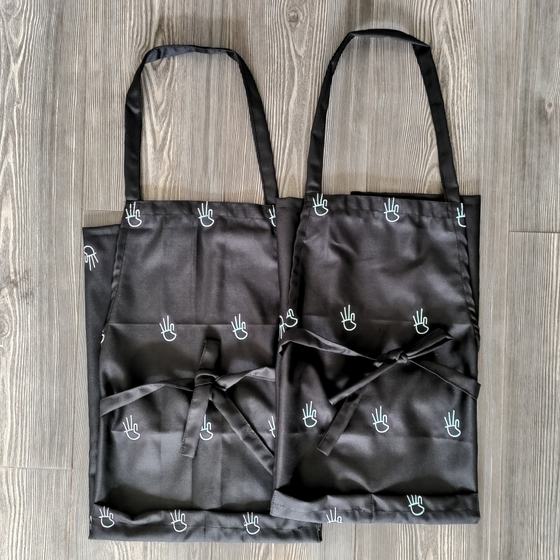
- Printing works on smooth twill and for bold graphics or all-over patterns, as the Third Roast aprons above show.
- Woven labels at the pocket or hem add a retail-quality detail.
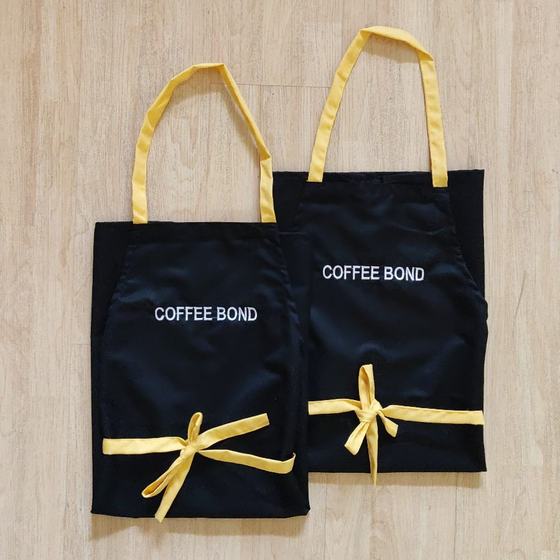
Consider what guests see from behind as well. On a cross-back apron, the straps and waist ties are the view from the queue; a contrast strap colour or a leather strap does quiet branding work.
Colours that work behind the bar
Espresso and milk are merciless on light fabrics. Black, charcoal, navy, dark denim, olive and deep brown hide stains best. Tan, mustard and rust canvas look warm and suit coffee brands, and show marks less than you might expect because they sit close to the colour of coffee itself. White and cream aprons look beautiful for a launch but need frequent replacement. A good combination is a dark apron over a lighter tee, with the logo in a contrast thread; our guide to round-neck tee uniforms covers what to wear underneath.
Care: making barista aprons last
- Wash canvas and denim aprons inside out, in cold or lukewarm water, and dry in the shade.
- Wash new denim separately for the first few washes.
- Wipe leather and leatherette with a damp cloth; never machine wash them.
- Remove leather straps before washing if they detach.
- Soak milk stains in cold water first; hot water sets milk protein into the fabric.
For roasteries and multi-outlet coffee brands
Roasteries and growing coffee chains have a few extra considerations. Roasting and packing staff need a tougher, heavier canvas apron in a natural fibre, which copes better near hot equipment than light synthetics. Multi-outlet brands benefit from locking one apron specification, fabric, colour, hardware and logo placement, so every outlet matches and reorders are simple. And many roasteries sell aprons, caps and branded tote bags as merchandise, which is easy to add when the staff design is already done. See our apron gallery for more coffee bar and cafe aprons we have made.
Barista apron brief
- Number of baristas, cashiers and roasting or packing staff.
- Cross-back or neck strap, per role.
- Fabric: canvas, denim, leatherette or twill, and weight.
- Pockets: what each role carries.
- Length: bib to the knee, short bib or waist apron.
- Hardware finish: brass, antique or black.
- Branding method and placement: embroidery, patch or print.
- Aprons per person and spares.
- In-hand date, allowing for sampling.
Get a quote for custom barista aprons
RestroCart designs and makes barista aprons, cross-back and neck-strap, in canvas, denim, leatherette and twill, for specialty coffee shops, espresso bars and roasteries, from our studio in Naraina, New Delhi, with delivery anywhere in India. Send your team size, strap style and logo on WhatsApp at +91 98213 34906, or build your request on our quote page. We make a sample before production and keep your specification on file for reorders.
Want to see your apron before you commit? Share your logo and preferences and we will send a mockup and a sample for approval.
WhatsApp +91 98213 34906 Email info@restrocart.comSee the real thing: 68 canvas aprons we have made · 49 denim aprons we have made