Buying guide, Tableware
Cutlery Caddies and Holders for Restaurants: Wood, MDF, Cork, Inlay Designs, Branding and What Goes on the Table
A cutlery caddy is the one object that stays on your table all day. Menus come and go, bill folders arrive at the end, but the caddy sits there through every cover, in every guest's photos, holding the things people reach for most. Chosen well, it saves your servers dozens of trips a shift and gives every table a quiet piece of branding. Chosen badly, it is a wobbly box of wet napkins.
At RestroCart we make cutlery caddies and holders in solid wood, MDF and cork, branded to match the rest of the table. This guide covers what should go on the table, which material suits which concept, compartment sizes, branding, hygiene, and what to send for a quote. For the wider set of small table pieces, see our overview of bill holders, caddies and tent cards.
Start with what goes on the table
Most caddy mistakes begin with choosing a design before deciding what it has to hold. Write the list first. It depends on your concept and service style far more than on looks.
| Concept | What usually goes in the caddy | Notes |
|---|---|---|
| Cafe, all-day dining | Forks, knives, spoons, paper napkins, sugar sachets | Two or three compartments; add a slot for a QR card if you use one |
| Casual dining, family restaurant | Cutlery, napkins, salt and pepper, sauces | Needs a bottle compartment sized to your sauce bottles |
| Pan-Asian, noodle bar | Chopsticks, spoons, forks, napkins, soy and chilli | Tall narrow slots for chopsticks; a tray base for sauce bottles |
| Pizzeria | Knives, forks, napkins, chilli flakes, oregano | Shakers need their own section |
| QSR and self-service counter | Everything in bulk, plus straws and wet wipes | Larger station caddies rather than one per table |
| Fine dining | Usually nothing on the table | Cutlery is laid and changed per course; caddies stay at service stations |
Two questions settle the rest. Will guests take cutlery from the caddy, or will servers set it from the caddy? And do condiments live on the table all day, or arrive with the food? If condiments arrive with the food, your caddy can be smaller and simpler.
Materials: wood, MDF, cork and inlay designs
| Material | Look and feel | Durability and care | Branding | Best for |
|---|---|---|---|---|
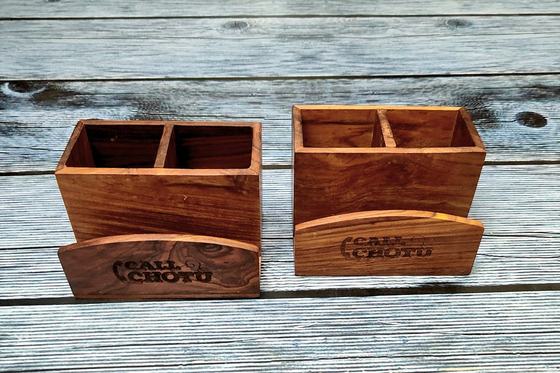
| Solid wood (for example sheesham) | Warm, rich grain, reassuring weight | Longest life; seal it and keep it dry | Laser engraving, printing | Cafes, bars, Indian and premium casual dining |
| MDF | Clean edges, any colour or woodgrain finish | Good if sealed; raw edges swell with water | Full-colour UV print or engraving | Bright, graphic concepts; matching MDF menus and holders |
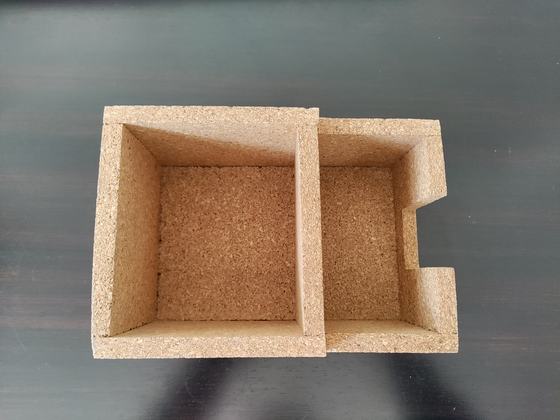
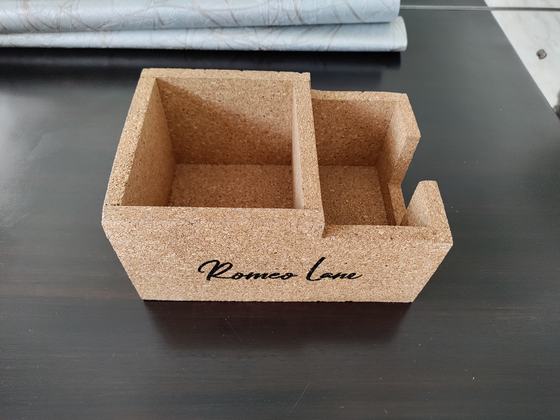
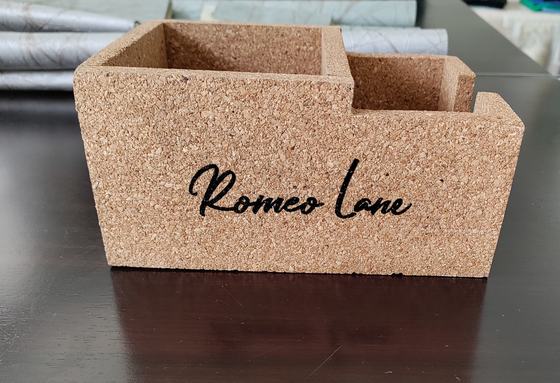
| Cork | Light, soft, natural texture | Light and wipeable when sealed; can chip at corners | Printed or engraved logo | Relaxed cafes, bakeries, brunch places |
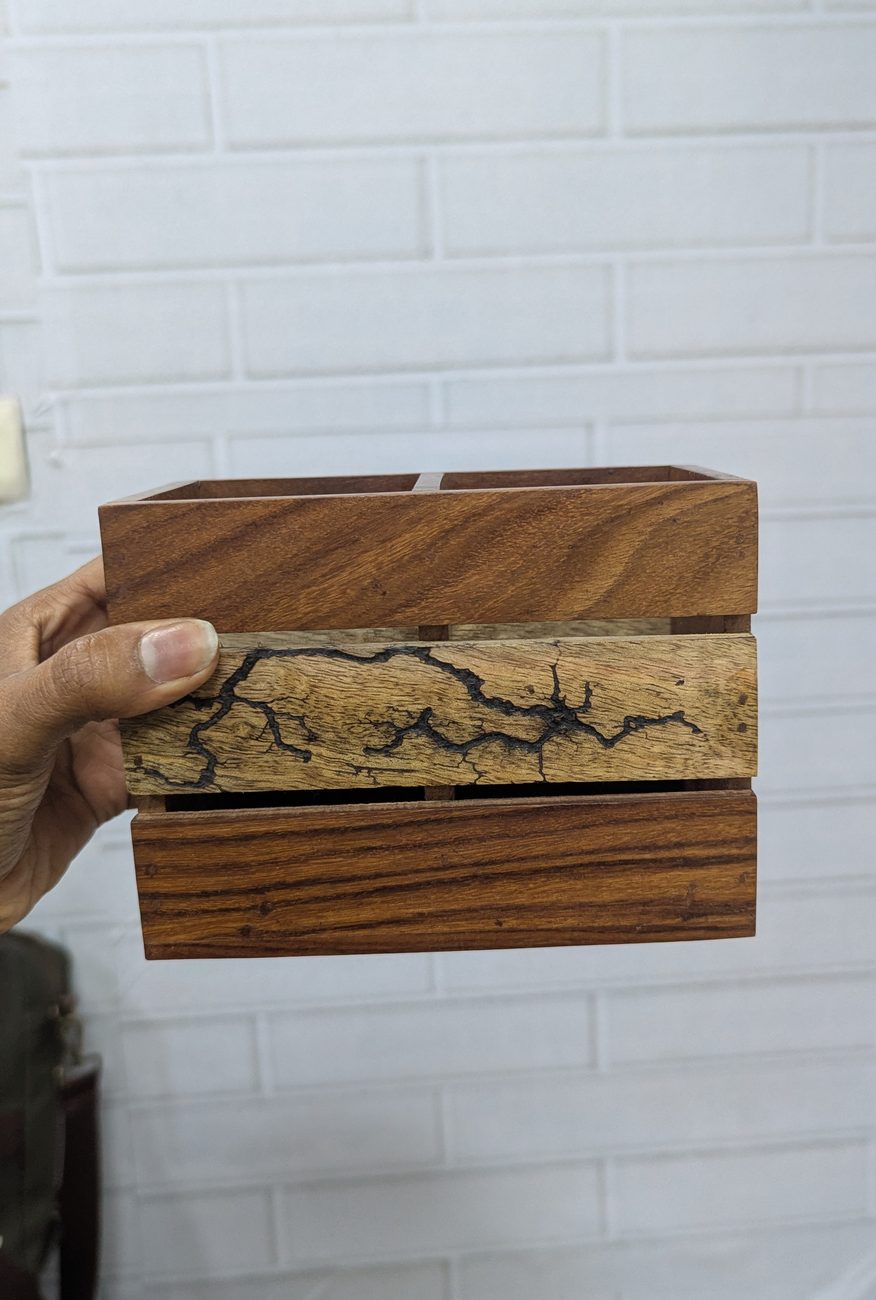
| Wood with inlay detail | A statement piece; contrasting pattern or colour | As solid wood; the inlay must be sealed flush | Engraving on plain panels | Signature tables, bars, brands that want a talking point |
Solid wood is the choice we see most in restaurants that want the caddy to feel like part of the furniture. It is heavier, so it does not tip when a guest pulls out a knife, and it can be refinished when it gets worn. MDF is lighter on budget and the best choice when the caddy should carry full-colour artwork or match MDF menus exactly. Cork is lighter still and has a soft, friendly character that suits cafes and bakeries.
Inlay designs, where a contrasting material fills a pattern in the wood, turn a caddy into a signature piece. They cost more and are best used where guests will notice: a chef's counter, a bar top, a flagship outlet.
Compartments, size and stability
A caddy is a small piece of furniture, and small errors in size are felt every service.
- Measure your longest cutlery. The cutlery compartment should let handles stand clear of the rim so guests pick them up without touching the others. Take your actual dinner knife and serving spoon to the brief, not a guess.
- Size the napkin slot to your fold. Paper napkins folded in quarters need a different slot from a tall folded dinner napkin. Our table napkin guide covers folds and sizes.
- Measure bottles and shakers. Sauce bottles and shakers should sit snugly, not rattle, and should be easy to lift out for refilling.
- Keep the footprint small. A two-seater table has little room. A caddy that crowds the plates gets moved to the floor by the first large order.
- Weight and feet. Heavier bases resist tipping. Felt or rubber feet protect your tabletops and stop the caddy sliding.
- Open or closed base. A slatted or open base lets crumbs fall through and air circulate, but can leave marks on the table; a closed base is easier to wipe out.
Designing caddies for your tables? Send what needs to go in them, your table size and your logo. We will suggest a material, compartments and branding, and share a mockup.
WhatsApp +91 98213 34906 Email info@restrocart.comBranding a caddy without overdoing it
The caddy is looked at all meal, so branding works hard here, but it should be quiet.
- Laser engraving on wood and cork gives a tonal, permanent mark that will not rub off like print. It suits premium and natural concepts and pairs well with engraved menus.
- UV printing on MDF gives full colour: your brand colour, a pattern, even a short line of copy such as your Wi-Fi name or a line asking for reviews.
- Placement. Put the logo on the side that faces the guest, sized to read across the table, not on the top rim where hands and cutlery wear it.
- A second face. The back panel, facing the server, can carry the table number, which saves a separate table-number stand.
Match the finish to your other pieces. A caddy engraved in the same wood tone as your wooden menus and bill holders makes the table look planned rather than collected.
Hygiene: what should really sit on the table
Since 2020 many restaurants in India have rethought open cutlery on tables. There is no single rule; what matters is that your caddy matches a routine your team will actually follow.
- Open cutlery in the caddy. Fine for fast-turning cafes if cutlery is replaced after every table and the caddy is wiped between guests.
- Wrapped cutlery. Cutlery rolled in a napkin, or in a paper sleeve, keeps each set untouched until the guest opens it. The caddy then holds rolled sets and condiments.
- Cutlery with the order. The server brings cutlery with the food and the table caddy holds only napkins, condiments and the table number.
- Station caddies. In fine dining and in busy dining rooms, caddies live at the service station and servers set cutlery course by course.
Whatever the model, the caddy should have a sealed finish that tolerates a daily wipe with a damp cloth and mild detergent, and should never be left standing in water. Raw MDF and unsealed wood absorb spills and look tired quickly. If your kitchen is reviewing hygiene more broadly, our kitchen hygiene and uniforms guide covers the staff side.
A daily caddy routine for your team
- At opening: clean, dry caddies set out with fresh cutlery and napkins.
- Between guests: remove used and touched items, wipe the caddy, restock.
- Check sauce bottles and shakers for drips and refill levels.
- At closing: empty the caddies, wipe inside and out, leave them to dry upside down.
- Weekly: check for chipped edges, loose joints or worn finish, and rotate in spares.
Station caddies and counters
Service stations and self-service counters need a different caddy: larger, with more compartments, sometimes with a handle so a server can carry a full set to a large table. For QSRs, a counter caddy holds cutlery, straws, napkins and wet wipes in bulk and should be easy to restock without lifting everything out. The same material and branding as your table caddies keeps the look consistent. If you run a fast-service format, our QSR uniforms guide covers dressing the team behind that counter.
Common caddy mistakes
- Too big for the smallest table. Size the caddy for your two-seaters, not your six-seaters, or it will spend service on the floor.
- Compartments that do not fit the cutlery. Knives that lie flat or spoons that disappear below the rim slow every guest down.
- Raw MDF near water. Unsealed edges swell within weeks of daily wiping.
- The logo on the rim. It wears off where hands grip. Brand the side panel instead.
- No spares. Caddies get chipped and dropped. A few spares keep every table matching while a damaged one is replaced.
What to send for a quote
Your caddy brief
- What goes in the caddy, with your actual cutlery, napkin fold and bottle sizes.
- Number of table caddies and station caddies, plus spares.
- Material: solid wood, MDF, cork or an inlay design.
- Branding method and placement, with your logo as a vector file.
- Table size, so the footprint suits two-seaters and larger tables.
- Any matching pieces: menus, bill holders, coasters, table numbers.
- Delivery city and the date you need them.
How RestroCart makes caddies
You share the brief on WhatsApp or email. Our design team sends mockups and suggests materials and compartment sizes, then we make a sample for approval before production. Every piece is checked before packing and delivered anywhere in India. Because we also make menus, bill holders and coasters, we can match wood tones and branding across the whole table. See finished pieces on our table accessories work page.
Ready to brief your cutlery caddies? Send the contents list, quantity and logo. We reply the same day with ideas and a quote.
WhatsApp +91 98213 34906 Email info@restrocart.comGet a quote. Message us on WhatsApp at +91 98213 34906, email info@restrocart.com, or add caddies to your list in our quote builder.
See the real thing: 17 tent cards and table stands we have made