Buying guide, Tableware
QR Table Stands, Tent Cards and Table Talkers: Small Signs That Sell More
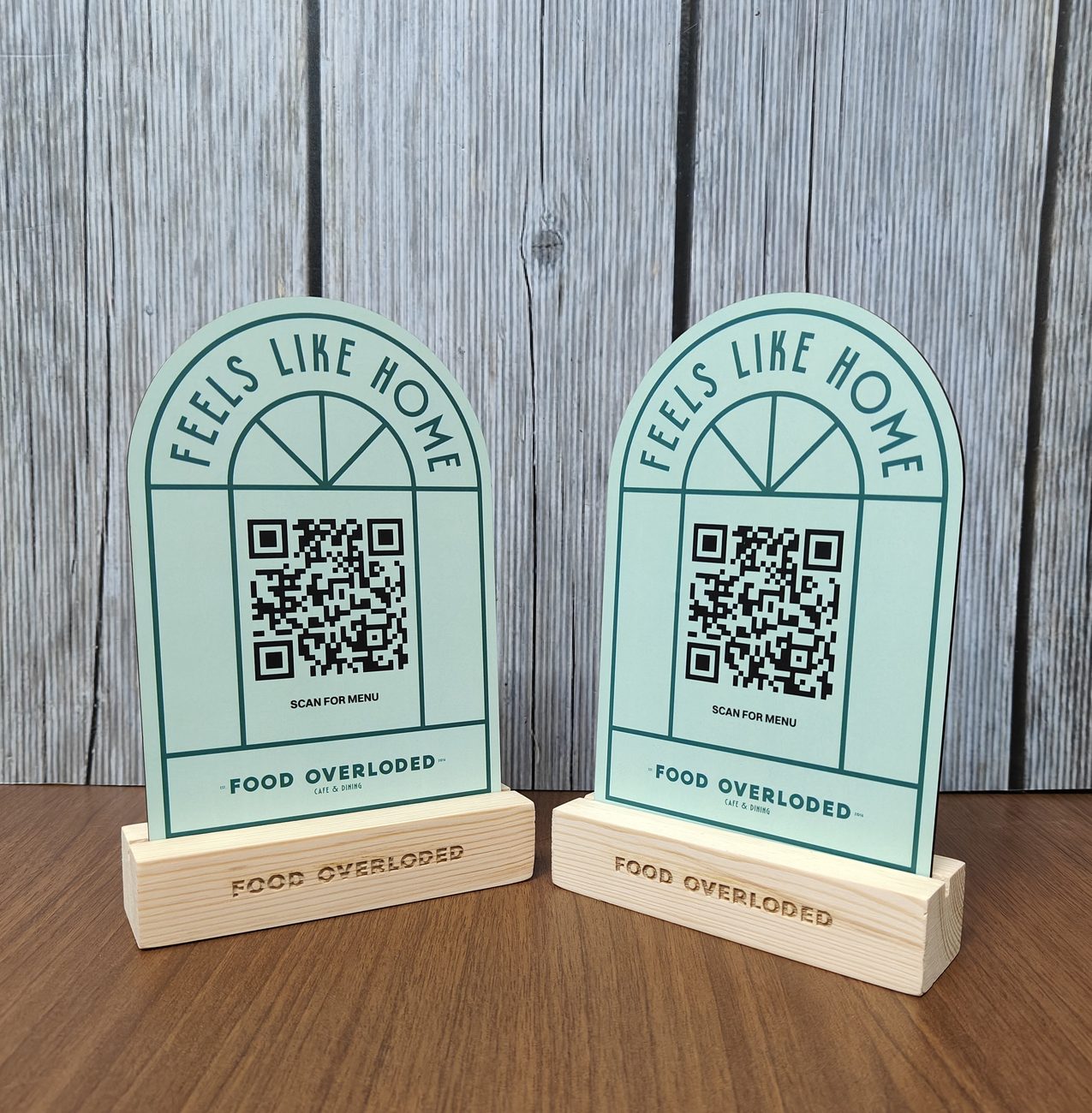
Every table in your restaurant has a few square centimetres of prime advertising space that most owners fill with a laminated sheet and some sticky tape. That space is looked at, on average, for the whole meal. Used well, it gets guests to open the menu, order another round, pay faster, follow you on Instagram and leave the review that brings in next month's customers.
At RestroCart we make QR table stands, tent cards, table talkers and cue cards for restaurants, cafes and bars, usually alongside their menus and bill holders. This guide covers what to print, which materials work, and how to design small table signs that actually get used.
The four jobs a table sign can do
| Job | What it says | Where it links |
|---|---|---|
| Menu | Scan for menu | Your digital menu |
| Order and pay | Scan to order / pay at table | Your ordering or payment system; include table number |
| Reviews and social | Loved it? Review us / Follow us | Google review page, Instagram, TripAdvisor |
| Promotions | Weekday offer, happy hours, new menu, events | Usually no QR needed; the card itself is the message |
The most common mistake is asking one small sign to do all four jobs. Pick one or two per stand. A guest will scan one code; nobody scans four.
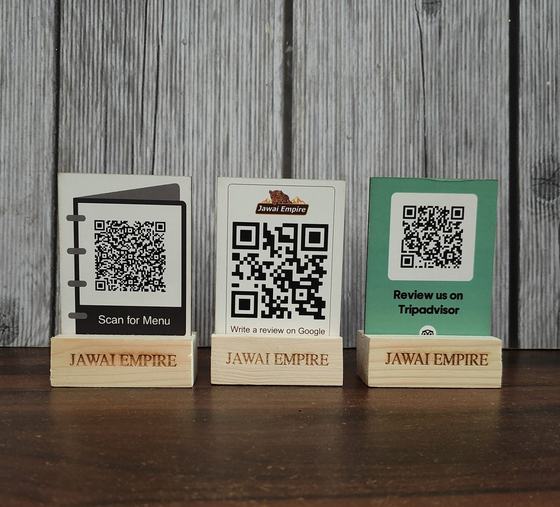
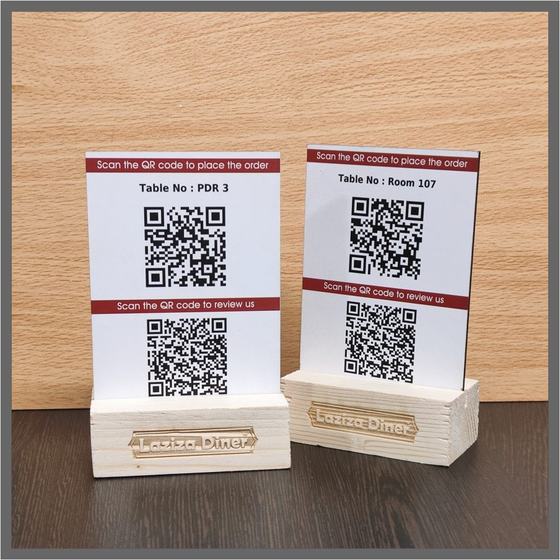
Designing a QR stand people actually scan
Size and contrast
Print the code at least 3 x 3 cm; 4 to 5 cm is safer in warm, low restaurant lighting. Dark code on a light background, with a clear white margin around it. Avoid placing codes on busy patterns or glossy finishes that catch glare.
A label that says what happens
"Scan for menu", "Scan to order, Table 7", "Scan to pay", "Review us on Google". A code without a label is a puzzle; a label tells the guest what they get for pulling out their phone.
Dynamic links
Print codes that point to a short link you control, so you can change the destination when you switch ordering platforms or update the menu URL. Reprinting forty stands because a link changed is an avoidable cost.
Table numbers
If guests order from the table, the table number should be on the stand and, ideally, encoded in the link. It removes the most common ordering error.
Brand, but small
Logo at the top or on the base, brand colours on the card. The QR code and the label are the heroes.
Materials and formats
| Format | Material | Look | Best for |
|---|---|---|---|
| Block stand with slot | Wooden or MDF base, printed card or acrylic insert | Warm, deliberate, easy to update | Cafes, casual dining, QR menus |
| Engraved wooden block | Solid wood with laser-engraved logo | Crafted, premium | Brands with wooden menus and coasters |
| Clear acrylic L-stand or T-stand | Acrylic with printed insert | Modern, minimal | Contemporary interiors, counters |
| Hanging card frame | Wooden frame with rings and printed card | Distinctive, flippable | Specials, events, bar menus |
| Folded tent card | Printed card, A-frame | Light, temporary | Offers, festivals, seasonal menus |
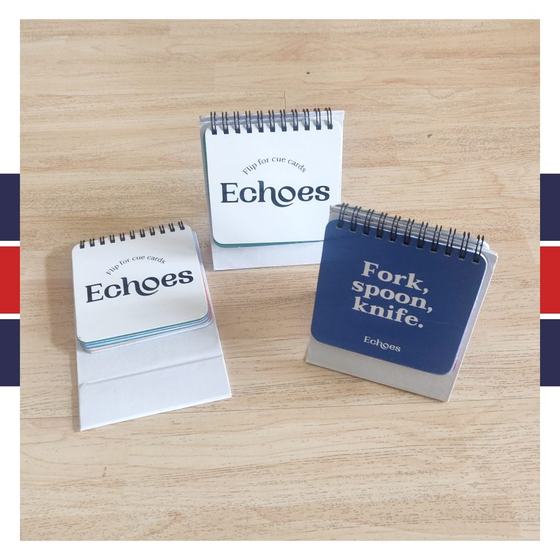
| Flip cue cards | Spiral-bound card set on a stand | Playful, informative | Conversation starters, stories, games |
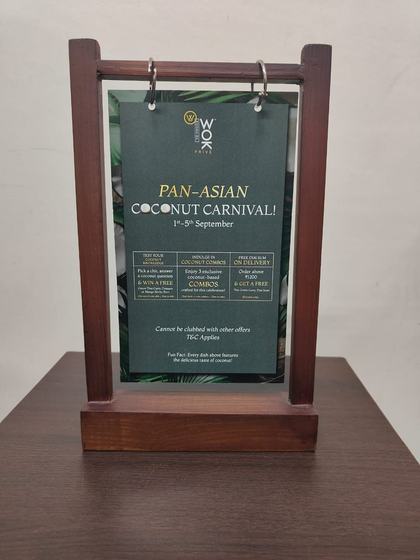
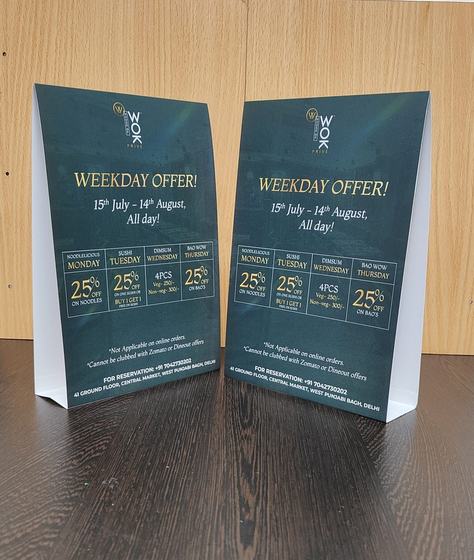
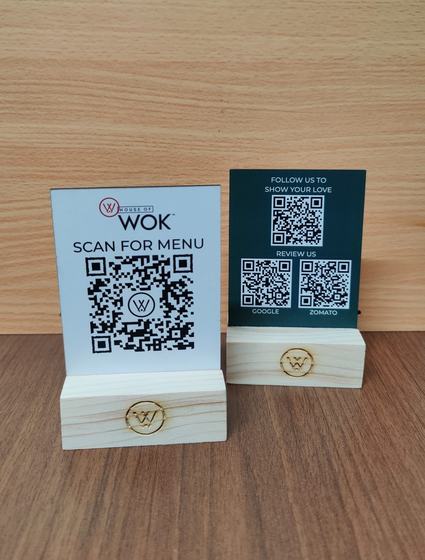
Need stands for every table? Send us your table count, logo and the links you want. We will design the cards and send a mockup.
WhatsApp +91 98213 34906 Email info@restrocart.comTent cards and table talkers: selling what is on the menu
Tent cards are the quiet salespeople of the dining room. They work best when they are specific and short-lived:
- Happy hours and weekday offers: "Weekday lunch: 25 percent off, Monday to Thursday."
- New dishes and seasonal menus: one photograph and one line.
- Events: live music, festival menus, brunch launches.
- Upsells: desserts, the signature cocktail, a large-format dish for the table.
Rotate tent cards monthly. A card guests have seen three times becomes furniture. Paper tent cards are ideal here because they are cheap to reprint; keep the permanent QR stand separate.
Cue cards: the table as a conversation
A flip-style cue card stand on the table can carry your story, sourcing notes, food facts, trivia or a game. We made spiral-bound cue cards for Echoes as part of a full cafe brand kit. They give guests something to pick up while waiting, and they are strong photo props.
Where to place them
- Tables: one QR stand per table, placed at the edge nearest the wall or window so it does not get in the way of plates.
- Counter and bar: a stand at the pickup point and at the bar for pay and review codes.
- Entrance: a larger standee with the menu QR for guests waiting to be seated; see our signage guide.
- Bill folder: a review QR on the inner panel of the bill folder catches guests at the best possible moment.
How many to order
| Item | Quantity rule |
|---|---|
| QR stands (menu / order / pay) | 1 per table, plus counter, bar and 10 percent spare |
| Review / social stands | 1 per table or every other table, or inside bill folders |
| Tent cards | 1 per table per campaign, plus 20 percent spare |
| Replacement inserts | Print extras; inserts get stained and bent first |
How to tell if your table stands are working
Table signage is one of the few pieces of restaurant branding you can actually measure. A few simple checks:
- Scan counts. Most dynamic QR services show how many times each code was scanned. Use a different link for each type of stand, menu, review, Instagram, so you can see which one earns its place.
- Reviews per week. Note your weekly Google review count before the review stands go out and compare it a month later.
- Offer redemptions. For tent cards promoting a specific dish or offer, count how many were ordered in the promotion period against the previous month.
- Staff feedback. Ask servers whether guests mention the cards. If nobody does, the design or placement needs work.
If a stand is not being used, change one thing at a time: the label, the size of the code, or the position on the table.
Common mistakes
- Too many codes. Menu, pay, review, Instagram, Wi-Fi and a loyalty programme on one card means none of them gets scanned.
- Codes too small or on glossy stock. Glare and low light make small codes fail. Test in your actual dining room at night.
- Static codes to links that change. A switch of ordering platform should not mean reprinting every stand.
- Stands that tip over. Light bases get knocked by plates and elbows. Use a wide or weighted base.
- Tent cards left for months. An offer that ended in June still on the table in August tells guests nobody is paying attention.
- No brand on the stand. A generic white acrylic stand with a printed sheet looks temporary. Your logo, colours and materials make it part of the table.
Durability tips
Keep table stands looking new
- Use a heavy or wide base so stands do not tip when a plate brushes them.
- Seal wooden bases so condensation rings and spills wipe off.
- Print inserts on thick card or put them behind acrylic.
- Keep spare inserts at the host stand for quick swaps.
- Check every code scans after printing, on two different phones, in your restaurant lighting.
Part of a coordinated table
A QR stand in the same wood and finish as your menus, bill holders and coasters makes the table look designed rather than accumulated. We make all of them together, which keeps colours and engraving consistent. See our table accessories guide and the tableware catalogue for the full range.
Turn every table into a sales channel. Custom QR stands, tent cards and table talkers, designed and made in New Delhi.
WhatsApp +91 98213 34906 Email info@restrocart.com