Buying guide, Tableware
Sunboard and Double-Sided Menu Boards for Cafes, QSR Counters and Pop-Ups: When They Beat MDF
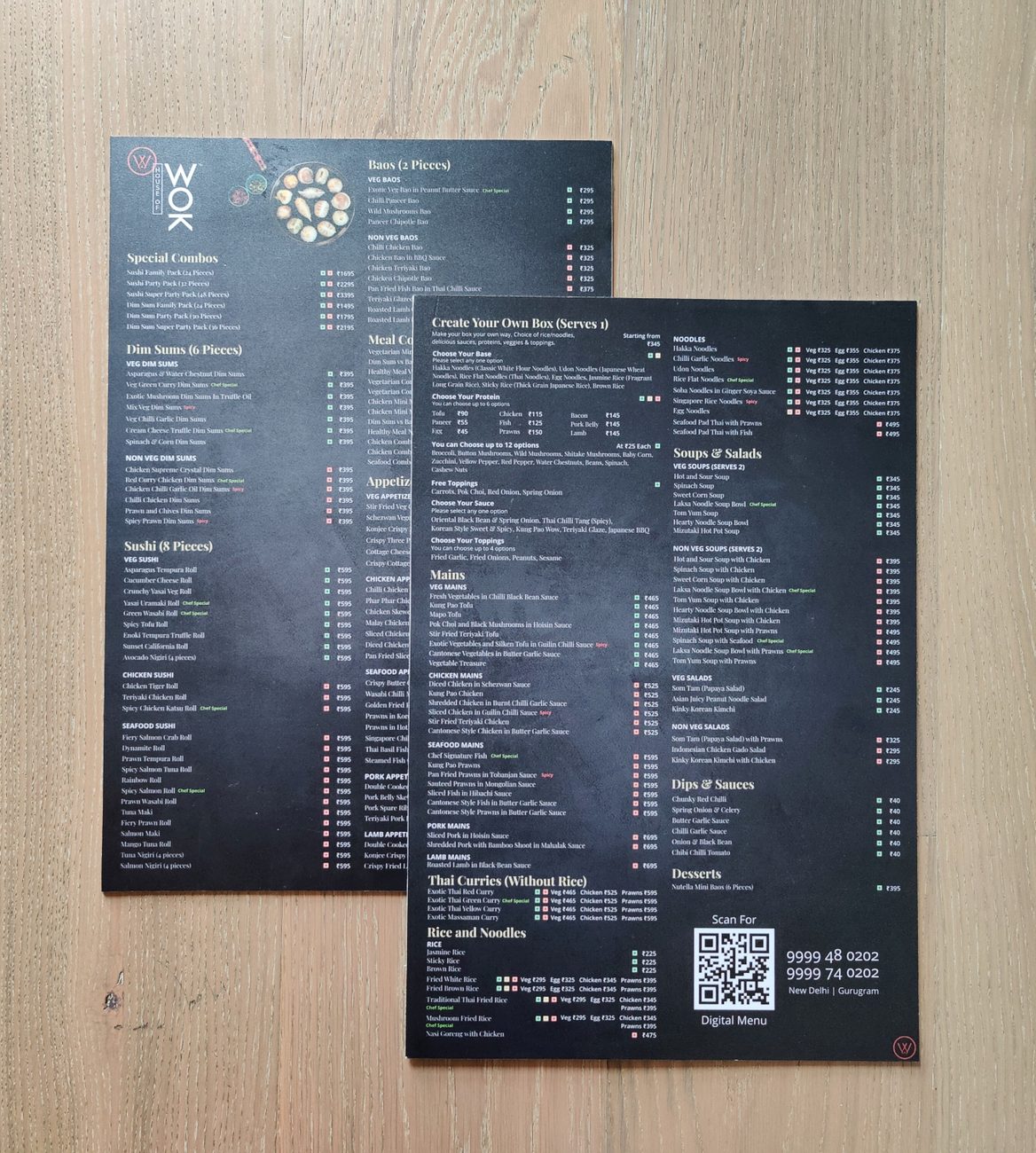
Sunboard menu boards rarely get written about, yet they sit on cafe tables and behind QSR counters all over India. They are light, they shrug off a spilt drink, and they are quick to make. For the right restaurant they are a better choice than MDF. For the wrong one they look temporary within a month.
This guide explains what sunboard is, how double-sided menu boards work, when they beat MDF and when they do not, how long they last, and the cost that matters most: what happens every time your menu changes. At RestroCart we make sunboard, MDF, wooden and leatherette menus, so we have no reason to push one material. If you want the full material comparison, read our MDF vs wooden vs leatherette guide first.
What sunboard is, and why cafes use it
Sunboard is the name used across India for PVC foam board: a rigid sheet of expanded PVC with a smooth, white surface. It is much lighter than MDF, does not soak up water, cuts cleanly into shapes, and takes print well, either printed directly or covered with a printed and laminated vinyl.
For menus, those properties add up to three advantages. A sunboard menu is easy for a guest to hold, even at a larger size. A spilt cold coffee does not ruin it. And because it is quick to produce, it suits menus that are expected to change. Its limits are just as clear: it cannot be engraved, it dents if dropped on a corner, and it does not have the weight in the hand that says "permanent".
Double-sided menu boards: one piece, the whole menu
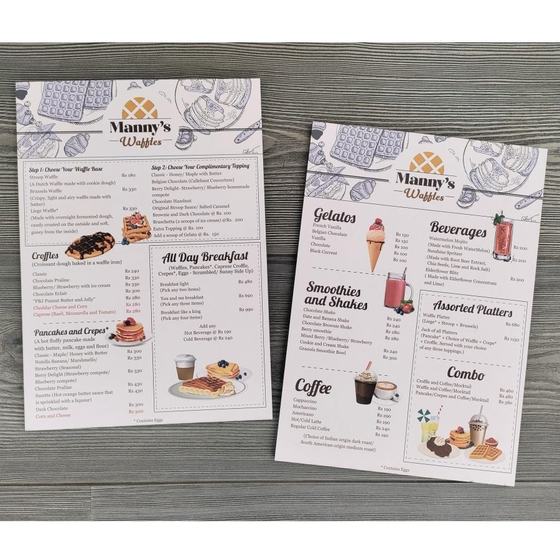
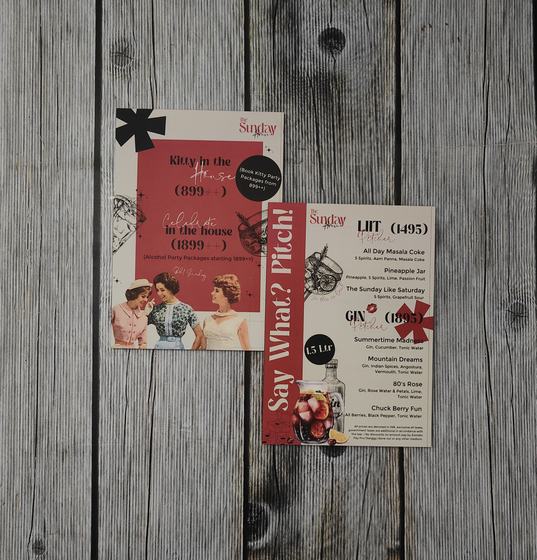
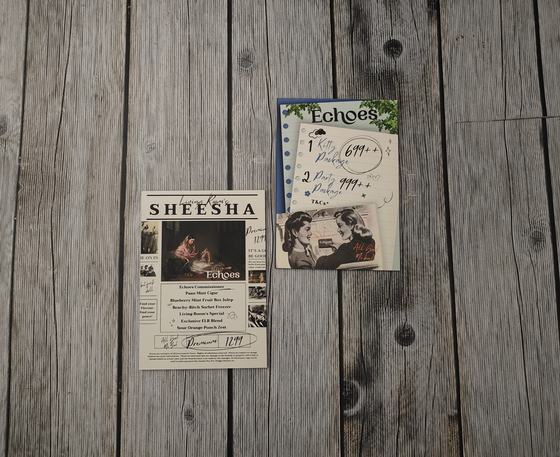
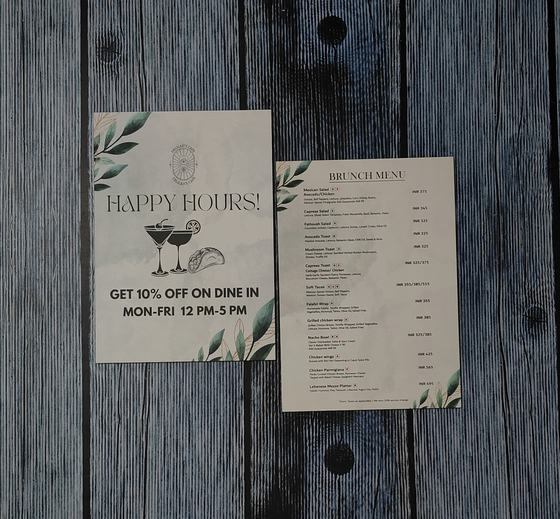
A double-sided menu board prints on both faces. The usual layout is food on one side and drinks on the other, or a main menu on the front with desserts, combos or specials on the back. It works on sunboard and on MDF.
The benefits are practical. Each guest handles one piece instead of a menu plus a drinks card. Servers carry fewer items to the table. You print, store and clean half as many pieces. And the guest sees the whole offer in two glances, which helps casual formats where people decide quickly.
Double-sided boards need one design discipline: each side must work alone, because one side will face the table. Put the brand on both faces, keep headings clear, and make sure the side guests see first sells what you most want to sell.
Sunboard vs MDF vs laminated card
| Sunboard | MDF board | Laminated card | |
|---|---|---|---|
| Weight in hand | Very light | Solid, heavier | Very light, flexible |
| Water | Does not swell; print needs protection | Swells at unsealed edges | Fine if laminated edge to edge |
| Branding | Print only | Print or laser engraving | Print only |
| Feel | Clean, modern, slightly plasticky | Warm, wood-like, permanent | Casual, disposable |
| Weak points | Dented corners, scratches, heat warping | Wet edges, heavier to carry | Curling, fraying, looks tired quickly |
| When the menu changes | Replace the board | Replace the paper insert only | Reprint the card |
| Best for | QSR counters, pop-ups, cafes with changing full menus | Permanent table menus, bars, casual dining | Specials, events, stop-gaps |
The key line is the last but one. With an MDF clipboard or screw-post board, a price change costs you a paper insert. With sunboard, the menu is the board, so a change costs you a board. That is not a problem if you plan for it; it is a problem if you discover it three weeks after opening. Our guide to MDF menu boards and clipboard menus covers the insert approach in detail.
When sunboard beats MDF
- QSR and cafe counters. Large counter and wall menus need to be light enough to mount and replace easily. Sunboard is the standard choice for exactly this, and the size would make MDF heavy.
- Pop-ups, events and festivals. A menu that lives for a weekend or a season does not need a board built to last two years. Sunboard is light to transport and quick to produce. If you are dressing the team too, see our event and pop-up staff uniforms guide.
- Menus that change completely. If you rewrite the whole menu every season, the "permanent board, changing insert" logic of MDF gives you less advantage. Fresh sunboards each season are simple and clean.
- Pre-opening and soft launch. Many restaurants adjust prices and dishes in the first weeks. A short run of sunboard menus lets you test before investing in permanent boards.
- Wet environments. Juice bars, ice cream counters and poolside or outdoor seating, where menus meet water constantly.
When MDF, wood or leatherette is the better call
- Permanent table menus in a dining room. Guests hold them for minutes; weight and texture matter, and a changing paper insert keeps costs down.
- Bars and premium rooms. Engraving, woodgrain and screw-post hardware say "considered" in a way printed plastic does not. See wooden menus.
- Long menus. More than two faces of content needs pages, which means boards with inserts or a leatherette cover.
- Menus with stable prices. If the menu rarely changes, a more durable board costs less over its life.
Not sure whether sunboard or MDF suits your menu? Tell us your concept, how often the menu changes and how many you need. We will recommend one honestly and share a mockup.
WhatsApp +91 98213 34906 Email info@restrocart.comDurability: making a sunboard menu last
Sunboard lasts as long as its surface and corners survive. A few decisions make a large difference:
- Laminate or coat the print. An unprotected print scratches where thumbs hold the board and where boards are stacked. Matte lamination hides fingerprints and reduces glare under lights.
- Round the corners. Square corners on foam board crush the first time a menu is dropped. Rounded corners survive far longer.
- Choose thickness by size. Thin boards are right for handheld menus; larger counter and wall boards need a thicker sheet so they stay flat.
- Keep them away from heat. PVC softens with heat. Do not store menus on top of a coffee machine, beside a tandoor pass or in a glass-fronted window in afternoon sun, where they can bow.
- Clean gently. A damp cloth with mild detergent is enough. Avoid abrasive pads, and test any strong sanitiser on one board first.
- Store flat. Stack boards flat in a dry place rather than leaning them against a wall, where they slowly bend.
The real cost of changing a board menu
With any printed board, the cost that matters over a year is not the first order; it is every change after it. A simple way to plan:
| If your menu changes | Sunboard approach | MDF approach |
|---|---|---|
| Rarely (once a year) | Fine; replace yearly | Print or engrave the full board; lasts longest |
| Seasonally (three or four times a year) | Print a fresh set each season | Permanent board with a seasonal paper insert |
| Prices change often, dishes stay | Costly: every price change is a board | Best: reprint only the insert |
| Daily or weekly specials | Keep the board stable; add a specials card | Keep the board stable; clip a specials sheet |
Three habits keep change costs down whichever material you pick. Keep daily specials off the main board and put them on a table card or a small clipped sheet; our table stands and tent cards guide covers the options. Keep the artwork files in one place so a reprint is a price edit, not a redesign. And order a small buffer of boards with every run, so a damaged menu is replaced from stock rather than by a rush order.
Counter and wall menu boards for QSRs
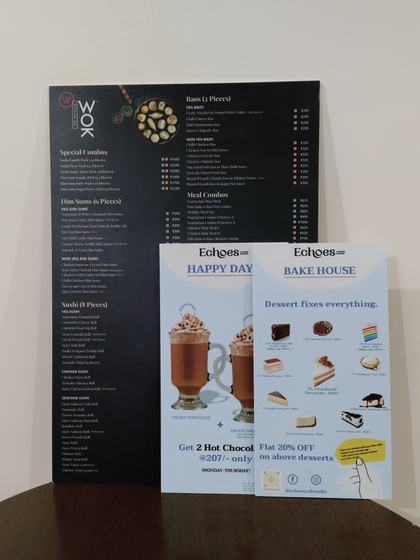
At a QSR counter the menu is read from a distance, often while the guest is in a queue. That changes the design rules: fewer items per panel, large prices, photographs of hero products, and combos grouped where the eye lands first. Sunboard panels are the practical format here because they are light to mount and easy to swap panel by panel when a price or product changes. Plan the layout so each panel can be replaced alone; one new burger should not mean reprinting the whole wall. For the wider picture on counters, entrances and wayfinding, see our restaurant signage guide.
What to send for a quote
Sunboard or double-sided menu brief
- Where the menu is used: tables, counter, wall or event.
- Size, and whether it is single or double-sided.
- Quantity, plus spares.
- Your menu content or print-ready artwork, and logo files.
- How often prices or dishes change, so we can suggest sunboard or MDF honestly.
- Finish preferences: matte or gloss, rounded corners.
- Delivery city and the date you need the menus.
How RestroCart makes menu boards
You send the brief on WhatsApp or email. Our design team prepares or checks the artwork, suggests the right material and thickness, and shares a mockup; for larger orders we make a sample before production. Every board is checked before packing and delivered to your door anywhere in India. We keep your files on file, so the next seasonal run or price revision is quick. See finished work on our menus work page.
Need menu boards for a counter, cafe or pop-up? Send your menu, size and dates. We reply the same day with a material recommendation and quote.
WhatsApp +91 98213 34906 Email info@restrocart.comGet a quote. Message us on WhatsApp at +91 98213 34906, email info@restrocart.com, or add menu boards to your list in our quote builder.
See the real thing: 47 wooden and MDF menu boards we have made