Buying guide, Tableware
Order Pads, KOT Books, Cue Cards and Table Numbers: The Branded Paper Tools of Restaurant Service
Order pads, KOT books, cue cards and table numbers are the least glamorous things a restaurant buys, and some of the most used. Every order starts on one, every kitchen ticket depends on one, and every guest looks at a table number or a cue card without thinking about it. When they are designed well, service is faster and fewer orders go missing. When they are an afterthought, servers scribble on torn sheets and the kitchen guesses.
This guide covers what each paper tool of service is for, what a good KOT book and order pad should include, how to design cue cards and table numbers, and how much to stock. At RestroCart we print these alongside menus, bill holders and the rest of a restaurant's stationery, so they carry the same brand as everything else on the floor.
Why paper still matters in a POS restaurant
Most restaurants now take orders on a POS or a tablet, and many print KOTs automatically. Paper tools still earn their place for four reasons.
- Backup. Power cuts, network drops and jammed thermal printers happen on the busiest nights. A printed KOT book keeps service running.
- Events, banquets and pop-ups. Outdoor counters, catering and event service often have no POS terminal close by.
- Table-side notes. Captains taking a large order, allergy details and special requests are often faster on paper, then entered into the system.
- Guest-written orders. Some cafes hand guests an order slip to fill in themselves, which keeps a small team moving at peak.
Order pads, KOT books, BOT books and captain pads
| Tool | Who uses it | What it does | Typical format |
|---|---|---|---|
| Order pad | Servers, or guests at self-order cafes | Takes the order at the table | Pocket-sized pad, tear-off sheets |
| KOT book | Servers and captains | Sends the order to the kitchen | Numbered, carbonless duplicate or triplicate |
| BOT book | Servers and bartenders | Sends drinks orders to the bar | As KOT, often in a different colour |
| Captain order pad | Captains and managers | Large tables, banquets, event orders | Larger pad or clipboard with more lines |
| Bill book | Cashier, event counters | Handwritten bills when the POS is down | Numbered, duplicate, with tax fields |
Small cafes often combine the order pad and KOT into one book. Larger restaurants keep them separate so the floor team and the kitchen each get exactly what they need.
Anatomy of a good KOT book
A KOT that works is designed around the order of events in your service. These are the fields and features we suggest; remove any your team will not use.
What to print on a KOT
- Your logo or outlet name, small, at the top.
- A printed serial number on every set, continuing from book to book.
- Date and time of order.
- Table number, number of covers (pax) and server or captain name.
- Columns for item or dish code, quantity and notes.
- A clear notes line for allergies, spice level and customisations.
- Tick boxes for dine-in, takeaway or delivery if you run all three.
- A course or sequence marker if you fire starters and mains separately.
Copies. Carbonless paper, often called NCR, makes copies without separate carbon sheets. Duplicate gives a kitchen copy and a book copy; triplicate adds one for the cashier or bar. Coloured copies, white on top with tinted copies below, help staff route them at a glance.
Numbering and binding. Serial numbers are the point of a KOT book for most owners, because they let a manager match tickets to bills. Books with a stiff back board are easier to write on standing up; perforated tear-off sheets stop tickets ripping through the text.
Size. A KOT needs enough lines for a typical table's order without being awkward to carry. Test a sample with your team for a service before printing a full run.
Need branded KOT books or order pads? Send your current ticket, or just tell us your fields and copies. We will design a version that fits your service and quote the first run.
WhatsApp +91 98213 34906 Email info@restrocart.comOrder pads for the floor, and for guests
A table-side order pad should fit the pocket it lives in. Check it against your server aprons and shirts; our steward and server uniform guide covers pocket sizes. Top-bound pads are easier to write on in one hand than side-bound ones. A firm backing board helps when there is no surface to lean on.
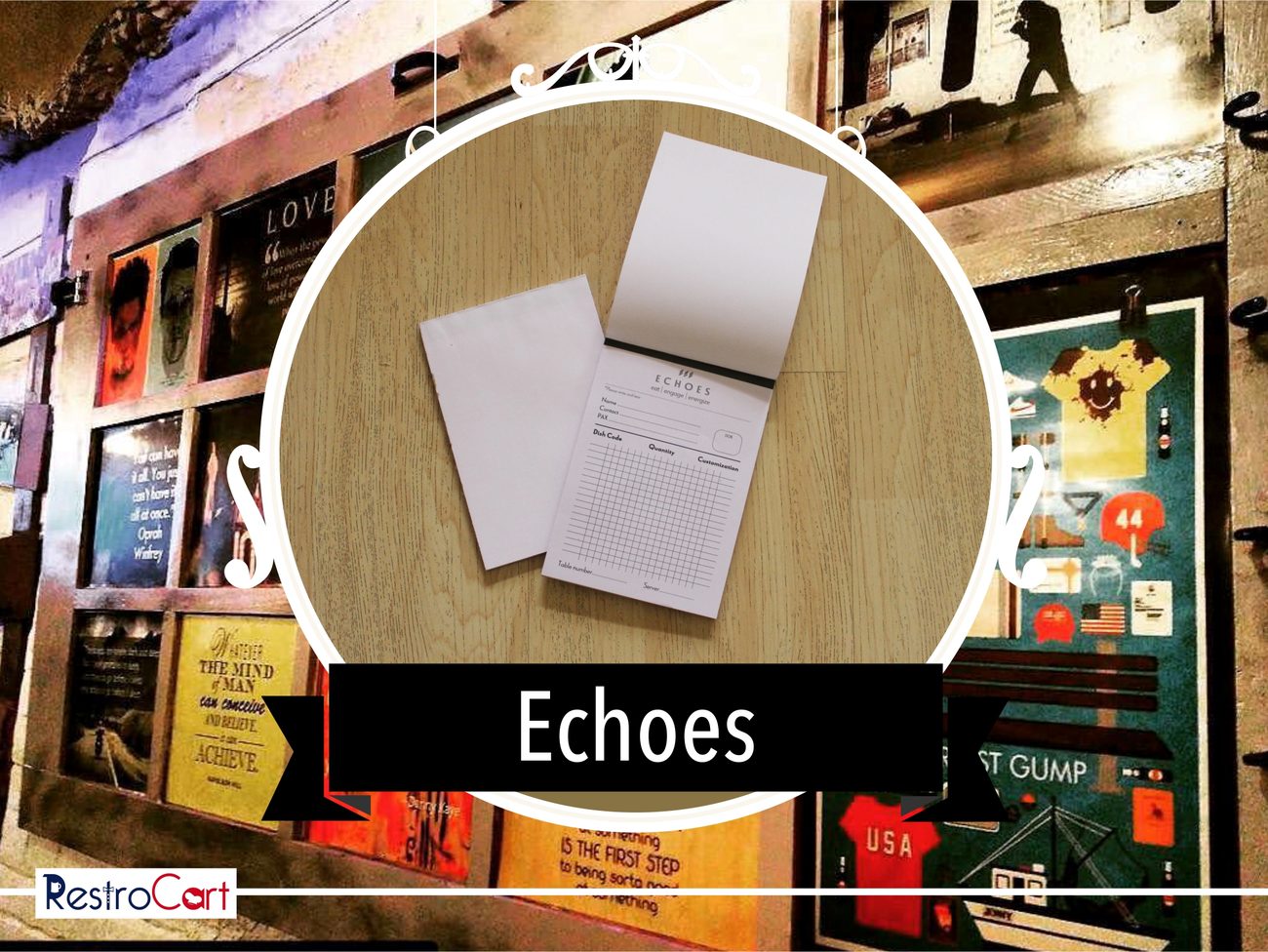
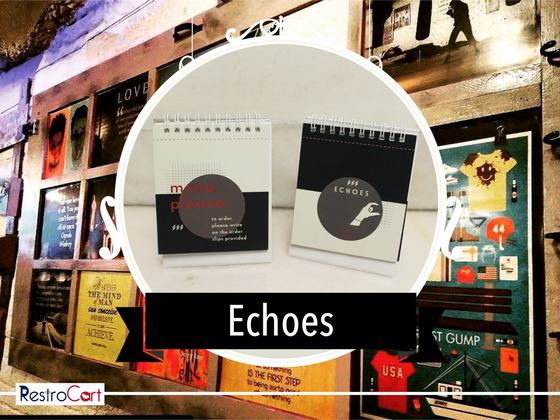
Self-order cafes print pads for guests instead. The fields are simpler and the tone friendlier: name, phone, table number, dish code, quantity, and a line for customisation. The order pad at the top of this guide is exactly this kind of guest slip: name, contact, pax, dish code, quantity and customisation, with table number and server at the foot. Pair it with a cue card on the table that explains how to use it.
Cue cards: small instructions that save a trip
Cue cards give an instruction at the moment it is needed, so a server does not have to. There are two families.
Guest-facing cue cards
- How to order: "Please write your order on the slip provided" or "Scan to order, pay at the counter".
- Service signals: flip cards that tell staff what a table needs, such as water, cutlery, service or the bill.
- House rules and information: Wi-Fi details, reservation notes, kids' menu, or a gentle reminder about self-service water.
Spiral-bound flip cards on a small stand work well because guests can turn to the right card and staff can read it across the room. Keep each card to a few words in large type.
Staff cue cards
Behind the bar and the pass, laminated cue cards hold recipes, pour sizes, plating guides, allergen lists and steps of service. They speed up training and keep consistency when the senior team is off. Print them on heavier card, laminate them, and date each one so old versions can be removed.
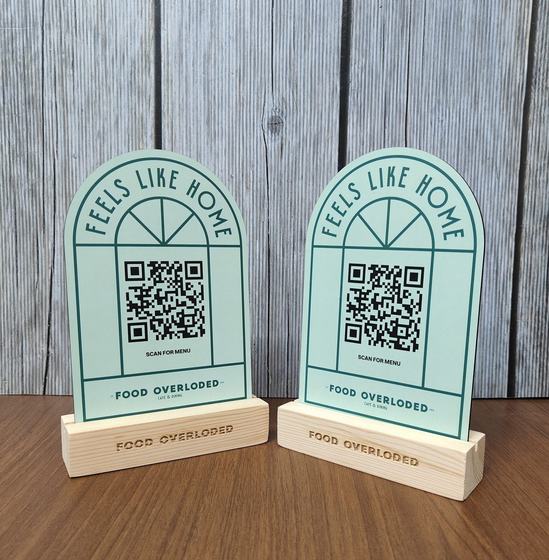
For promotional cards, specials and QR codes, see our guide to QR table stands and tent cards.
Table numbers that staff and guests can read
Table numbers are how orders reach the right guest. A few rules help:
- Readable from the pass. Numbers should be large and high-contrast enough for a runner to spot from a few metres away.
- Visible from both sides. A number facing only the guest does not help a runner coming from behind.
- Logical numbering. Number by section so new staff learn the floor quickly, and keep the numbering the same on the POS, the KOT book and the table.
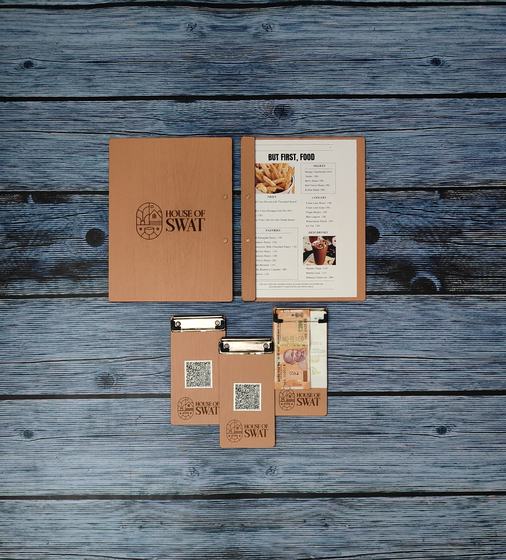
- Combine where you can. A table number printed on the back of a QR stand or engraved on a caddy saves a separate object on a crowded table; see our cutlery caddies guide.
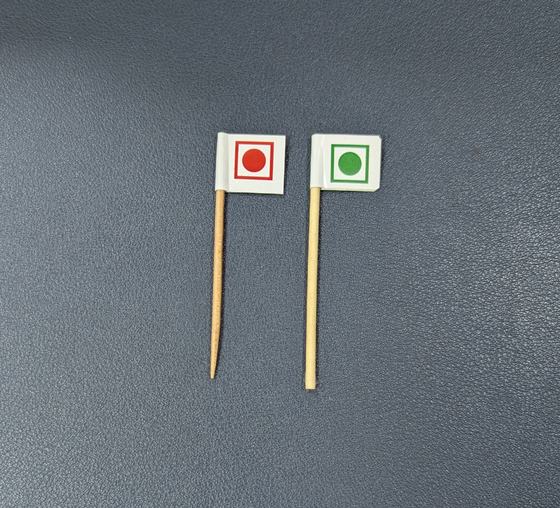
Formats include engraved wooden blocks, acrylic or MDF stands, numbers printed on table stands, and small flags. Flags on picks are also useful on the plate itself: red and green markers help runners and guests tell vegetarian from non-vegetarian dishes at a glance.
Branding the paper tools of service
These are working tools first. Brand them the way you would brand a kitchen towel, not a menu cover:
- Put the logo small at the top, in one colour, so it does not compete with the fields.
- Use your brand colour for headers or rules, keeping the writing areas plain and light.
- Choose paper that takes ballpoint and gel pens without smudging; avoid glossy surfaces on anything people write on.
- Keep guest-facing pieces, such as order slips and cue cards, closer to your menu design so the table looks consistent.
Match them to the rest of your printed pieces; our guide to stickers, thank-you cards and stationery covers the other small prints guests take home.
Common mistakes with order pads and KOTs
- No serial numbers. Without them, a missing ticket is invisible until the stock count does not match.
- Too few lines. A pad that fits three items forces servers onto a second sheet for every family table.
- No notes space. Allergies and spice levels squeezed into the margin get missed on the pass.
- Glossy paper. Pens skip and smudge on coated stock. Use a matte, writable paper.
- Table numbers that do not match the POS. One numbering system across the floor plan, the POS and the books avoids wrong deliveries.
How much to stock, and when to reorder
Paper tools run out at the worst moment, usually on a Saturday. Work out consumption instead of guessing:
- Estimate orders per day, then multiply by how many tickets each order uses (a food and a drinks ticket, for example).
- Divide by the sets per book to get books per week.
- Set a reorder point: when stock falls to a few weeks of use, reorder. Printing takes time, and you want the new numbering to continue without a gap.
- Store books in a dry cupboard. Carbonless paper stored in heat or damp can lose its ability to copy.
- Keep used books for your records for as long as your accountant advises.
How RestroCart prints KOT books and order pads
Send your current KOT or order pad, or just a list of fields, on WhatsApp or email. Our design team lays out a branded version, confirms copies, colours, numbering and size, and sends a proof for approval. We print after approval and deliver anywhere in India, often in the same shipment as menus, bill holders or uniforms. Your design and last serial number stay on file, so the next order continues where the last one ended. Browse the packaging and print catalogue for other printed pieces.
Ready to replace the torn sheets? Send your fields, copies and quantity. We reply the same day with a proof plan and quote.
WhatsApp +91 98213 34906 Email info@restrocart.comGet a quote. Message us on WhatsApp at +91 98213 34906, email info@restrocart.com, or add them to your list in our quote builder.